
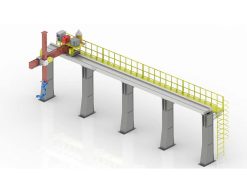
 Robot Linear track
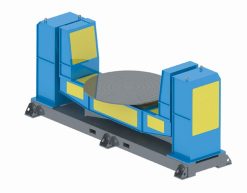 Robot welding Positioner
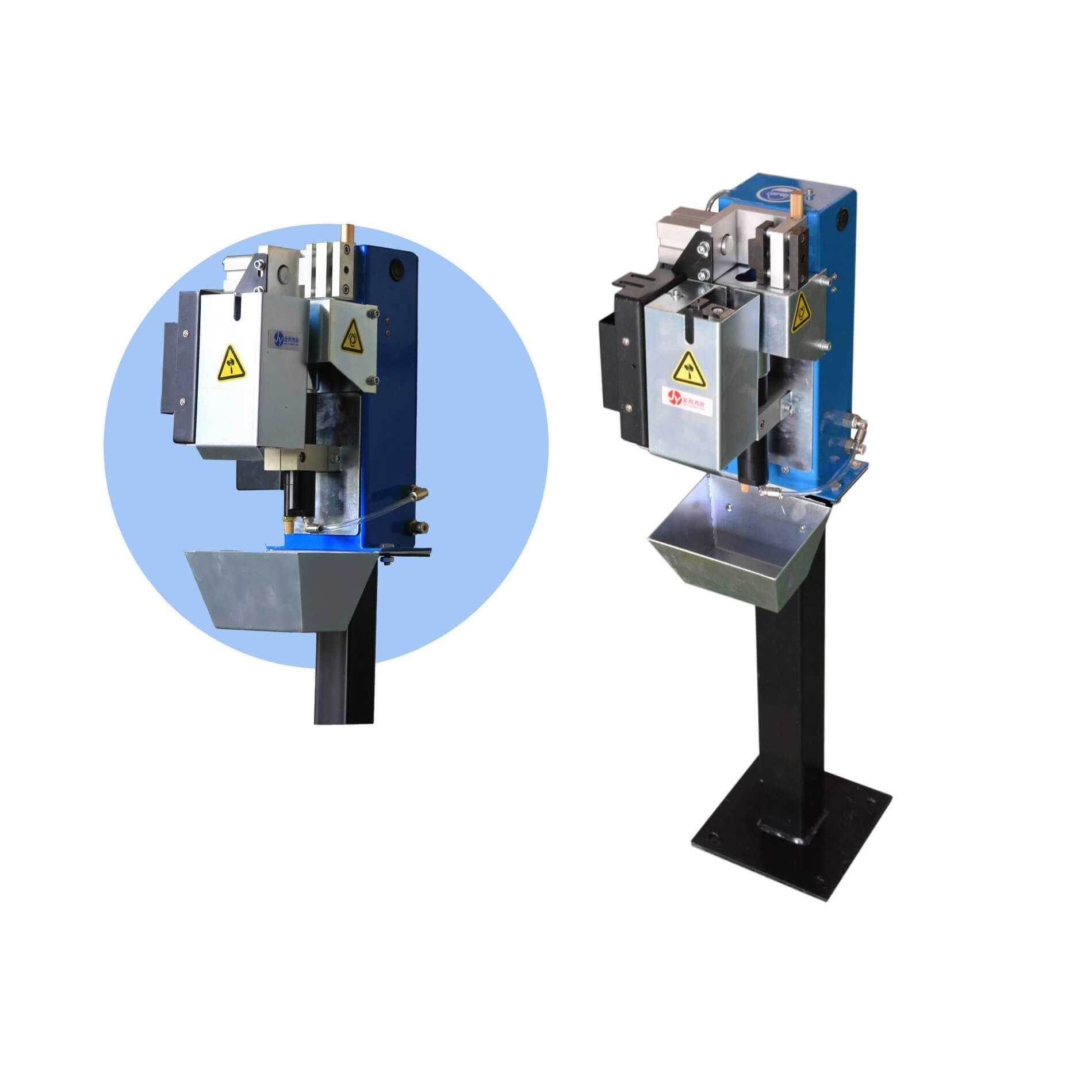 Robot Torch cleaning station
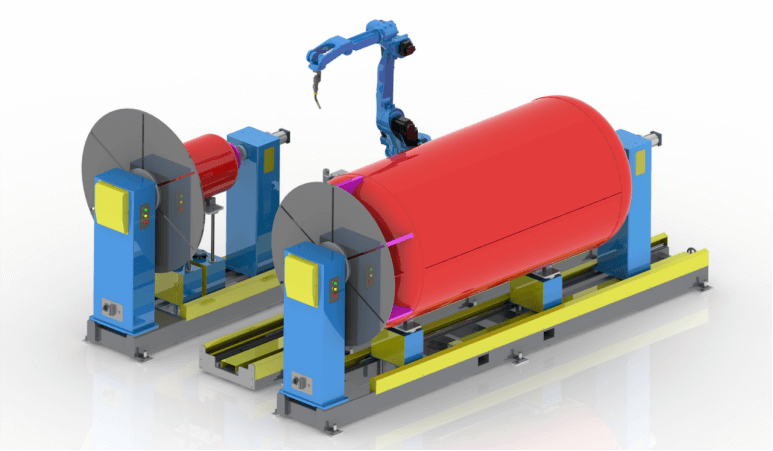 Welding Robot Workstations & Automation Solutions
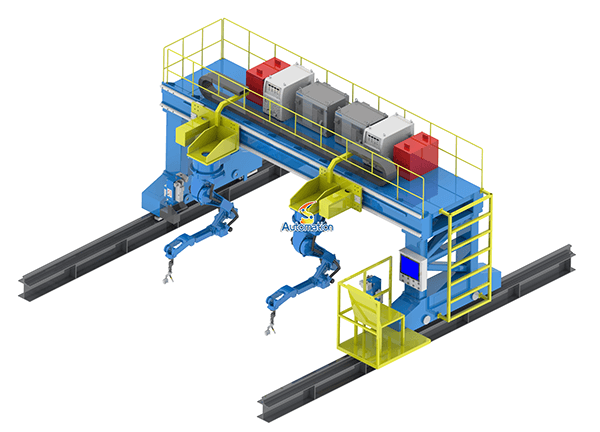 Robot Gantry System
Every robotic welding cell we quote eventually meets the same question, usually from someone who was not in the room when the project started: “When does it pay for itself?” The engineer who asked for the cell can describe the positioner, the track and the robot in detail. The finance manager wants one number — the payback period — and a calculation they can defend in a meeting.
Most ROI sheets we see fail that test, and not because the arithmetic is wrong. They compare the wrong numbers. The investment side lists the equipment quote and stops there. The returns side lists the welder’s salary and stops there. A cell that looks like a three-year payback on that sheet is often an eighteen-month payback in reality — or, just as often, a five-year payback that nobody noticed until the second year, when the costs that were left out started arriving as invoices.
This article walks through how to calculate the ROI of a robotic welding cell properly: what counts as the investment, what counts as the return, a worked example you can run with your own numbers, and the four factors that move the payback more than anything else.
Payback period is the number that matters
For most fabrication shops, the useful ROI figure is not a percentage. It is the payback period — how many months until the cell has paid for itself — because that is the number a finance manager can compare against the life of the equipment and the company’s other investments. The formula is simple:
Payback (months) = total investment ÷ net monthly saving
Everything else in this article is about getting the two numbers in that formula right. “Total investment” means everything the cell costs before it welds its first production part, not just the equipment quote. “Net monthly saving” means the real monthly difference between running the cell and running the manual station it replaces — after the new running costs of the cell itself are subtracted.
Two mistakes are common before the calculation even starts. The first is comparing the cell against doing nothing, when the real comparison is against the cost of the manual welding you are already doing — including the rework, the overtime and the welder you cannot hire. The second is treating the payback as a property of the equipment, when it is mostly a property of how the cell will be used. The same cell can pay back in fourteen months in a two-shift shop running one part family, and in four years in a single-shift shop that changes parts every hour. The hardware is identical. The utilisation is not.
1. Count the whole investment, not the quote
An equipment quote covers the robot, the positioner, the track and the welding package. That is usually only part of what the cell costs. The rest arrives in six buckets, and leaving any of them out is how a payback calculation goes wrong.
Equipment. The robot, the welding positioner, the linear track or gantry, the welding power source and torch, the torch cleaning station, the safety fencing and the control cabinet. If the positioner and the track are configured as external axes of the robot — which is how they should be for coordinated welding — confirm that the robot’s external-axis option packages are included in the price, not discovered later as an extra. Our guide to synchronising a positioner with ABB, FANUC, KUKA and Yaskawa robots explains why that configuration matters.
Integration and engineering. Someone has to design the cell layout, write the robot programs, define the PLC sequence, wire the safety system and test the whole thing. That engineering is real work with a real price, whether it is done by the equipment supplier, a local integrator or your own team. It is also the bucket most often underestimated, because it is quoted as hours and the hours grow every time a requirement surfaces late — a fixture that was never specified, a part-present sensor nobody ordered, a handshake signal that was never defined. Agreeing the interface between the robot, the PLC and the external axes before ordering is the cheapest way to keep this bucket under control, as we covered in our article on PLC communication problems between robot and external axis.
Installation and foundation. Freight to your country, rigging, the concrete foundation or steel base the track bolts to, and the installation crew’s time on site. A long robot track needs a foundation designed for it — our foundation design guidelines explain what that involves — and foundation work is priced by local contractors, not by the equipment supplier. If the cell is going into an existing building, check the floor loading and the ceiling height before the equipment ships. Finding out on delivery day that the forklift cannot get the positioner through the door is an expensive lesson.
Fixtures and tooling. The cell needs fixtures to hold each part family in position while the robot welds it. Simple parts need simple fixtures; complex weldments need fixtures with clamps, locators and sometimes their own powered rotation. Fixture cost scales with part variety, not with cell size, which is why a shop running twenty part numbers needs a bigger fixture budget than a shop running three — even if both buy the same cell.
Training and programming. Your operators and maintenance team need training on the robot, the positioner and the cell sequence, and your first programs need to be written and proven. Budget for the training days and for the first month of slower production while the team learns the cell. The learning curve is not a failure of the equipment. It is a normal cost, and it belongs in the calculation.
First-year running costs. Spare parts, torch consumables, wire, gas, lubrication for the track and positioner, and the maintenance time to keep the cell in calibration. These are small next to the equipment price, but they are the costs that arrive every month, so they belong on the returns side of the formula as a deduction from the saving — which is where most ROI sheets forget them entirely.
2. Count all four returns, not just labour
The returns side is where most calculations understate the case for automation, because they count only the welder’s wages. A welding cell returns money in four ways, and labour is only the first.
Direct labour. The hours of manual welding the cell replaces, at your fully loaded labour cost — wages plus overtime, benefits, recruitment and the cost of the welder you cannot hire. In many markets the honest comparison is not the welder’s hourly rate. It is the overtime rate you are already paying, or the output you are losing because a welding station stands empty. If your shop is turning work away for lack of welders, the labour saving is not a cost reduction. It is recovered revenue, and it is usually the largest number in the calculation.
Throughput — arc-on time. A manual welder’s arc is on for a surprisingly small share of the shift. The rest goes to positioning the part, changing wire, grinding, waiting for the next part and taking breaks. A robot on a track with a two-station positioner keeps welding while the operator loads the other side, so the arc-on time per shift can roughly double. That is not a marginal gain. It means the same shift produces roughly twice the welded parts, or the same output in half the shifts. When you calculate throughput, measure your current arc-on time honestly for a week before you buy. The gap between manual arc-on time and robotic arc-on time is usually the single biggest return in the whole calculation — and the one most buyers never measure.
Rework and scrap. A robot repeats the same weld, at the same speed and angle, on every part. A manual welder’s quality varies with fatigue, shift and experience. If your current rework rate is five per cent of welded parts and the cell brings it to one per cent, that four per cent is pure return: the labour, material and time that used to go into grinding out bad welds and re-welding them. It also includes the parts that were scrapped entirely, and the late deliveries that cost you the next order. Shops that track rework properly are usually surprised by how much it costs. Shops that don’t track it are usually surprised later, when the cell’s quality improvement shows up as money they didn’t know they were losing.
Quality, consistency and safety. The hardest return to put a number on, and the one that matters most to your customers. Consistent weld quality means fewer customer complaints, fewer warranty claims and a stronger position when a customer audits your process. A positioner that presents the weld in the flat position every time — instead of a welder welding overhead because the part cannot be turned — produces better penetration and fewer defects, as we explained in our article on reducing welding distortion with a positioner. And moving the welder away from the arc, the fume and the awkward posture is a safety and retention benefit that shows up in fewer injuries and less staff turnover, even if it never appears on a spreadsheet.
3. A worked example with your own numbers
The calculation itself takes ten minutes once you have the inputs. To show the method without pretending to quote your project, work in units: call the total investment 100 units, then express the monthly saving in the same units.
Take a typical two-shift fabrication shop. The cell replaces one manual welding station per shift, lifts arc-on time enough to raise output per shift by roughly half, and cuts rework from an estimated five per cent of parts to around one per cent. After subtracting the cell’s own running costs — consumables, maintenance and power — the net monthly saving works out at about 4 units against the 100-unit investment. Payback is 100 ÷ 4, or 25 months.
Now change one assumption. Run the same cell three shifts instead of two, and the monthly saving rises to about 6 units. Payback falls to 17 months. Or keep two shifts but hold the rework saving out of the calculation entirely — the saving drops to about 3 units and payback stretches to 33 months. That is why the inputs matter more than the formula. The arithmetic is trivial. Knowing your arc-on time, your rework rate and your real labour cost is the actual work.
| Net monthly saving (units) | Payback on a 100-unit investment |
|---|---|
| 2 units | 50 months |
| 3 units | 33 months |
| 4 units | 25 months |
| 5 units | 20 months |
| 6 units | 17 months |
Use the table as a sense check, not a promise. If your calculation lands at two units a month, the cell is a hard sell and you should say so before ordering — either the utilisation is too low, or a smaller cell would do the job. If it lands at five or six, the question is not whether to automate but how soon the cell can be installed.
4. What moves the payback most
Four factors move the payback period more than the equipment price does. If you only check four things before ordering, check these.
Utilisation — how many hours a week the arc is actually on. A cell that welds sixteen hours a day pays back roughly twice as fast as the same cell welding eight. This is why two-station positioners matter so much to ROI: the operator loads one side while the robot welds the other, so the arc barely stops. A single-station cell that waits for the operator to unload, reload and clamp every part will never reach the arc-on time the payback calculation assumed. Before you buy, estimate your real arc-on time per shift — not the robot’s theoretical speed, but the time the arc is burning while parts are available, fixtures are ready and the operator is keeping up.
Part mix and changeover frequency. A cell running three part families in long batches is a different investment from a cell running thirty part numbers in daily changeovers. Every changeover costs programming time, fixture swaps and first-article inspection. If your mix changes often, budget for quick-change fixtures and for the programming time each new part needs, and be honest about how many changeovers a week the cell will actually do. High-mix shops still get good payback from automation — but the payback comes from flexibility and quality, not from raw throughput, and the calculation should say so.
Your current rework rate. If you are already welding at a one per cent rework rate with skilled welders, the cell will not save you much on quality. If you are at eight per cent with agency welders and overtime, the quality saving alone can justify the cell. Measure the rework rate before you buy, because it is the return most buyers either overclaim or leave out entirely.
Labour cost and availability in your country. The same cell pays back faster where welders are expensive or unavailable, and slower where manual welding is cheap and plentiful. That is not a judgement about the equipment. It is arithmetic. It is also why the payback question cannot be answered from a catalogue: the equipment price is the same worldwide, but the labour it replaces is not.
5. The costs buyers forget until month six
A few costs deserve their own warning, because they are the ones that surprise buyers after the cell is running. None of them is large on its own. Together they are the difference between a payback calculation that holds up and one that quietly slips by six months.
First, the foundation and freight. A long track needs a proper foundation, and freight and installation to your country are priced separately from the equipment. Confirm both before ordering, and confirm who is responsible for the foundation work. Second, spare parts: keep the wear items on the shelf — torch consumables, a spare torch neck, positioner drive belts or gear spares as recommended — because a cell waiting a week for a part is a cell earning nothing. Third, programming new parts. The first programs are written during commissioning, but every new part family after that needs programming time, and someone on your team needs the skill to do it. Fourth, calibration. A track and positioner that were calibrated at installation drift with use, temperature and foundation settlement, and re-calibration is maintenance, not a defect — our article on why external axis calibration fails explains what to watch for. And finally, the hidden cost of the wrong equipment in the first place: an undersized positioner or a track that is a metre too short cannot be fixed with a software update. Our article on the hidden costs of inadequate positioning equipment covers that mistake in detail, and it is the most expensive one on this list.
An ROI checklist for your cell
Work through this list before you ask for a quotation. Every item you can answer makes the quote — and the payback calculation — more accurate. If you cannot answer an item, that is the item to measure first.
- Total investment, not just the equipment quote. Equipment, integration, installation, foundation, freight, fixtures, training and first-year spares — all in one number.
- Current arc-on time, measured for a week. Hours per shift the arc is actually burning, not the hours the station is staffed.
- Current rework and scrap rate. As a percentage of welded parts, with the labour and material cost of rework included.
- Fully loaded labour cost. Wages, overtime, benefits and recruitment — per welding station, per shift.
- Shifts and working days. How many hours a week the cell will actually run, including realistic downtime.
- Part mix and batch sizes. How many part families, how often changeovers happen, and how long a changeover takes.
- Workpiece details. Size, weight and shape of the largest and the most common parts — this sizes the positioner and the track, and our guides to choosing a positioner and calculating track payload explain how.
- Robot brand and model. ABB, FANUC, KUKA, Yaskawa or another — the external-axis options and the integration effort depend on it.
- Required accuracy. Repeat positioning accuracy the welds actually need, not the tightest number on a datasheet.
- Operating environment. Welding fume, dust, temperature and floor conditions — they affect the track, the positioner and the maintenance budget.
- Installation country and site. Freight, foundation work, floor loading and access all depend on where the cell is going.
- Payback target, agreed in advance. What payback period would make this project a yes — twelve months, twenty-four, thirty-six — decided before the quote arrives, not after.
FAQ
What is a good payback period for a robotic welding cell?
There is no universal number, because payback depends on your shifts, labour cost and rework rate more than on the equipment. As a rough guide, a two-shift shop with steady part volumes commonly sees payback in the range of eighteen to thirty months. A single-shift shop with frequent changeovers will take longer, and a three-shift shop shorter. If your calculation shows more than four years, check the inputs before ordering — the utilisation is probably too low, or a smaller cell would do the job.
Should I include the robot in the ROI calculation?
Yes, if you are buying the robot as part of the cell. The payback formula needs the total investment — robot, positioner, track, welding package, integration, installation and fixtures — against the total saving. Leaving the robot out because “we already own it” is only valid if the robot genuinely has no other use and no resale value. Otherwise it is part of the investment.
How do I measure arc-on time in my shop?
For one week, log the hours the arc is actually burning per welding station — from the welding power source’s arc-time counter if it has one, or by simple observation sampling through the shift. Compare that with the hours the station is staffed. The gap between the two is the time spent positioning, grinding, waiting and changing parts, and it is the biggest single opportunity a robot cell addresses.
Does a welding positioner really improve ROI, or is it an extra cost?
It improves ROI in most cells, because it raises arc-on time and weld quality at the same time. A two-station positioner lets the operator load one side while the robot welds the other, so the arc barely stops — and presenting the weld in the flat position improves penetration and reduces rework. The positioner is an extra line on the investment side, but it usually pays for itself through the utilisation and quality gains on the returns side. Our torque calculation guide (welding positioner torque calculation explained) helps size one correctly, because an undersized positioner is the version of this purchase that does not pay back.
What is the biggest mistake in welding automation ROI calculations?
Counting only the equipment quote on the investment side and only the welder’s wages on the returns side. The first mistake understates the cost by leaving out integration, installation, fixtures and training. The second understates the return by leaving out throughput, rework and quality. Both mistakes usually happen in the same spreadsheet, and they partly cancel out — which is why the result can look plausible while being wrong in both directions.
Can I calculate ROI before choosing the equipment?
Yes — and you should. The inputs the calculation needs are about your shop, not about a catalogue: arc-on time, rework rate, labour cost, shifts and part mix. With those numbers you can set a budget and a payback target first, and then ask suppliers to meet them. That is also the fastest way to get a useful quotation: a supplier who knows your payback target and your part details can propose the right size of cell, instead of quoting the largest one.
What to send us for a tailored ROI estimate
The fastest way to a payback number you can defend is to send us the inputs, not just a request for a price. Tell us your workpiece sizes and weights, the robot brand and model if you already have one, the travel and payload the track needs, the accuracy your welds require, the operating environment, and the country the cell will be installed in. Add your shifts, your part mix, and — if you have them — your current arc-on time and rework rate. With those details we can propose the right positioner and track size, tell you what the integration involves, and work through the payback calculation with you before anyone talks about ordering.
You can reach our engineering team through the contact page, or browse our robot linear track range, our welding positioner range, and our gantry system range to see the equipment we build. If you are still sizing the hardware, our guides to choosing a welding positioner and calculating track payload cover that side, and our article on adding a robot track to an existing welding cell covers the retrofit case.
By WRS Robotics Engineering Team