
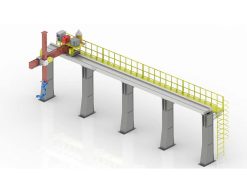
 Robot Linear track
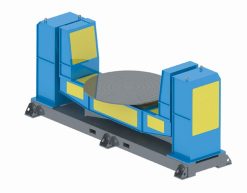 Robot welding Positioner
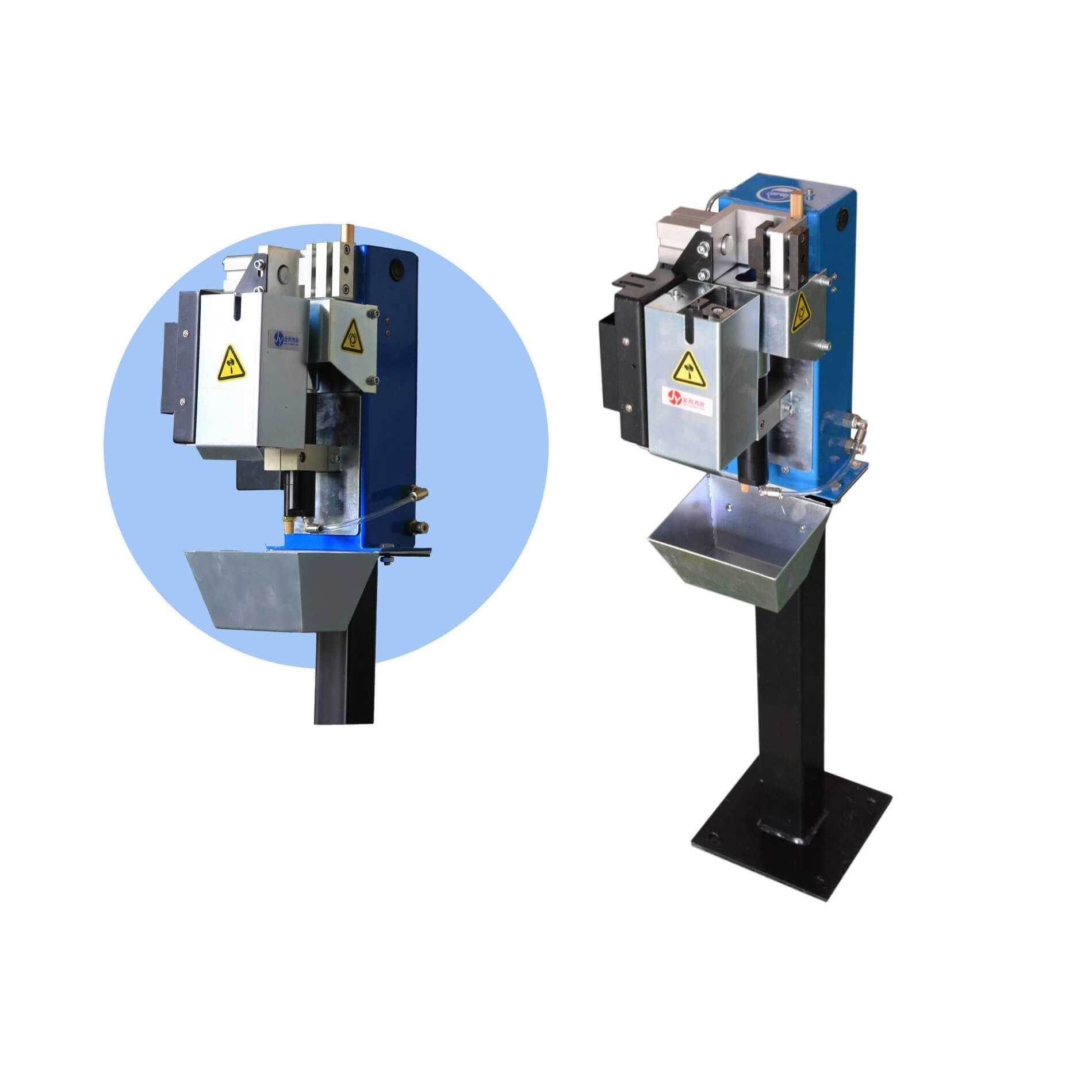 Robot Torch cleaning station
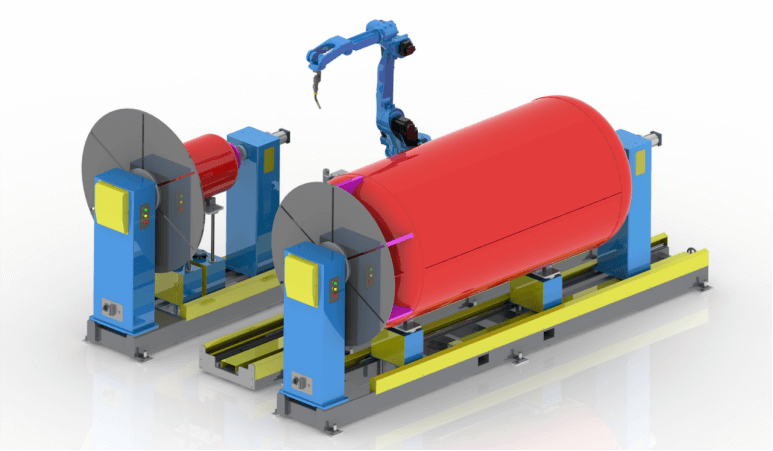 Welding Robot Workstations & Automation Solutions
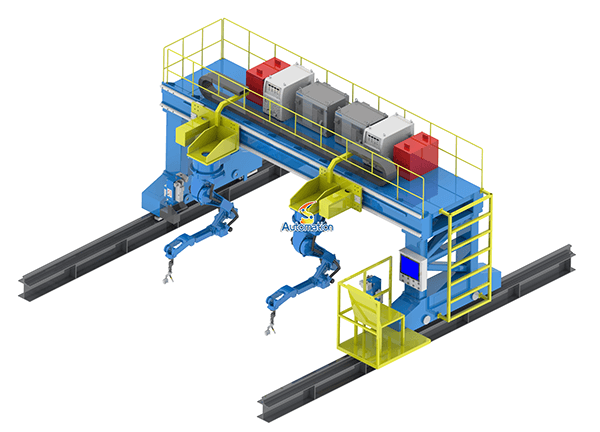 Robot Gantry System
The track was fine. The floor was not.
A welding integrator called us about a problem with a 12-metre robot track we had supplied two years earlier. The robot had started missing weld positions at the far end of the track — not by much, a millimetre or two — but enough that the welds were drifting off the seam. The integrator was sure something had gone wrong with the track. The rack, the servo, the calibration — they had checked everything they could think of.
We went to site and put a precision level on the rail. At one end it was fine. In the middle it had sunk by almost 3 mm. The track itself was in perfect condition. The concrete slab underneath it had settled, and the track had followed it down.
That is the thing about foundations: nobody thinks about them until they fail, and by then the fix is expensive. A robot track is a precision machine, but it sits on something that is usually poured by a general building contractor who has never heard of a 7th axis. If the foundation is wrong, no amount of precision in the track will save the cell. The accuracy you pay for in the rail, the rack and the servo is only as good as the concrete and steel underneath it.
This article covers foundation design the way we approach it on real projects — what the ground has to carry, how thick the slab should be, when to use steel instead of concrete, how levelling and grouting actually work, and the mistakes we see most often. It is written for integrators who have to sign off on a foundation design and live with it for the next ten years.
What a foundation actually has to do
It is tempting to think of a foundation as just a flat surface to bolt the track to. It does more than that, and each job matters.
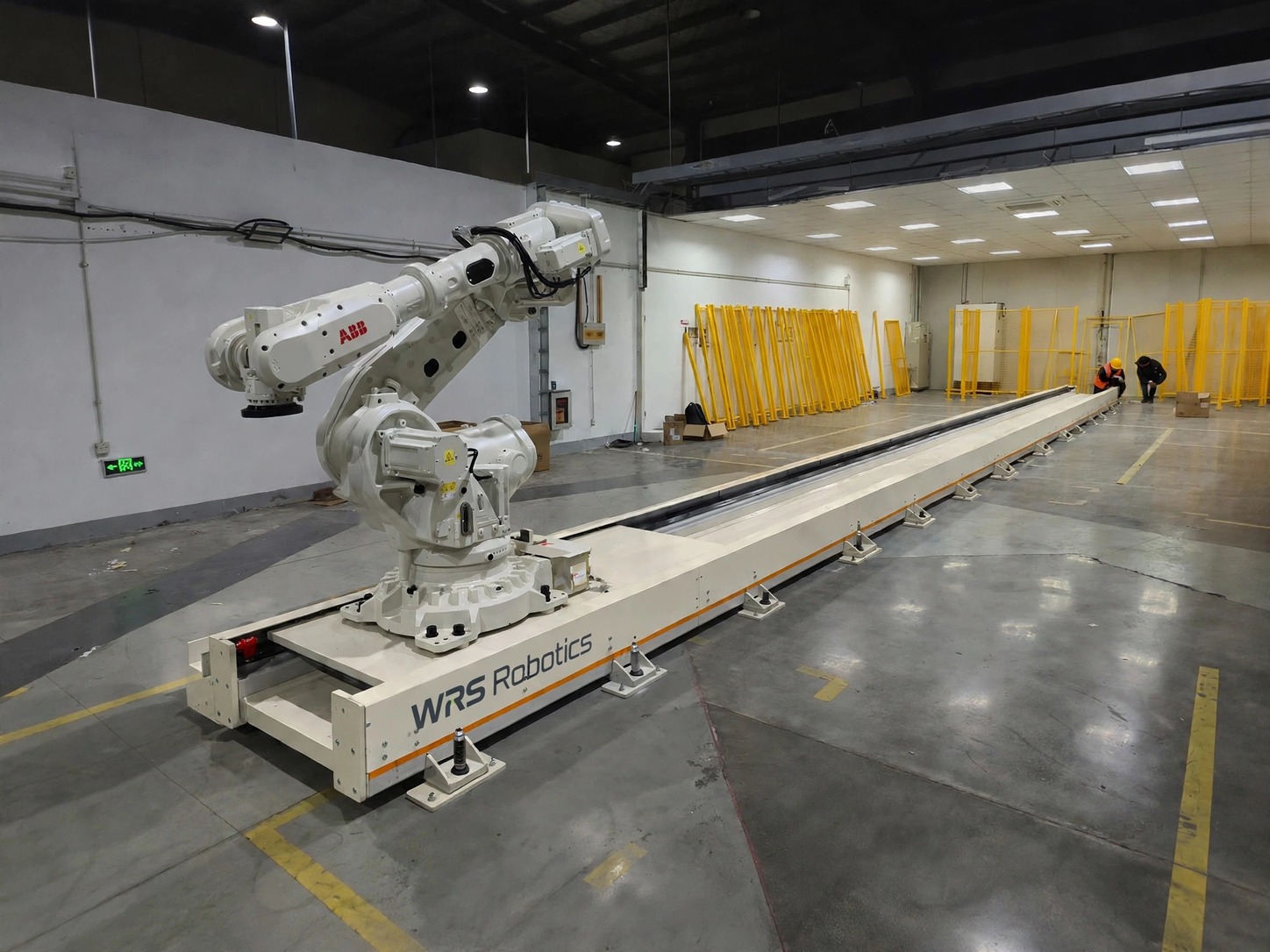
First, it carries the load. A robot track is not light. A 12-metre track with a 1,500 kg robot on it can put several tonnes of static load on the floor, and the dynamic forces are higher again every time the carriage accelerates and stops. The foundation spreads that load into the ground without sinking or cracking.
Second, it holds the track straight. A linear track is aligned to a fraction of a millimetre over its full length. The foundation has to hold that alignment — not just on the day the track is installed, but after a year of vibration, temperature changes and forklifts driving past. A foundation that moves by a millimetre is a foundation that has failed, even if it looks perfectly fine from the outside.
Third, it isolates the track from the building. Factory floors move. Trucks drive in, heavy presses run nearby, the temperature swings 20 degrees between winter and summer. A good foundation design keeps the track’s alignment independent of all of that, or at least limits how much of it reaches the rail.
Fourth, it gives you something to adjust. No concrete slab is perfectly flat. The foundation has to be built so the track can be levelled precisely on top of it — with levelling screws, shims or grout — and then locked in place so it stays there.
If a foundation design does not do all four of these things, it is not a robot track foundation. It is a floor with a track on it. There is a difference, and it shows up about six months after installation.
Start with the loads, not the concrete
Every foundation design starts with the same question: what is this track actually going to carry? The answer is not just the robot’s weight. It is the total moving mass — robot, riser, dress pack, control cabinet and welding equipment if they ride on the carriage — plus the track’s own weight, plus the dynamic forces from acceleration and braking, plus the moment loads from a tall robot at full reach.
We worked through the full payload calculation in our guide to calculating the correct payload for a robot linear track. The numbers from that calculation are the starting point for the foundation. A track carrying 1,500 kg of moving mass needs a very different foundation from one carrying 300 kg, and the difference is not just thickness — it is the whole design: slab depth, reinforcement, anchor bolt size, and whether the foundation is a simple thickened slab or a separate, isolated plinth.
There are two kinds of load the foundation sees. The static load is the weight of the track, the robot and everything on it, spread along the length of the rail. The dynamic load is what happens in motion — the carriage accelerating, the robot swinging its arm and braking, the whole assembly stopping at the end of a stroke. Dynamic loads are what crack a marginal slab and loosen anchor bolts over time, and they are the reason a foundation designed for the static weight alone is under-designed.
The other number that matters is the accuracy requirement. A track specified to ±0.1 mm repeatability needs a foundation that holds the rail straight to a fraction of that over its full length. That is a far tighter requirement than a normal industrial floor, which is typically built to a few millimetres over several metres. If the foundation specification just says “level concrete floor”, the track will be installed on something that was never built to the tolerance the track needs.
Before any concrete is poured, get these numbers on paper: total static load, peak dynamic load, track length, required rail straightness, and the accuracy the cell has to hold. Send them to the track supplier as well as to the civil engineer. The supplier knows what the track needs; the civil engineer knows what the ground can do. The foundation design lives where those two sets of knowledge meet.
Concrete slab foundations: the standard approach
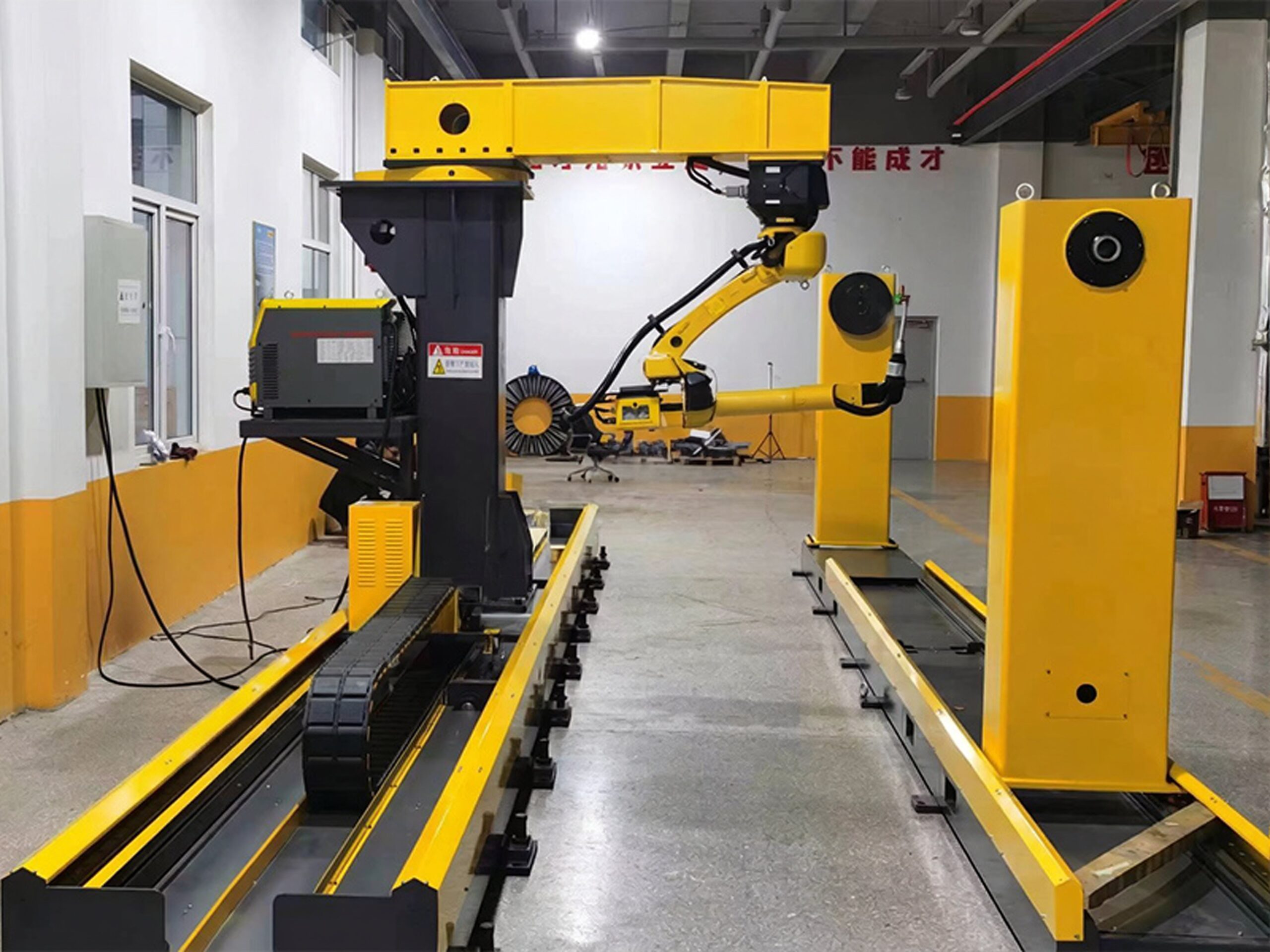
For most installations, the track sits on a reinforced concrete slab — either a thickened section of the factory floor or a dedicated foundation strip poured specifically for the track. Done well, this is a solid, economical solution. Done badly, it is the most common source of track accuracy problems we see.
Slab thickness and reinforcement. There is no single number that works everywhere, because it depends on the load, the track length, and what is under the floor. As a rule of thumb, a heavy-duty robot track foundation is rarely less than 200 mm thick, and 300 mm or more is common for long tracks with heavy robots. The slab should be reinforced with steel mesh or rebar, sized by a structural engineer for the actual loads — not by the rule of thumb the building contractor uses for a warehouse floor. A warehouse floor is designed for forklifts. A robot track foundation is designed for a precision machine. They are not the same specification.
The sub-base matters as much as the slab. Concrete is only as good as what it sits on. A slab poured on soft, poorly compacted fill will settle no matter how thick it is. The ground under the foundation should be compacted in layers, and on poor soil a layer of compacted crushed stone or lean concrete should go down first. On one project we visited, the track had settled 5 mm in a year — not because the slab was too thin, but because it had been poured over uncompacted backfill from an old excavation. The slab was fine. The ground under it was not. That is a ground investigation problem, not a concrete problem, and it has to be caught before pouring, not after.
Separate the track foundation from the general floor. Where possible, the track foundation should be a separate pour from the surrounding factory floor, with an isolation joint between them. That way, when a forklift crosses the floor or a heavy press runs in the next bay, the vibration and the load do not travel straight into the track foundation. It also means the track foundation can be built to a different — tighter — specification than the general floor, without paying to build the whole factory floor to precision tolerances. This is one of the cheapest decisions in the whole project, and one of the most often skipped.
Curing time is not optional. Concrete gains strength over weeks, not days. A track bolted down on a slab that is still curing will move as the concrete shrinks and hardens. We recommend waiting at least 28 days after pouring before installing the track, and longer in cold or damp conditions. We know that schedule pressure makes this unpopular — the robot is waiting, the cell has a deadline — but installing a precision track on green concrete is how you end up re-levelling it three months later. If the schedule really cannot wait, the alternative is a steel foundation, which has no curing time at all.
Flatness: the number nobody checks. The top surface of the slab does not need to be perfectly flat — the track is levelled on top of it with screws and grout. But it does need to be flat enough that the levelling range is not used up just getting to level, and it needs to be free of high spots that push the track up in one place. A slab finished to normal industrial floor tolerance (a few millimetres over 3 metres) is usually workable. What is not workable is a slab with a hump in the middle or a dip at one end, because the track will either bridge over the dip — and flex under load — or sit on the hump and rock. Check the slab with a straight edge and a level before the track arrives. It is far cheaper to grind a high spot now than to shim a track later.
Steel foundations: when concrete is not the answer
Sometimes concrete is the wrong choice. On a mezzanine, on an existing floor that cannot be cut, in a rented building, or where the schedule cannot absorb a 28-day cure, a steel foundation is often the better answer.
A steel foundation is usually a welded frame of structural steel — I-beams or box sections — bolted to the existing floor and machined or shimmed flat on top. The track bolts to the steel frame, and the frame carries the load down to the floor through its feet. The advantages are real: no curing time, no wet trades, the frame can be built and machined in the workshop and installed in days, and if the cell ever moves, the whole foundation can move with it.
The catch is stiffness. Steel is strong, but a steel frame has to be designed to be stiff enough that it does not flex under the moving load. A frame that is strong enough to carry the weight but not stiff enough to hold alignment will bend by a fraction of a millimetre every time the carriage passes — and a track that flexes under load loses accuracy in exactly the way a settling slab does. The frame needs proper bracing, enough cross members, and feet positioned so the load path is short and direct. This is a job for a structural engineer who understands machine foundations, not just a steel fabricator working from a sketch.
Steel foundations also need protection. In a welding environment, spatter and grinding dust get everywhere, and bare steel rusts. Paint or galvanise the frame, and design it so spatter does not accumulate in the levelling screws and anchor bolts. And remember that steel moves with temperature more than concrete does. In a factory with big day-night temperature swings, a long steel foundation will grow and shrink by millimetres over its length. That does not matter much for a 3-metre track. It matters a lot for a 14-metre one.
The choice between concrete and steel is not about which is better in general. It is about which fits the building, the schedule, the load, and the accuracy requirement of this particular project. Both work well when designed properly. Both fail when they are treated as an afterthought.
Levelling, grouting and anchor bolts: where accuracy is actually made
Here is a truth that surprises people who have never installed a track: the foundation does not make the track accurate. The levelling does. The foundation’s job is to stay still. The installer’s job is to make the rail straight on top of it.
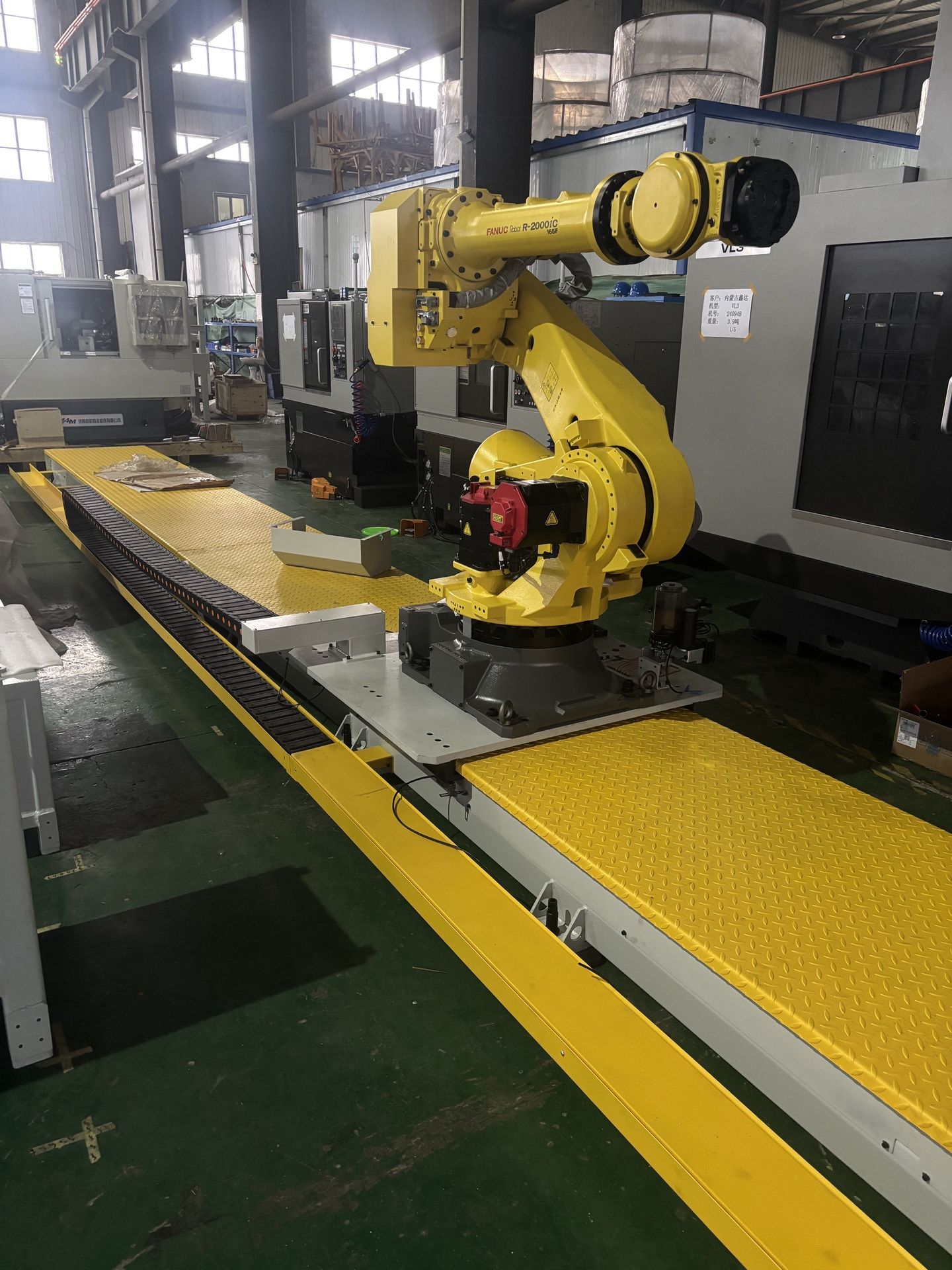
Levelling screws and shims. The track is set on levelling screws or jacking bolts built into its base, and the installer adjusts them one by one, working along the length of the track with a precision level or a laser tracker, until the rail is straight and level to the required tolerance. Then the gaps under the track are filled, and the anchor bolts are tightened. This is slow, careful work, and it is where the accuracy of the whole cell is decided. A rushed levelling job on a perfect foundation will still produce a bad track. We covered the levelling and alignment mistakes that cost accuracy in our guide to 7 common robot linear track installation mistakes — over-tightening anchor bolts before the grout has set, and levelling against a datum that itself is not level, are two of the most expensive.
Grout: the layer that locks it in. Once the track is level, the gap between the track base and the foundation is filled with grout — usually a non-shrink, high-strength cementitious grout, sometimes epoxy grout for the most demanding applications. The grout does two things: it transfers the load evenly from the track into the foundation, so the track is supported along its whole length rather than sitting on a few screws, and it locks the levelled position in place. Non-shrink matters: ordinary mortar shrinks as it cures, leaving a gap under the track and putting the load back onto the levelling screws. Epoxy grout is stronger and shrinks even less, but it costs more and is less forgiving to work with. Whichever is used, the grout must be allowed to cure fully before the anchor bolts are finally torqued — tightening early pulls the track out of level and puts stress into the rail.
Anchor bolts. The bolts that hold the track to the foundation are sized for the loads and the foundation type. Cast-in bolts, set into the concrete before it is poured, are the strongest option but demand that the bolt positions are exactly right before the pour — there is no moving them afterwards. Post-installed chemical anchors or expansion bolts are more forgiving and are the usual choice on existing floors, but they need the right embedment depth and the right concrete strength to hold. Either way, the torque matters: over-tightening an anchor bolt can distort the rail, as we described in the installation mistakes article, and under-tightening lets the track creep under vibration. Torque to the specification, with a torque wrench, and re-check after the first weeks of running.
Leave access for re-levelling. Foundations settle. Buildings move. A track that was perfect on installation day may need re-levelling after a year. Design the foundation and the cell layout so the levelling screws and anchor bolts can be reached without dismantling the cell. If the track is buried under cable trays and guarding with no access to the base, the first re-levelling job becomes a major shutdown instead of a morning’s work.
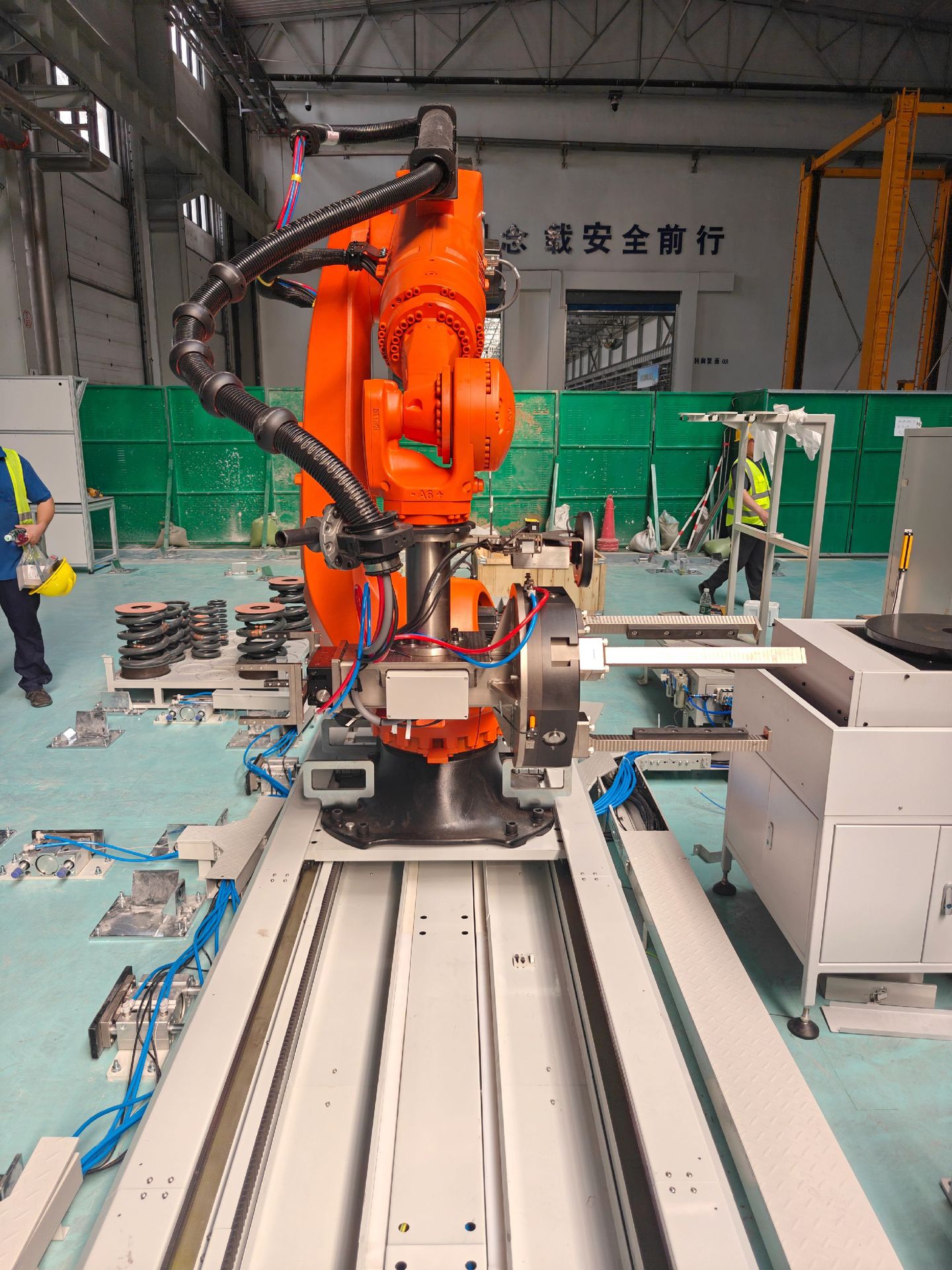
The foundation mistakes we see most often
1. Treating the track foundation like a warehouse floor. A general industrial floor is built to a tolerance of a few millimetres. A robot track needs its foundation to hold alignment to a fraction of a millimetre over many metres. If the foundation specification does not say that explicitly — slab thickness, reinforcement, flatness, and curing time — the contractor will build a warehouse floor, and the track will be installed on it.
2. Pouring over bad ground. The slab is only as stable as the soil underneath it. Uncompacted fill, old excavations, and soft spots will settle, and the track will settle with them. A ground investigation and proper compaction are not optional extras — they are part of the foundation.
3. Skipping the isolation joint. When the track foundation is poured as part of the general floor, every forklift, press and truck in the building loads the track foundation. An isolation joint is cheap. A re-levelled track is not.
4. Installing on green concrete. Bolting a precision track to a slab that is still curing and shrinking is asking for a re-levelling job within months. Wait the full curing time, or use a steel foundation if the schedule does not allow it.
5. Grouting with the wrong material — or skipping grout altogether. A track sitting on levelling screws with no grout under it is supported at a few points, not along its length. It will flex under load, and the screws will loosen. Non-shrink grout, properly placed and fully cured, is what turns a levelled track into a stable one.
6. Over-tightening anchor bolts before the grout cures. Tightening early distorts the rail and puts stress into the track that shows up as positioning error. Torque the anchors to specification only after the grout has reached its design strength.
7. Designing the foundation without the track supplier. The civil engineer knows concrete. The track supplier knows what the track needs. If they never talk, the foundation is designed for a load the track will never see, and the track is installed on a foundation that was never designed for it. Bring the supplier into the foundation conversation early — ideally before the slab is designed, not after it is poured.
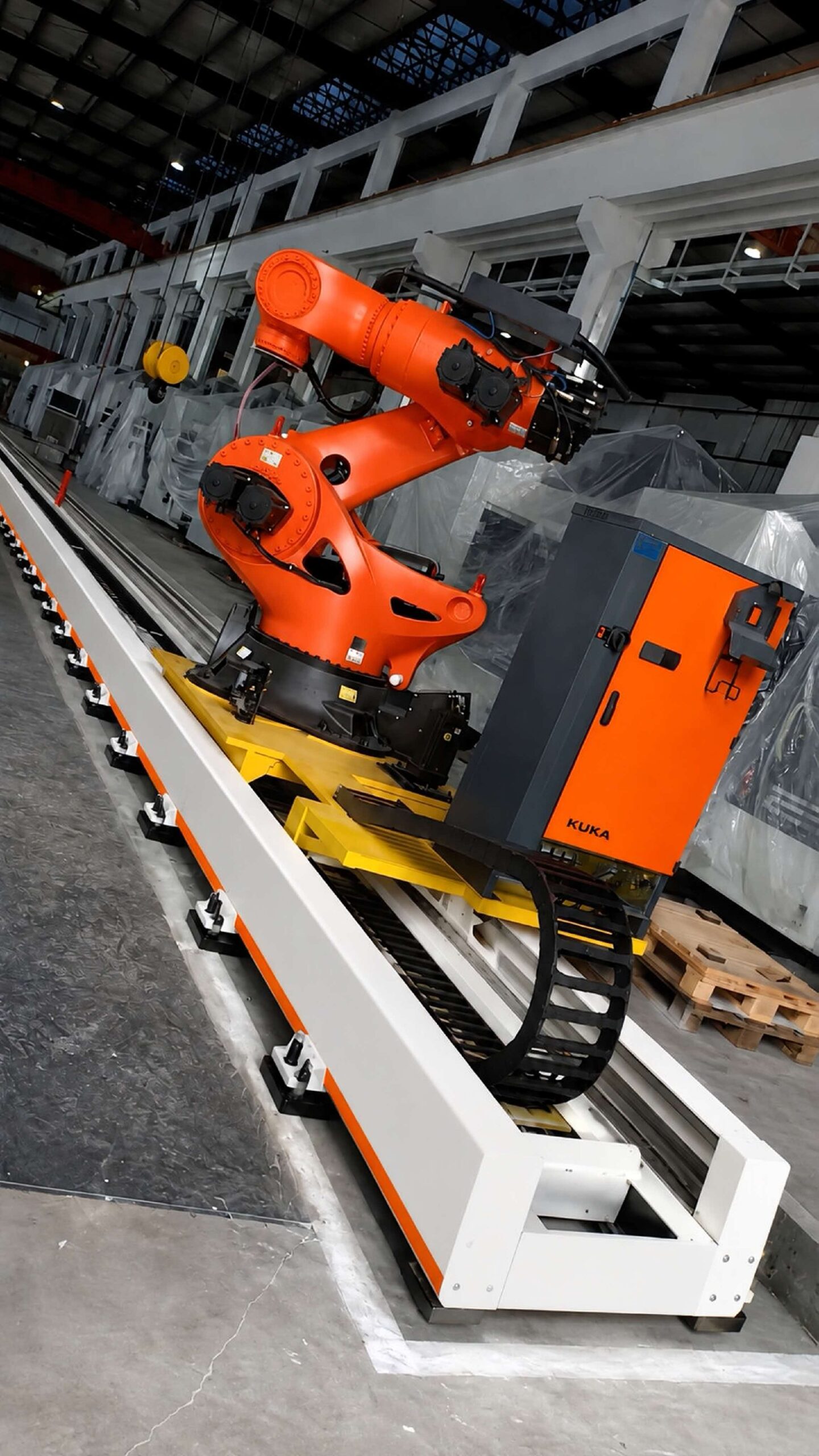
Foundation design checklist
Use this before the foundation is designed, and again before the track is installed.
- Total static load and peak dynamic load calculated (see our payload calculation guide: https://wrsrobotics.com/how-to-calculate-the-correct-payload-for-a-robot-linear-track/)
- Track length, rail straightness and repeatability requirements written into the foundation specification
- Ground conditions investigated; fill compacted in layers; soft spots treated
- Slab thickness and reinforcement sized by a structural engineer for the actual loads (typically 200–300 mm+ for heavy tracks)
- Track foundation separated from the general floor with an isolation joint
- Slab flatness checked with a straight edge and level before the track arrives
- Concrete cured at least 28 days before installation (or a steel foundation used instead)
- Anchor bolt type, size, positions and embedment depth specified — cast-in or post-installed, to suit the foundation
- Levelling screws, shims and non-shrink grout specified; epoxy grout considered for the most demanding cells
- Grout allowed to cure fully before anchor bolts are finally torqued
- Anchor bolts torqued to specification with a torque wrench, and re-checked after the first weeks of running
- Levelling screws and anchor bolts left accessible for future re-levelling
- Steel foundations (if used) designed for stiffness, not just strength, braced, and protected against corrosion and spatter
- Track supplier involved in the foundation design before the slab is poured
FAQ
How thick should a concrete slab be for a robot track?
It depends on the load, the track length, and the ground underneath. For heavy-duty tracks, a dedicated foundation is rarely less than 200 mm thick, and 300 mm or more is common for long tracks with heavy robots. The thickness and the reinforcement should be sized by a structural engineer for the actual loads, not taken from a warehouse floor specification.
Can a robot track be installed on an existing factory floor?
Often yes, if the floor is thick enough, in good condition, and the loads are within what it was designed for. The floor should be checked for thickness, cracking, and level, and the track is usually fixed with post-installed chemical anchors. If the floor is thin, cracked, or built over poor ground, a separate foundation strip or a steel frame is the safer choice.
How long should concrete cure before installing a robot track?
At least 28 days for a standard concrete foundation, and longer in cold or damp conditions. Installing on green concrete is one of the most common causes of tracks needing re-levelling within months. If the schedule cannot wait, a steel foundation avoids curing time entirely.
Do I need a separate foundation, or can the track sit on the general floor?
A separate foundation, isolated from the general floor by a joint, is the better choice wherever it is practical. It keeps forklift traffic, nearby presses, and general floor movement from reaching the track, and it lets the track foundation be built to a tighter specification than the rest of the floor.
What is the difference between concrete and steel foundations for robot tracks?
Concrete is stiff, economical, and excellent at damping vibration, but it needs curing time and cannot be moved. Steel is fast to install, has no curing time, and can be relocated, but it must be designed for stiffness as well as strength, and it expands and contracts more with temperature. The right choice depends on the building, the schedule, the load, and the track length.
What kind of grout should be used under a robot track?
A non-shrink, high-strength cementitious grout is the standard choice. It fills the gap between the track base and the foundation, supports the track along its full length, and locks the levelled position in place. Epoxy grout is stronger and shrinks even less, and is worth considering for the most demanding applications. Ordinary mortar should not be used — it shrinks as it cures and leaves the track unsupported.
Why does my robot track lose accuracy after a few months?
The track itself is rarely the cause. The usual causes are foundation settlement, grout shrinkage, anchor bolts loosening under vibration, or a slab that was still curing when the track was installed. We explain the full set of causes in our article on why your robot track loses accuracy after six months.
Should the track supplier be involved in the foundation design?
Yes. The supplier knows the loads, the accuracy requirements, the anchor bolt layout, and the levelling arrangement. The civil engineer knows the ground and the concrete. The foundation design needs both sets of knowledge, and it is far cheaper to have that conversation before the concrete is poured than to fix a foundation afterwards.
The bottom line
A robot track is a precision machine, and a precision machine needs a foundation that stays still. That means designing for the real loads — not just the robot’s weight, but the dynamic forces and the moment loads — building on properly prepared ground, separating the track foundation from the general floor, letting the concrete cure, and then levelling and grouting the track properly and locking it in with correctly torqued anchors.
None of this is complicated. All of it is easy to skip when the schedule is tight and the foundation is the least interesting part of the project. But the foundation is also the hardest part to fix once it is wrong. Get it right before the concrete is poured, and the track will hold its accuracy for years. Get it wrong, and you will be re-levelling the track, chasing phantom positioning errors, and explaining to the customer why the welds are drifting — all because of something nobody looked at on installation day.
If you are planning a robot track installation and want a second pair of eyes on the foundation design, send us the details: the robot model, the travel length, the loads, and what the floor looks like today. We will help you work out what the foundation needs to be — before the concrete is poured. You can reach us at info@wrsrobotics.com or through the contact form on our robot linear track page.