
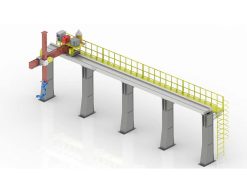
 Robot Linear track
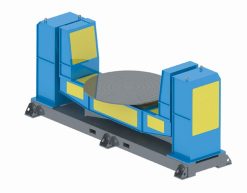 Robot welding Positioner
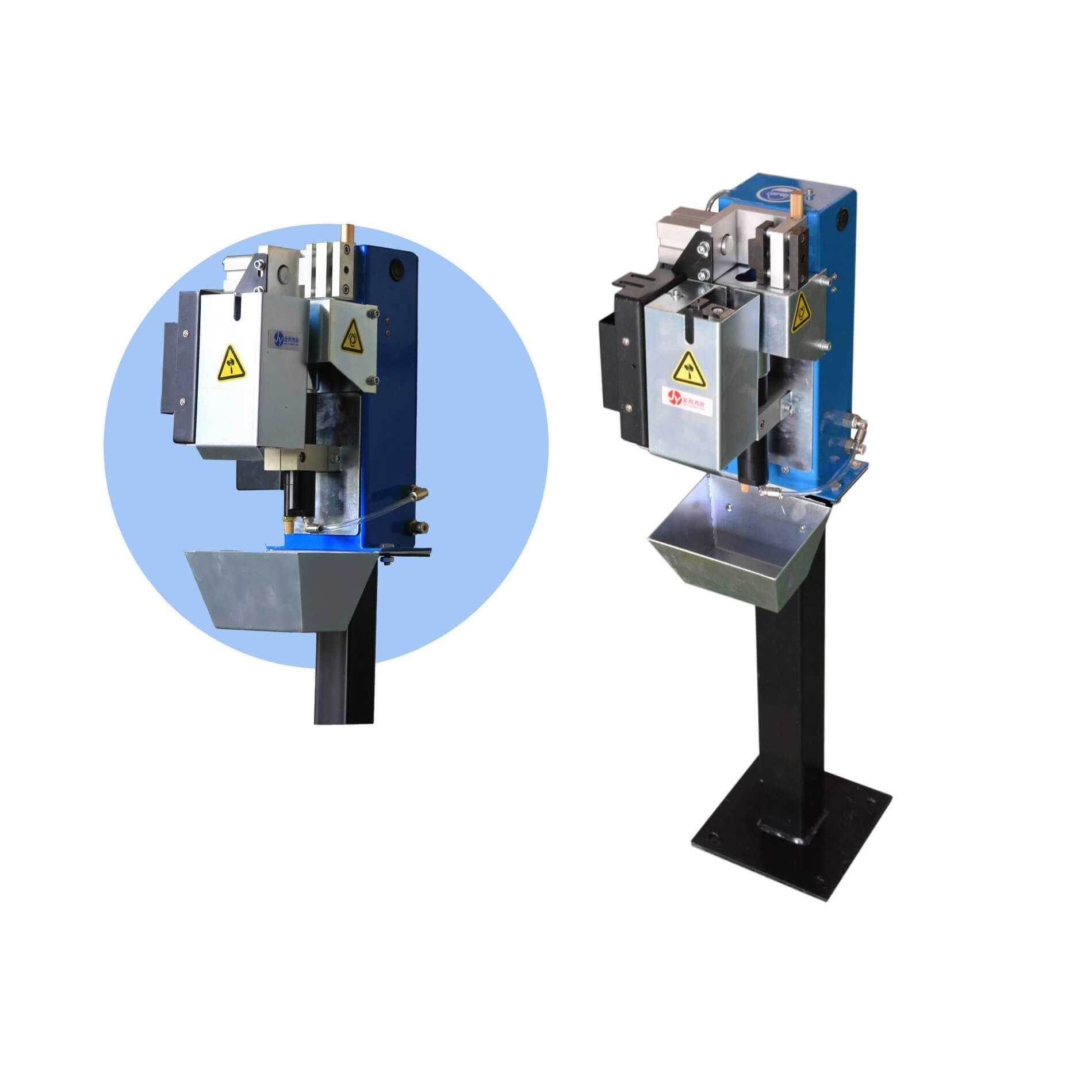 Robot Torch cleaning station
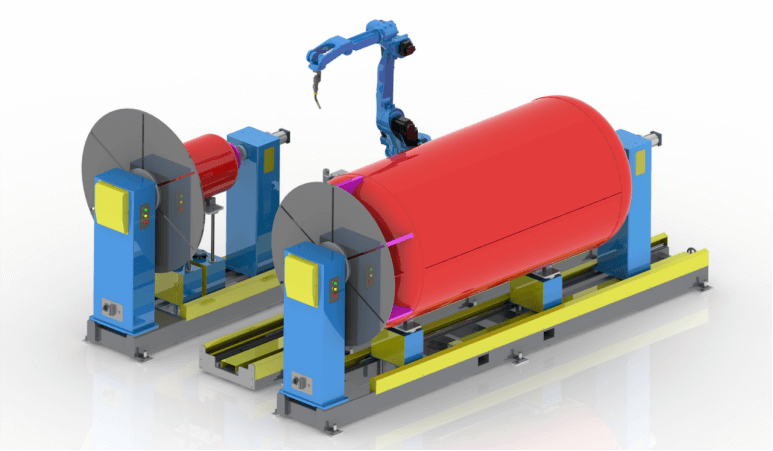 Welding Robot Workstations & Automation Solutions
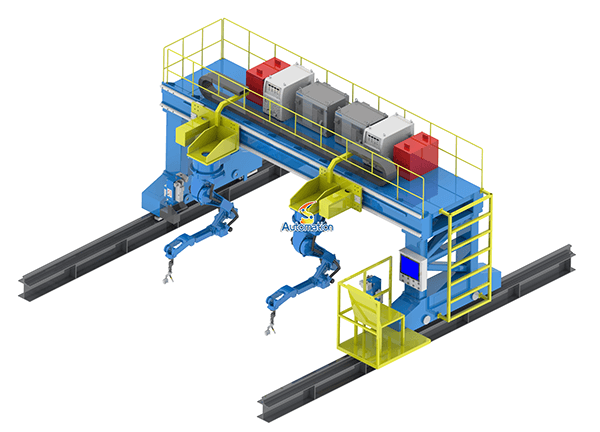 Robot Gantry System
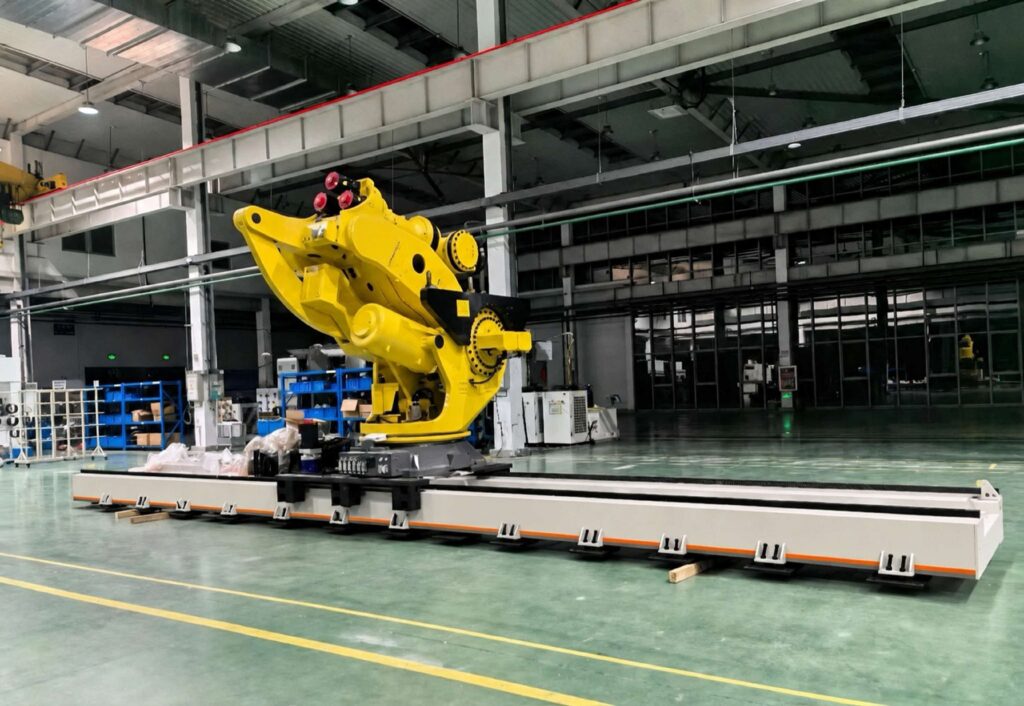
The cell that already works
Most of the welding cells we are asked to automate are not empty floors. They are working shops. There is a bench where the welder stands, a fixture that has held the same part for five years, a crane rail overhead, a drain in the floor exactly where the track needs to go, and a production schedule that does not have a free month in it. The robot is the easy part. The cell is the hard part.
We learned this on a job for a heavy-equipment integrator who wanted a robot on a track to weld frames that were too long for a fixed robot to reach. The drawings of the shop were clean and complete. The floor, measured on site, was not the same floor as the drawing. A column that was supposed to be 400 mm from the track centreline was 340 mm away. A cable trench ran diagonally under the proposed track line. The welding power source sat where the track’s service loop needed to swing. None of this was on any drawing. All of it was obvious the moment someone stood in the cell with a tape measure.
That is the difference between a new cell and an existing one. A new cell is designed around the track. An existing cell has to be negotiated with. This article is about that negotiation: what to measure before you order anything, what breaks most often when a track goes into a working cell, and the order to do the work in so production loses days, not weeks.
First, decide what the track is actually for
Before any measurement, answer one question honestly: what is the track doing that the robot cannot do alone? There are usually three answers, and they point to different tracks.
The first is reach. The workpiece is longer than the robot’s working envelope — a frame, a beam, a long spool — and the robot has to travel along it. This is the most common retrofit, and it is the one where travel length matters most. The track length is set by the workpiece, not by the catalogue.
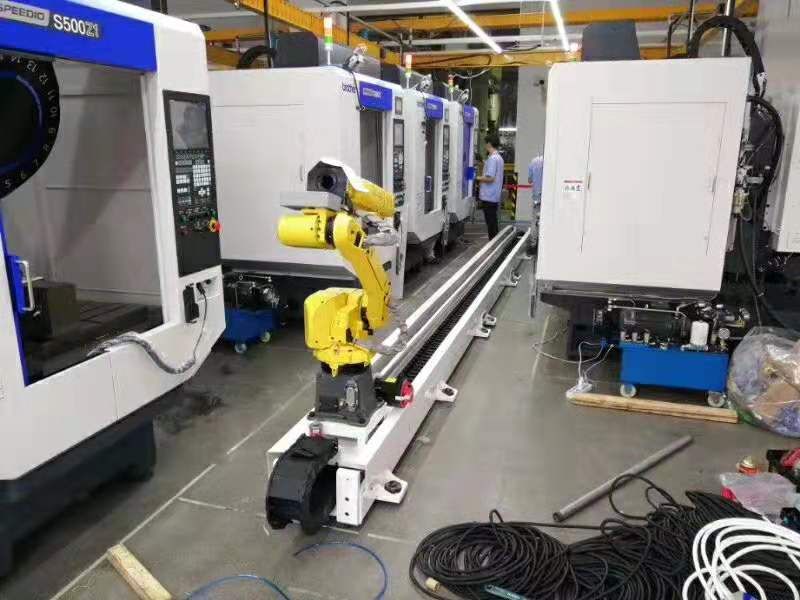
The second is flexibility. One robot has to serve two or three stations — weld at one fixture while the operator loads the next. The track is a way of buying a second robot without buying a second robot. This is where the changeover time and the safety logic matter more than the travel length.
The third is access. The weld is in a position the robot cannot reach from a fixed base — inside a large structure, or along a seam that runs the length of a vessel. Here the track is part of the welding solution, not just a way of moving the robot, and the accuracy requirement is usually tighter.
If you cannot say which of the three you are buying, stop. A track bought for reach and used for flexibility will be the wrong length, the wrong speed, or the wrong control setup, and you will find out after it is bolted down. We ask every customer the same set of questions before sizing a track — travel, payload, robot model, environment, accuracy — because the answers change the machine. In a retrofit, the floor and the existing fixtures change the answers again, and that is where the rest of this article lives.
Measure the floor, not the drawing
The single most common retrofit mistake is trusting the building drawings. Buildings settle. Floors get re-poured in patches. A mezzanine gets added and nobody updates the plan. The drawing says the floor is flat to 3 mm over the track length; the floor, measured with a level, is 8 mm out over six metres, with a dip where a forklift has been turning for a decade.
Measure the real floor, along the exact line the track will sit on, before you order. A straightedge and a level will find most problems. A laser level will find the rest. What you are looking for is not just flatness — it is the things that sit in the way: floor drains, expansion joints, cable trenches, anchor bolts from a machine that was removed five years ago, and the patch where the concrete is a different mix and will not hold an anchor the same way.
An expansion joint deserves a special mention. A track that crosses an expansion joint will move with the two slabs, and the two slabs do not move together. If the track has to cross one, the foundation work changes completely — usually a separate plinth that bridges the joint, designed by someone who understands what the joint is doing. If you can move the track line to avoid the joint, do that first. It is almost always cheaper than bridging it.
The same rule applies to the space above the floor. Measure the crane hook height, the ducting, the light fittings, and the roof trusses along the track line. A robot on a track is taller than a robot on a fixed base, and the difference is the track height plus the carriage. We have seen a track installed and then discovered that the robot, at full reach on the top of its travel, could not clear a duct that nobody had measured. The fix was to lower the track — which meant re-doing the foundation. Measure up as well as across.
The foundation is not the same job as a new floor
Our article on robot track foundation design covers the engineering of a new foundation in detail. In a retrofit, the question is different: what is under the floor you already have, and what can it carry?
Most industrial floors are a slab on compacted fill, 150 to 200 mm thick, designed for forklifts and pallet loads — not for a track with anchor bolts pulling at it every time the robot accelerates. The slab may be fine. It may also be a thin topping over an older slab, or a slab with a void underneath where a trench was backfilled badly. You cannot tell from the surface.
The practical answer is to core-drill two or three test holes along the track line before the track arrives. It costs very little, and it tells you the slab thickness, the concrete quality, and whether there is anything underneath you need to know about. If the slab is thin or poor, the foundation becomes a plinth — a reinforced concrete beam poured on or into the floor, with the track anchored to the plinth rather than the slab. That is a week’s work, not a day’s, and it is far better to know before the track is on a truck than after it is standing in the cell.
One more thing the core drill finds: reinforcement. Cutting a track foundation into a slab without knowing where the rebar is means cutting rebar, which means a weaker floor and a difficult conversation with the building owner. A rebar scanner, used for an hour before the saw comes out, prevents that conversation entirely.
The fixtures you already have will decide the layout
In a new cell, the fixture is designed around the robot and the track. In a retrofit, the fixture already exists, the operator already knows it, and production already depends on it. The question is whether the fixture stays where it is, moves, or gets rebuilt — and the honest answer is usually that it moves a little and gets modified a lot.
Start with the welding position, not the robot. The seam has to be in the right place relative to the torch, and the positioner has to present it there. If the track moves the robot along the workpiece, the fixture and the positioner have to be re-thought together: the robot’s travel along the track changes where the torch can reach, and the positioner’s rotation changes where the seam sits. A fixture that worked perfectly with a manual welder standing on one side of it may put the seam out of the robot’s reach on the far side, because the manual welder could walk around the part and the robot cannot.
This is also where the welding positioner earns its place in a retrofit. A positioner that rotates the workpiece can do more for reach than a longer track can, and it is often cheaper. If the workpiece is long and the seams are circumferential, a headstock-tailstock positioner plus a shorter track will usually beat a longer track alone. Decide the positioner and the track together, before either is ordered — we covered the positioner choice in detail in our article on choosing a welding positioner for heavy-duty robotic welding.
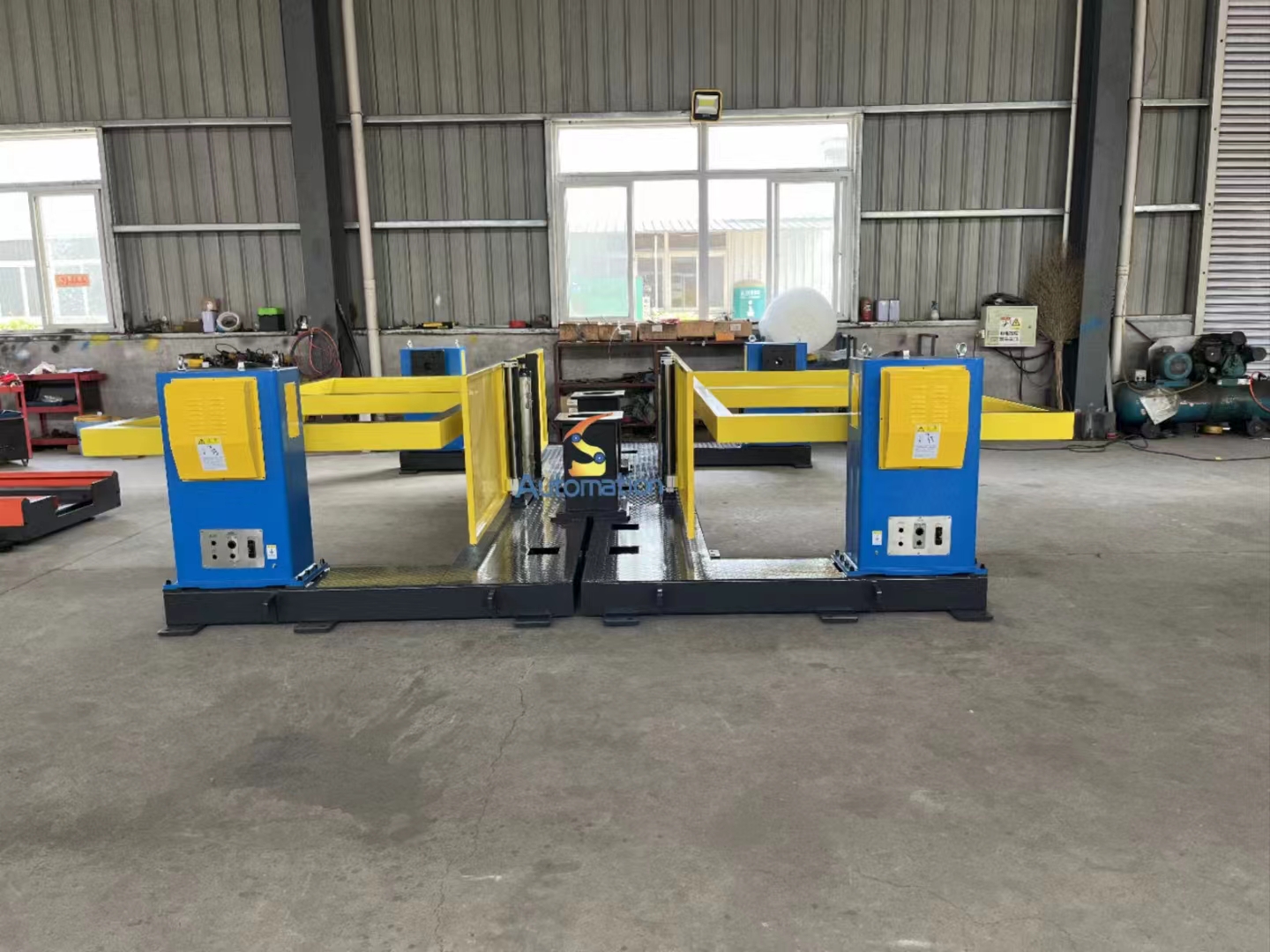
And do not forget the operator. In a manual cell, the operator stands where the work is. In an automated cell, the operator loads and unloads, and the loading position has to be safe, reachable, and fast. If the track puts the robot’s travel path across the loading aisle, the cell will be safe on paper and unusable in practice, because every load will mean stopping the robot, waiting for the interlock, and restarting. Walk the loading path yourself, with the track line marked on the floor in tape, before anything is ordered. Tape is cheap. Regret is not.
Power, air, and the cable problem nobody budgets for
A robot on a track needs power, control signals, and usually air and water, delivered to a carriage that moves. In a new cell this is designed in. In a retrofit it is often an afterthought, and it is the afterthought that causes the most downtime after commissioning.
The usual answer is an energy chain — a cable carrier that follows the carriage along the track. It needs a channel or a support rail, it needs the right bend radius for the cables inside it, and it needs to be kept clear of weld spatter and grinding dust. In a retrofit, the energy chain often has to share space with things that are already there: a cable tray, a compressed-air line, a water pipe. Plan its route on the floor, in tape, at the same time as you plan the track line.
Power is the other half. A track drive and a robot together draw more than the welding power source alone, and the existing supply in a manual cell is sized for the manual process. Check the supply capacity before the track arrives, not after the breaker trips on the first production run. The same applies to compressed air: a positioner with pneumatic clamping and a torch cleaning station will use more air than the manual cell ever did, and a marginal compressor will show it at exactly the wrong moment.
Safety fencing in a cell that already has walls
A robot on a track changes the safety envelope. The robot’s reach is no longer a circle around a fixed base — it is a rectangle, the length of the track plus the robot’s reach at each end. The fencing, the light curtains, and the interlocked gates all have to cover that rectangle, and in an existing cell that rectangle usually crosses something: a walkway, a storage area, a door that people use.
The practical approach is to design the fencing around the track’s full travel, including the overtravel at each end, and to put the operator’s loading position outside the fenced area with its own interlocked gate. If the existing cell already has fencing, measure whether it can be extended or whether it has to come down and be rebuilt. Fencing that is extended piecemeal, with a gap where the track passes through, is the most common safety finding on retrofits — and it is found by the safety inspector, not by the installer.
One detail that gets missed: the track itself is a trip hazard and a pinch point where the carriage passes. The floor around a track in a retrofit is a working floor, with people walking on it. A simple guard rail or a marked exclusion zone along the track, plus a carriage cover, prevents the two most common minor injuries in a retrofitted cell.
Plan the downtime like a production job, not an installation
The last mistake is a scheduling one. A track installation in a working shop is usually planned as “a weekend.” It is rarely a weekend. The foundation work alone — coring, cutting, pouring a plinth, curing — is a week if it is done properly, and concrete does not cure faster because production is waiting. The honest plan is to do the foundation and the services (power, air, cable routes) in one shutdown, and the track installation, levelling, and commissioning in a second, shorter one.
If the cell cannot stop at all, the answer is usually a phased install: build the track and the robot cell alongside the manual cell, prove it out on a trial batch, and then switch production over. That costs floor space for a few weeks, and it is worth it. A cell that is switched over before it is proven will be switched back, and the second switch costs more than the first.
Commissioning deserves the same discipline. A track that is levelled, aligned, and calibrated in a new cell is a known job. In a retrofit, the calibration has to be done against the real workpiece positions, in the real fixtures, with the real floor underneath — not against the drawing. Budget a full day for calibration and first-article welding, and do not let production pressure cut it short. The defects that come from a rushed calibration look like welding problems, and they will be chased as welding problems for weeks.
A retrofit checklist
Before you order a track for an existing cell, work through this list. If you cannot answer an item, that is the item to resolve first — not after the track arrives.
- Purpose, in one sentence. Reach, flexibility, or access — and which one matters most.
- Robot and payload. Robot model, total moving mass including the fixture and the workpiece, and the heaviest part the cell will ever weld.
- Travel. The length the robot actually has to move, measured against the workpiece — not the catalogue length. See our article on track travel versus effective travel.
- Floor survey. Level and flatness measured on the real floor along the track line, plus the location of drains, trenches, expansion joints, and old anchor bolts.
- Overhead clearance. Crane hook, ducting, lights, and trusses along the full track line, with the robot at full reach.
- Slab cores. Two or three core samples to confirm thickness and concrete quality; rebar scan before any cutting.
- Fixture and positioner. Whether the existing fixture stays, moves, or is rebuilt, and whether a positioner changes the track length you need.
- Loading path. Walked on the floor, in tape, with the operator who will actually load the cell.
- Services. Power supply capacity, compressed air, and the energy-chain route — planned on the floor, not assumed.
- Safety envelope. Fencing for the full travel rectangle, including overtravel, with the loading gate outside it.
- Downtime plan. Foundation in one shutdown, installation and commissioning in the next — or a phased build alongside the manual cell.
- Calibration day. A full day budgeted for levelling, alignment, calibration, and first-article welding, against the real fixtures.
FAQ
Can you install a robot track in a cell that is still in production?
Yes, and most retrofits are done that way. The foundation and services are done in one shutdown, and the track installation and commissioning in a second. If the cell genuinely cannot stop, the track is usually built alongside the manual cell and production is switched over once the new cell has welded a trial batch.
How long does a retrofit take, realistically?
The track installation itself is two to three days. The foundation work is a week if a plinth is needed, including curing time. Commissioning and calibration is a full day at least. The number most people get wrong is the foundation — it is the part that cannot be hurried, and it is the part that is discovered last.
Is my existing floor strong enough for a robot track?
Often yes, but do not assume it. Core-drill two or three holes along the track line to check the slab thickness and concrete quality. If the slab is thin or poor, the track is anchored to a reinforced plinth poured on or into the floor instead. That is a normal solution, not a problem — as long as it is planned before the track arrives.
Do I need a new welding positioner as well as a track?
Not always, but decide the two together. A positioner that rotates the workpiece can reduce the track length you need, and in a retrofit a shorter track is usually a cheaper and easier install. If the workpiece is long and the seams run around it, a headstock-tailstock positioner plus a shorter track will usually beat a long track alone.
What is the most common retrofit mistake?
Trusting the building drawings. Measure the real floor, the real overhead clearance, and the real fixture positions on site, with a tape and a level, before ordering. The drawing is a starting point. The floor is the truth.
Can a track be moved later if the cell layout changes?
It can, but it is a foundation job again, not a furniture move. The track has to be unbolted, the new foundation prepared, and the track re-levelled, re-aligned, and re-calibrated. If you think the layout may change within a couple of years, say so when the track is specified — it affects the foundation design and the services routing.
What to send us before you order
If you are looking at a track for an existing cell, the fastest way to a useful answer is to send us the information we would ask for on site: the robot model, the workpiece dimensions and weight, the travel you think you need, the floor construction if you know it, and a few photos of the cell — the floor along the proposed track line, the overhead space, and the fixture as it stands today. A phone photo of the floor is worth more than a drawing of it. Tell us what the cell welds now, what it has to weld next, and how much downtime you can afford, and we will tell you whether the track fits, what the foundation needs, and what the order of work should be.
You can reach our engineering team through the contact page, or browse our robot linear track range, our welding positioner range, and our gantry system range to see the equipment we build.
By WRS Robotics Engineering Team