
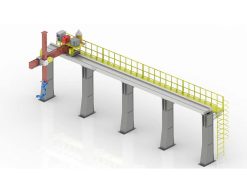
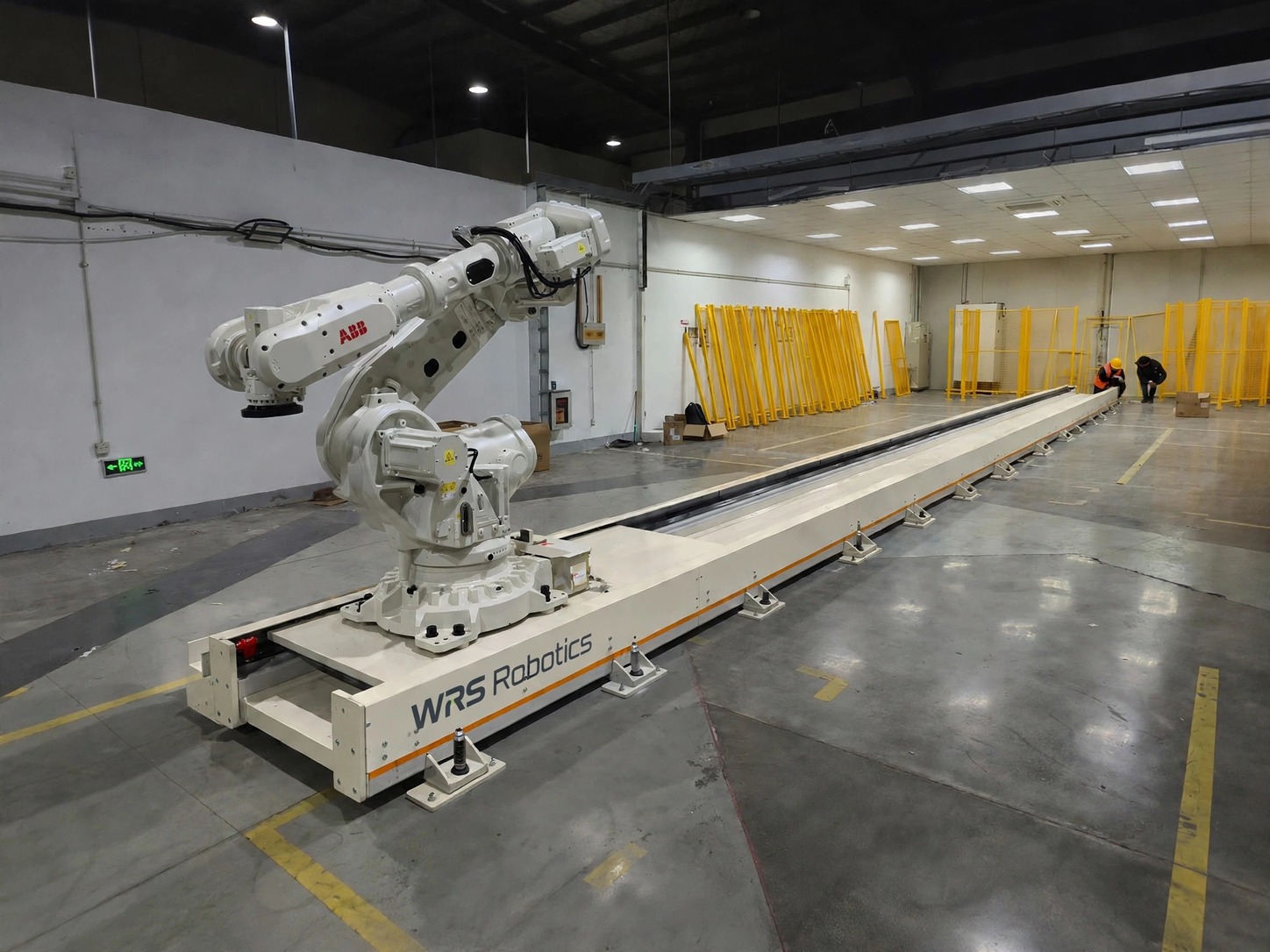
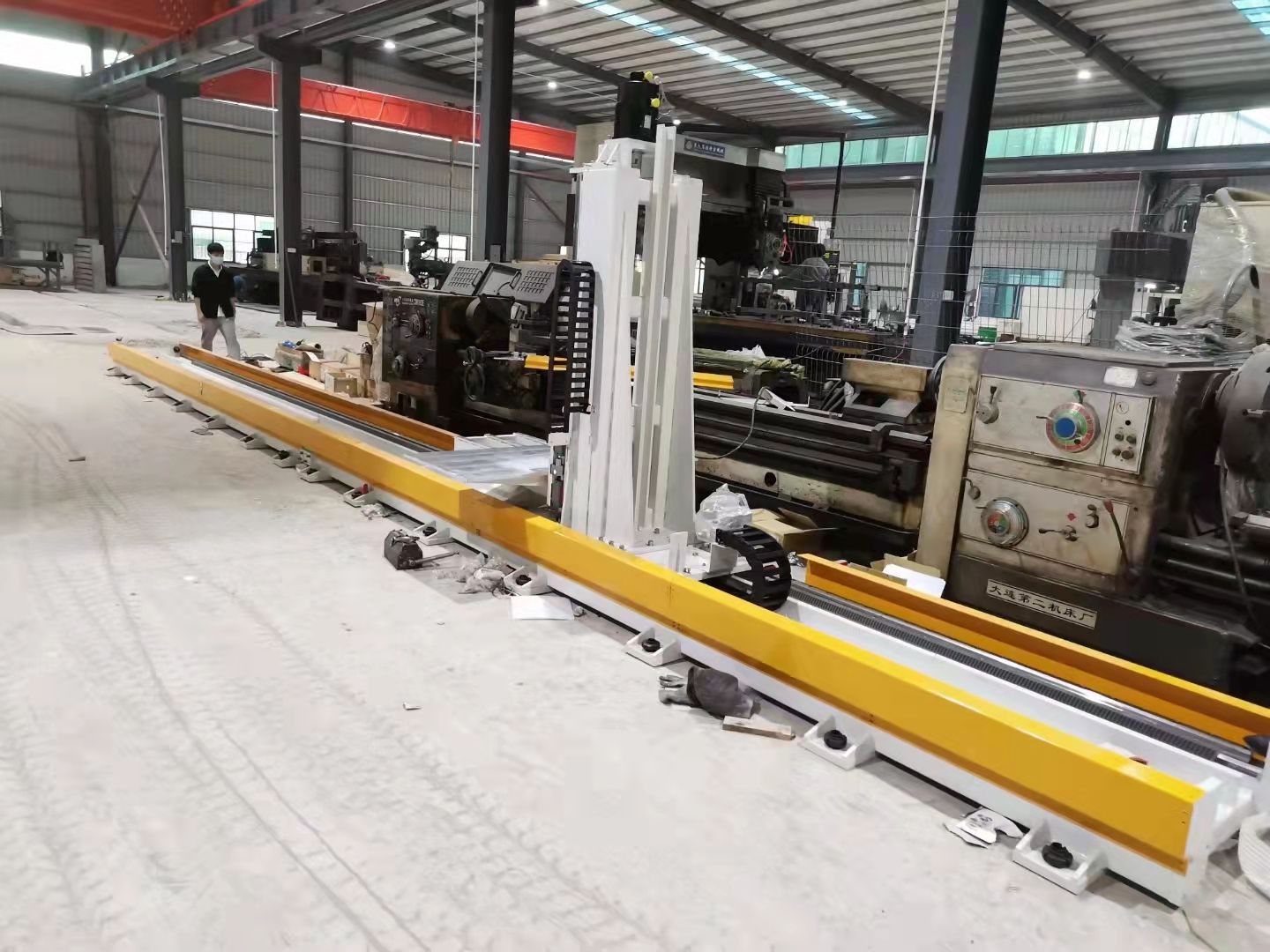
 Robot Linear track
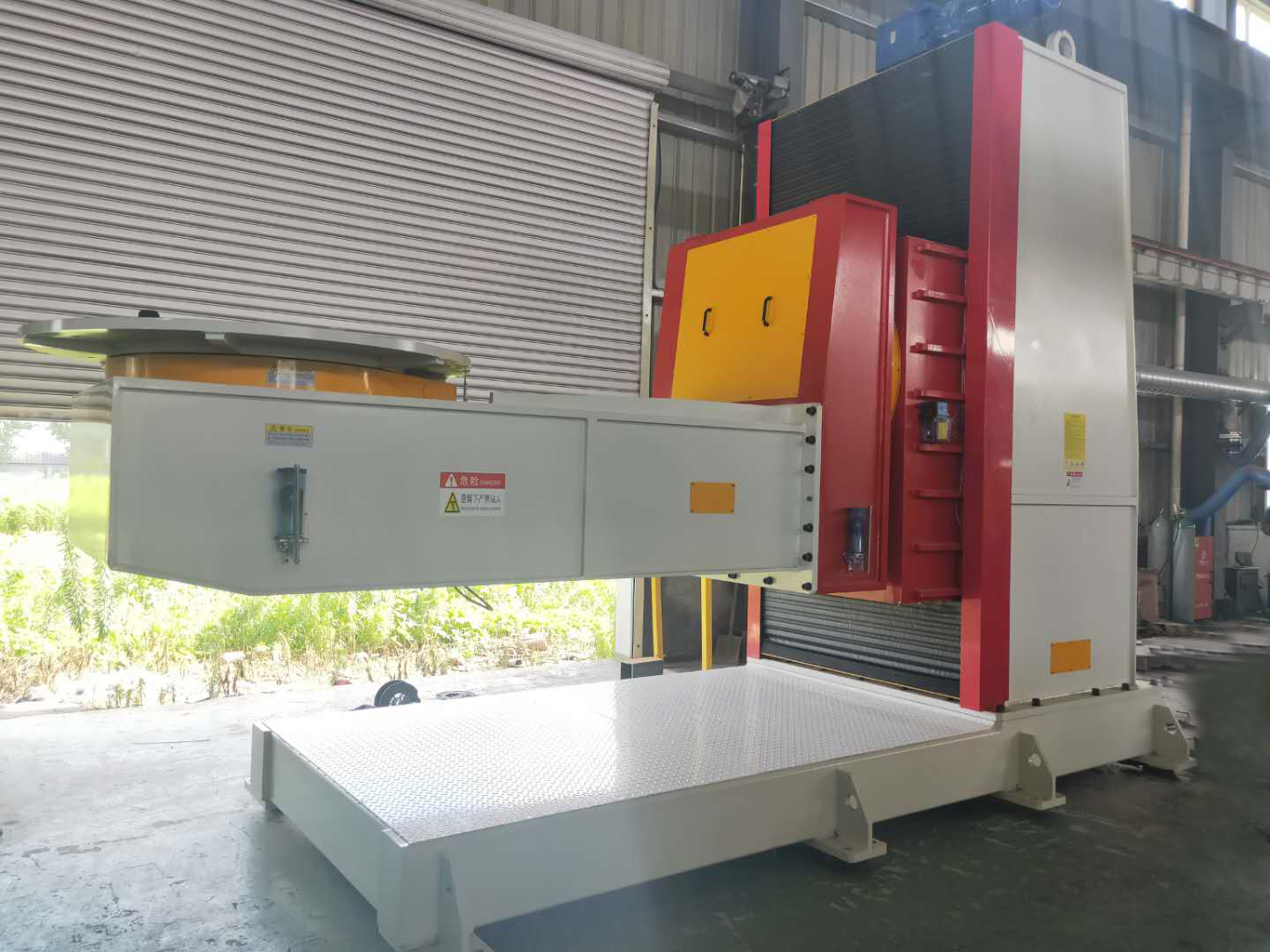
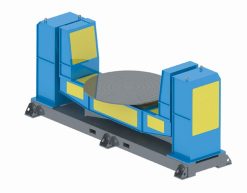 Robot welding Positioner
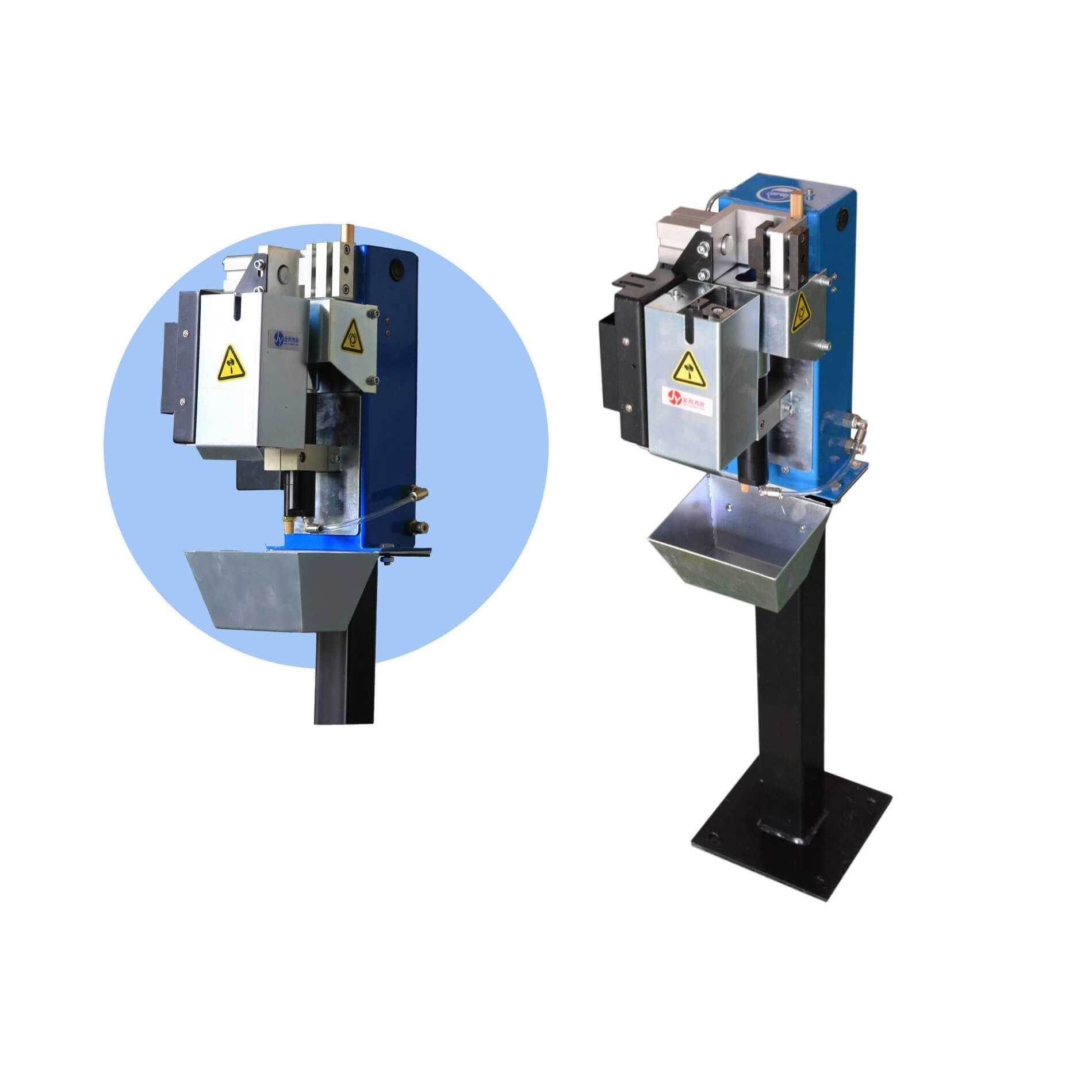 Robot Torch cleaning station
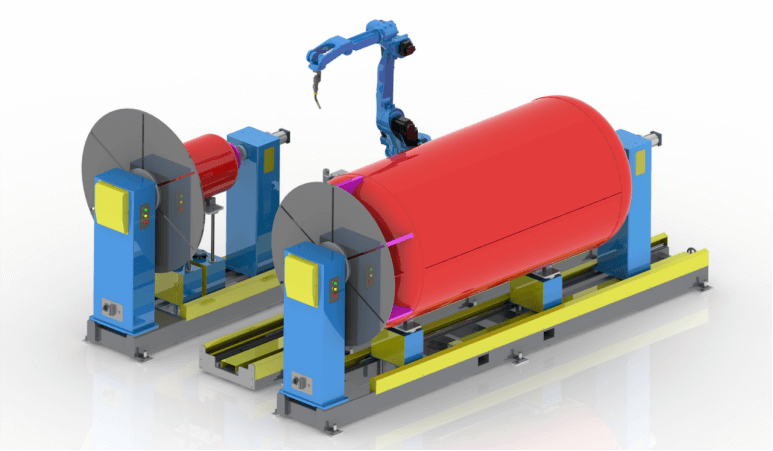 Welding Robot Workstations & Automation Solutions
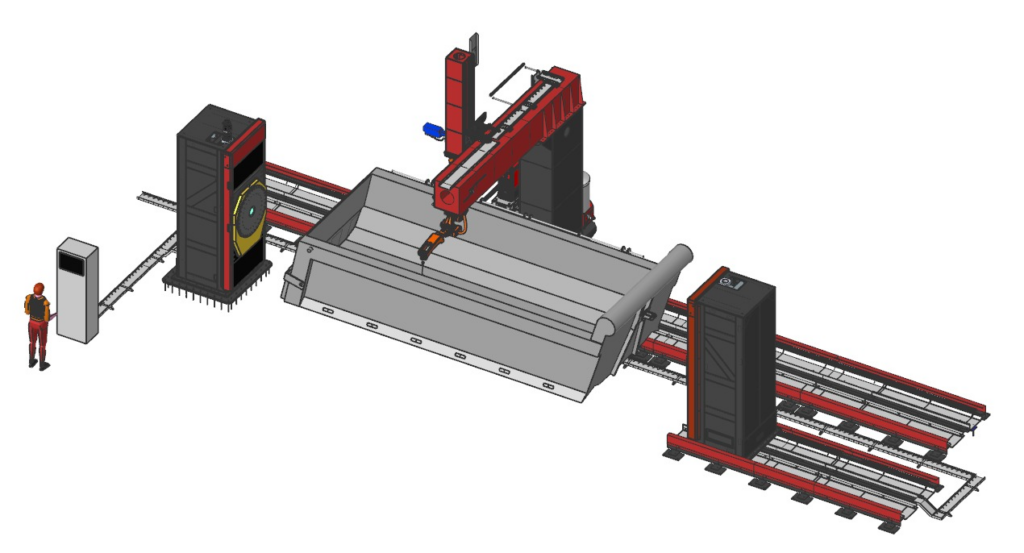
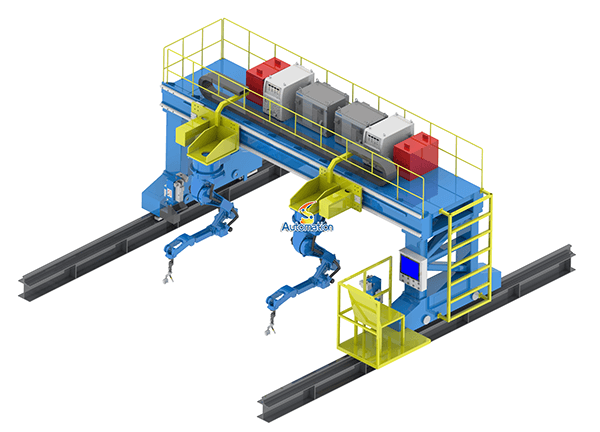 Robot Gantry System
The cheapest line on the quotation turned out to be the most expensive part of the cell
A few years ago an integrator called us about a welding cell that was technically working and commercially failing. The robot was fine. The welding power source was fine. The problem was the positioner — the cheapest item on the original quotation, bought to keep the project under budget. Six months after commissioning, the cell was producing welds that needed rework on roughly one joint in five, the positioner had already been serviced twice, and the cycle time was about 20% slower than the figure the project had been sold on. The integrator had saved a few thousand dollars on the positioner. He was losing that amount every few weeks in rework labour, grinding consumables, and lost production.
We see this pattern often enough that it has stopped surprising us. Positioning equipment — the robot track, the welding positioner, the gantry — is usually the smallest part of a cell’s budget, so it is the first place people look when they need to cut cost. It is also the part that decides whether the robot can actually do its job. A robot can only weld what it can reach, at the angle it needs, while the workpiece stays where the program thinks it is. If the equipment that holds and moves the workpiece is not up to the job, the robot’s precision is wasted, and the costs show up everywhere except on the purchase order.
This article is about those costs. Not the price of the equipment — the price of getting it wrong. If you are specifying a cell, or reviewing a quotation that looks surprisingly cheap, these are the numbers to check before you sign.

1. Rework and scrap: the cost that never appears on a quotation
The first hidden cost is the most visible one on the shop floor, and the hardest to trace back to its cause. When a workpiece cannot be presented flat to the torch, the weld suffers. The torch angle drifts, the puddle runs, you get undercut on one side and lack of fusion on the other. The operator grinds it out and welds it again. Sometimes twice.
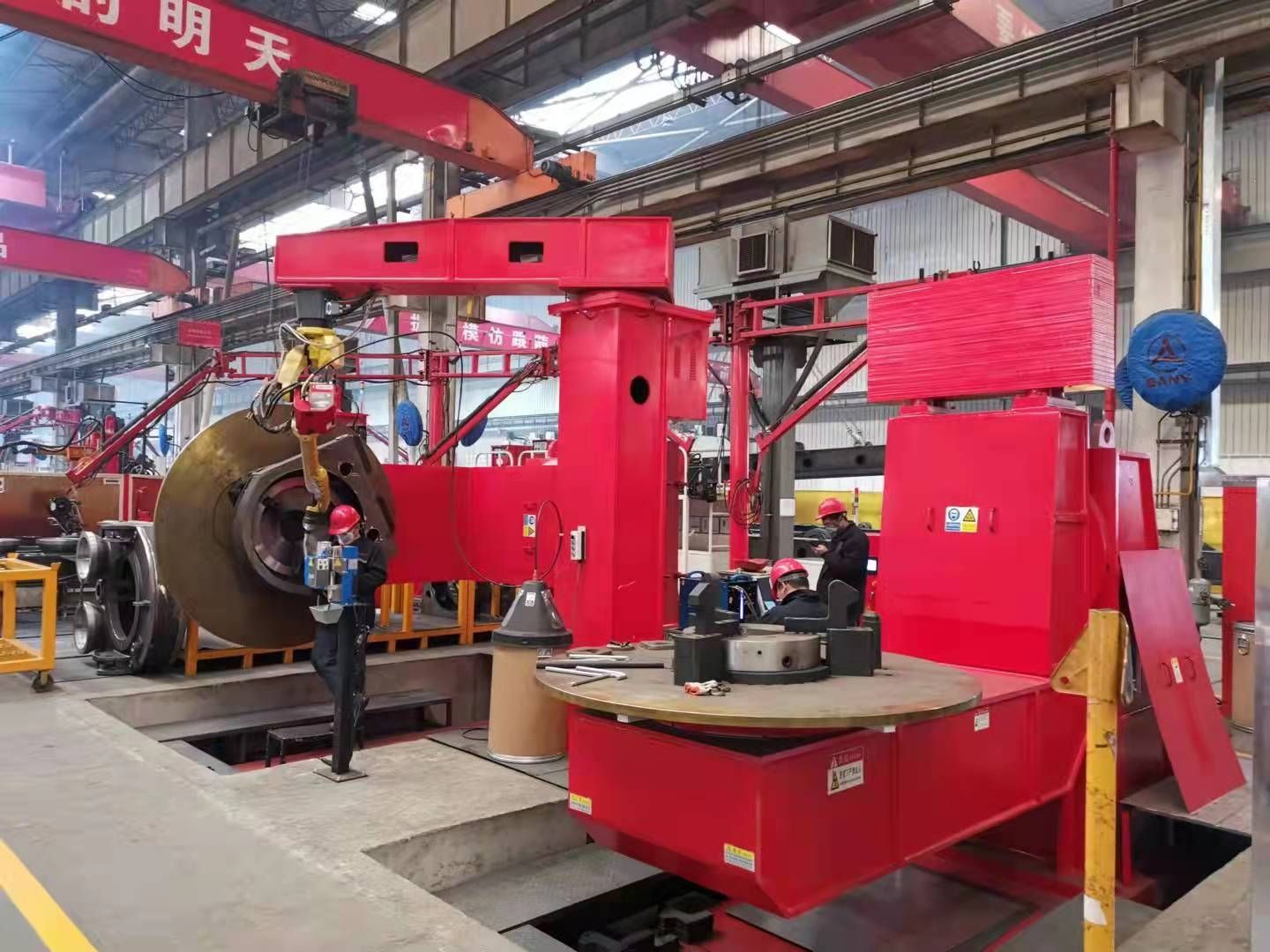
Nobody writes “positioner too small” on a rework ticket. They write “bad weld”. So the rework gets blamed on the welding parameters, the wire, the gas, the operator — everything gets adjusted except the thing that is actually wrong. In one cell we visited, the positioner was rated for the workpiece weight on paper, but the workpiece was long and the load was off-centre. Every time the positioner rotated past 90 degrees, the workpiece sagged a few millimetres under its own weight. The robot program had been taught with the workpiece in one position, so every weld made after rotation was a few millimetres off the seam. The fix was not a new welding procedure. It was a positioner with a proper headstock-tailstock arrangement and the rigidity to hold a long workpiece straight through a full rotation.
Rework costs more than the labour of welding twice. There is the grinding, the extra wire and gas, the inspection time, and the parts that cannot be reworked at all and go to scrap. On high-value workpieces — pressure vessel sections, structural beams, machined fabrications — one scrapped part can cost more than the price difference between an adequate positioner and an inadequate one. If your quotation review only compares purchase prices, this cost is invisible until the cell is running.
2. Cycle time you never get back
The second cost is quieter: a cell that runs slower than it should, every cycle, every shift, for the life of the equipment. Positioning equipment affects cycle time in three ways.
First, indexing. A positioner that is not synchronized with the robot as an external axis can only move while the robot waits. The robot finishes a weld, the positioner rotates, the robot waits, the robot welds. Every index is dead time. A synchronized setup moves the positioner and the robot together, so the workpiece is turning into position while the robot is already moving to the next seam. We covered synchronization in detail in our last article, but the cost point is simple: if you buy a servo positioner and drive it from a PLC as an independent device, you have paid for a servo and you are using it like a turntable.
Second, speed. An undersized positioner has to move slowly, because the servo and gearbox cannot accelerate the load any faster without faulting or wearing out. The rotation that should take three seconds takes eight. Multiplied by dozens of indexes per part and hundreds of parts per month, that is real production time.
Third, workarounds. When a positioner cannot reach a weld in the flat position, the programmer slows the weld down, adds weave patterns, or splits one weld into two passes. The weld gets done, but the program is slower than it needs to be, and every part carries that penalty. Over a year of production, a 10% cycle-time penalty is the difference between meeting a delivery schedule and paying overtime.
3. Downtime and unplanned maintenance
Positioning equipment works hard, and it works in a welding environment — spatter, dust, heat, vibration. Equipment that is built for that environment keeps running. Equipment that is not, stops.
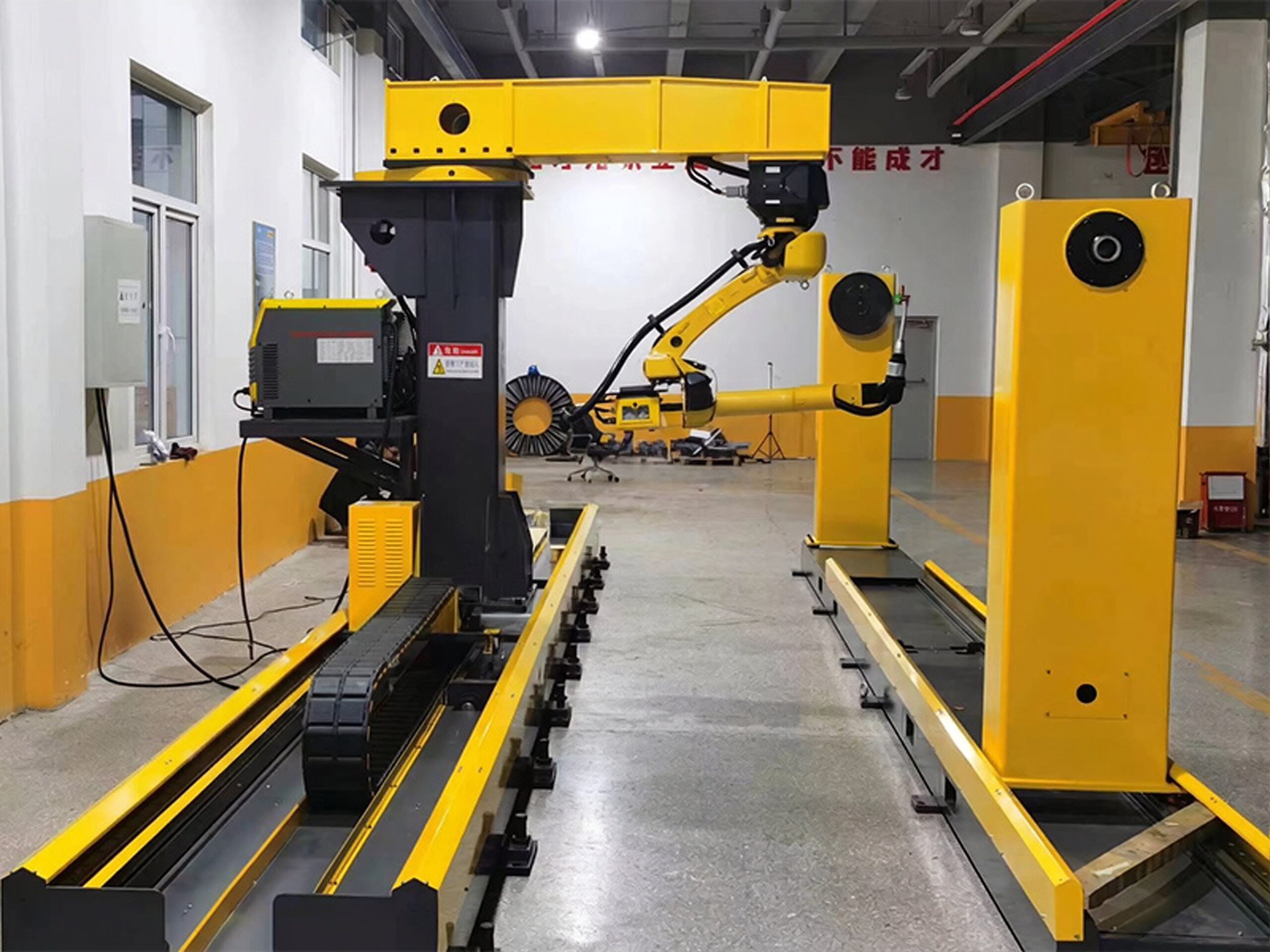
The failures we see most often are not dramatic. A bearing that was never meant to carry the load starts to run rough. A gearbox with too little margin overheats on a long shift. A cable chain that was not routed properly wears through a cable. Spatter gets into a linear guide because the covers are inadequate, and the guide starts to stick. None of these stop the cell on day one. They stop it on a Tuesday afternoon in the middle of a production run, six months in, when the delivery truck is already booked.
Unplanned downtime costs far more than the spare part. There is the lost production, the rescheduled delivery, the technician’s call-out, and the overtime to catch up. A positioner that needs servicing twice a year instead of once is not a maintenance nuisance — it is a recurring production interruption. When you compare two quotations, ask what the service interval is, what the wear parts are, and whether the supplier stocks them. A supplier that cannot answer those questions is selling you a price, not a piece of production equipment.
4. Accuracy drift and the re-calibration trap
A robot track or positioner that starts accurate and drifts is worse than one that is inaccurate from the start, because the drift is gradual and the symptoms look like something else. Welds start coming out slightly off. The programmer touches up a few points. A month later, more points need touching up. Eventually someone re-teaches the whole program, and the cycle repeats.
The causes are usually mechanical and usually predictable: a track foundation that was not designed for the load, a positioner frame that flexes under a heavy workpiece, backlash in a gearbox that was specified too small, or a linear guide that has worn because it was never lubricated properly. We wrote about track foundations and about accuracy loss after six months in earlier articles — the point here is the cost. Every re-teach is a day of lost production and a day of a programmer’s time. Every re-calibration is a service visit. And while the cell is drifting, it is producing parts that are just inside tolerance — parts that pass inspection today and fail in the customer’s hands tomorrow.
5. Re-integration: replacing the wrong equipment costs more than buying the right equipment
This is the cost that turns a bad purchase into a bad project. When a positioner or track has to be replaced, you do not just pay for the new unit. You pay to take the old one out, to re-do the foundation or the mounting, to re-run the cables and the safety wiring, to re-teach the robot program, and to re-run the acceptance tests. The cell is down for days, sometimes weeks. And the new equipment still has to be integrated with a robot program that was written around the old equipment’s geometry.
In our experience, the total cost of replacing positioning equipment in a running cell is typically two to three times the price of the equipment itself. That is the number to keep in mind when a quotation looks cheap. The saving on the purchase price is real and immediate. The replacement cost is larger and later — which is exactly why it gets ignored in the buying decision.
6. Floor space, handling, and safety
The last hidden cost is the one that shows up in the layout, not the ledger. A positioner that cannot hold a workpiece in the right orientation forces manual handling — an operator turning the part, a crane move between stations, a second fixture for the welds the robot cannot reach. Every manual step is a cycle-time penalty, an ergonomic risk, and a chance to damage the workpiece.
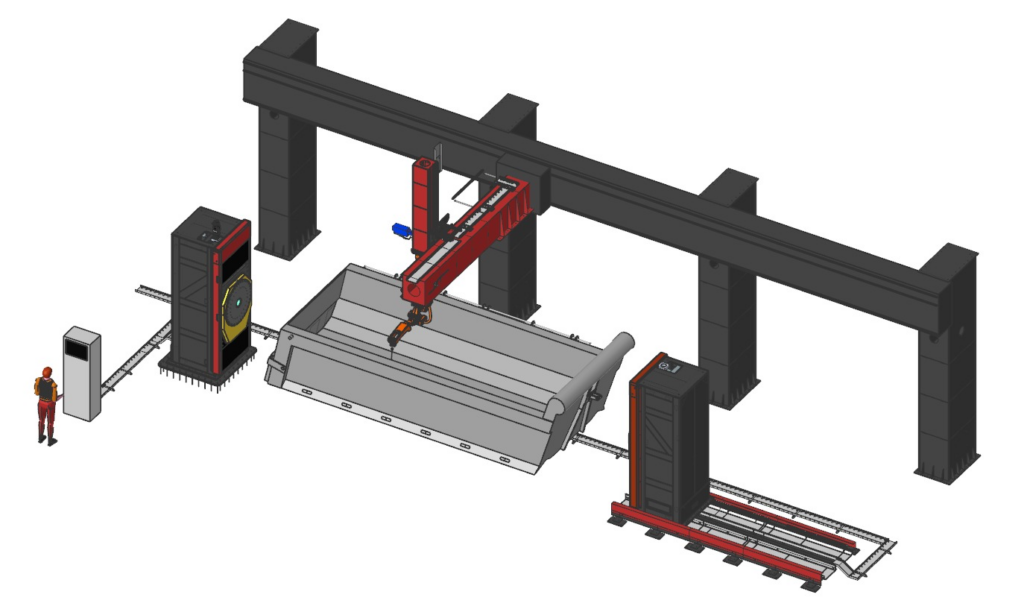
The same applies to tracks. A robot on a track that is too short cannot reach the far end of a long workpiece, so the workpiece gets welded in two setups, or a second robot gets added to the cell. A track that was bought without enough travel is not a small mistake — it is a cell that cannot do the job it was built for, and the fix is either a new track or a second robot. Neither is cheap.
How to price it properly before you buy
None of this means you should buy the biggest, most expensive equipment available. It means the purchase price is the wrong number to optimize. What you should be pricing is the cost of the cell over its working life — and the questions that decide that cost are the same ones a good supplier will ask you before quoting:
- Workpiece, honestly described. Weight, length, centre of gravity, and how the load sits when the positioner is rotated — not just the nominal weight. An off-centre load is a different machine from a balanced one.
- Weld access. Which seams need to be welded flat, and can the positioner present them that way? If the answer is no, the rework starts on day one.
- Duty cycle. How many indexes per part, how many parts per shift, how many shifts per day. A positioner that runs eight hours a day is a different machine from one that runs two.
- Environment. Welding spatter, dust, temperature, and whether the cell is indoors. Covers, sealing, and lubrication are not extras — they are what keeps the equipment accurate in year three.
- Accuracy, with a number. Repeatability is not a marketing claim; it is a figure with a test behind it. Ask how it is measured, and what it is after a year of service, not just on the day of delivery.
- Service and spares. Service interval, wear parts, spare parts availability, and who does the work. A positioner with no service plan is a positioner that will stop the cell one day with no one to fix it.
- Acceptance test. Agree the test before you buy: a real workpiece, a real weld program, measured accuracy and cycle time, signed off on site. If a supplier will not agree to an acceptance test, that tells you something.
Checklist: before you approve a positioning equipment quotation
- Workpiece weight, dimensions, and centre of gravity confirmed — with margin, not at the limit
- Every weld seam reachable in the flat or horizontal position
- Positioner specified as a robot external axis if coordinated motion is needed — not PLC-driven indexing
- Track travel, speed, and accuracy matched to the robot model and the workpiece length
- Foundation and mounting designed for the real loads, not just the static weight
- Environment protection (covers, sealing, lubrication) included, not added later
- Service interval, wear parts, and spare parts confirmed in writing
- Accuracy figure given with a measurement method, and a re-check plan after commissioning
- Acceptance test agreed: real workpiece, real program, measured cycle time and accuracy
- Total cost estimated over three years — purchase, service, rework risk, and downtime — not just the purchase price
FAQ
Why does a cheap positioner cost more in the long run?
Because the saving is on the purchase price only. The costs it creates — rework, slower cycles, unplanned downtime, re-calibration, and eventually replacement — are larger, and they recur for as long as the equipment is in service. A positioner that costs 20% less but causes one extra hour of rework a week has paid for its own price difference within a year, and then keeps costing you.
How do I know if my positioner is undersized?
The symptoms are consistent: welds that need rework on one side of the workpiece, a positioner that faults or runs hot on long shifts, rotation that has to be slowed down to avoid vibration, and programs that need re-teaching every few months. If any of those sound familiar, the first thing to check is the load — including how far the centre of gravity sits from the rotation axis — not the welding parameters.
Is it worth replacing a positioner that still works?
If it still works but it is costing you rework, cycle time, or downtime every week, then yes — but run the numbers first. Add up the rework hours, the lost production, and the service visits over a year, and compare that with the cost of replacement including re-integration. In many cases the replacement pays for itself in well under a year. If the numbers are close, the deciding factor is usually the delivery risk: a cell that is barely coping is one breakdown away from missing a shipment.
What is the most commonly overlooked cost in a robot track quotation?
The foundation and the installation. A track is only as accurate as what it is bolted to, and a foundation that was not designed for the dynamic loads will let the track drift. We covered foundation design in a previous article — the short version is that the cheapest foundation is the one you only build once.
Should the positioner be driven by the robot controller or by a PLC?
It depends on the weld. If the positioner only needs to index between welds, a PLC drive is simpler and cheaper, and it is fine. If the workpiece has to move while the arc is on — long seams, circumferential welds, anything where the torch angle has to stay constant — the positioner needs to be an external axis of the robot controller, with coordinated motion. Buying a PLC-driven positioner for a coordinated-motion job is one of the most expensive mistakes in this article, because the only fix is new hardware.
What information should I send a supplier for a proper quotation?
The same information we ask for on our own track questionnaire: travel and total length, slider payload, robot model, what sits on the track (robot, control cabinet, welding machine, torch cleaning station, wire feeder), operating environment, rail width limits, mounting height, travel speed, repeatability, guide rail brand, drag chain position, lubrication power supply, painting colour, and the destination country. A quotation based on a weight figure alone is a guess. A quotation based on the full picture is an engineering answer.
How do I compare two quotations fairly?
Compare total cost over three years, not purchase price. Include the service plan, the wear parts, the expected rework rate, and the cost of a week of downtime. And check that both quotations are for the same job — the same workpiece, the same weld access, the same duty cycle. A cheaper quotation for a smaller machine is not a saving.
Can an old positioner be upgraded instead of replaced?
Sometimes. A new servo and drive, a re-machined gearbox, or a better control interface can extend the life of a sound mechanical frame. But if the frame itself flexes under load, or the bearings are worn, or the geometry cannot present the workpiece properly, no control upgrade will fix it. A supplier should be willing to inspect the existing equipment and tell you honestly whether an upgrade is worth it — and if they will not, that is also an answer.
The purchase price is the smallest number in the cell
Positioning equipment is a small part of a welding cell’s budget, and that is exactly why it gets under-specified. The robot is the visible investment. The positioner is the line item that gets cut when the project runs over budget. But the robot can only do what the positioning equipment lets it do, and every shortfall in the positioning equipment becomes rework, downtime, slow cycles, or a replacement project — all of which cost more than the saving that created them.
If you are reviewing a quotation and one supplier is significantly cheaper than the rest, ask what is missing. Ask about the service plan, the accuracy figure, the foundation, and the acceptance test. The answers will tell you whether you are looking at a better price or a more expensive cell.
And if you are already running a cell where the positioner is the bottleneck — welds that need rework, programs that need re-teaching, a machine that cannot keep up with the schedule — it is worth getting a second opinion before the next production run. Send us the workpiece drawings, the robot model, and the welds you are struggling with, and we will tell you what the positioning equipment should be doing, and what it would take to get there. The assessment costs nothing. The rework is already costing you.
By WRS Robotics Engineering Team