
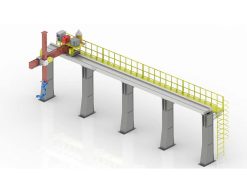
 Robot Linear track
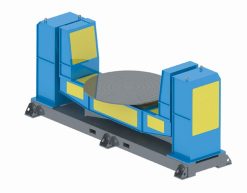 Robot welding Positioner
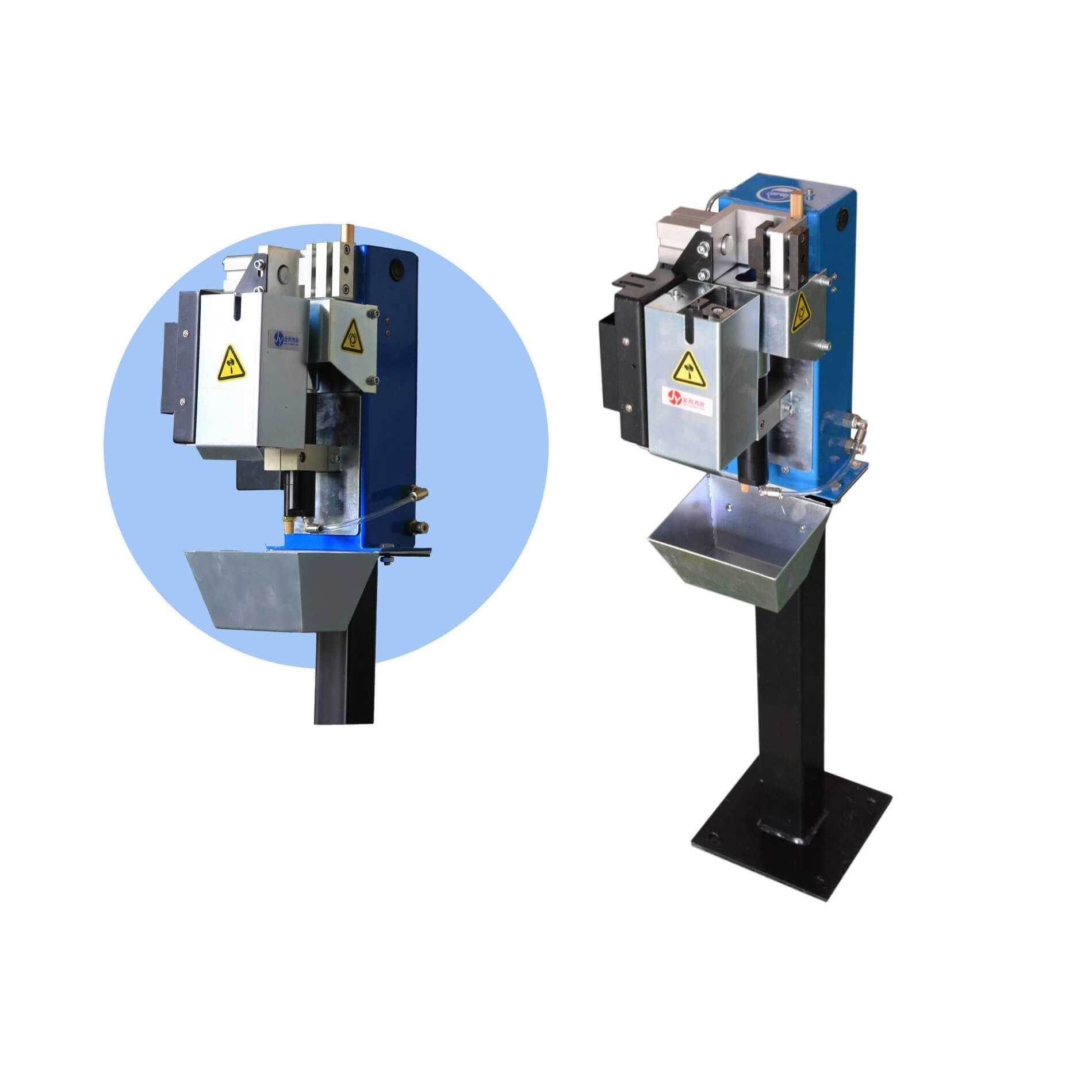 Robot Torch cleaning station
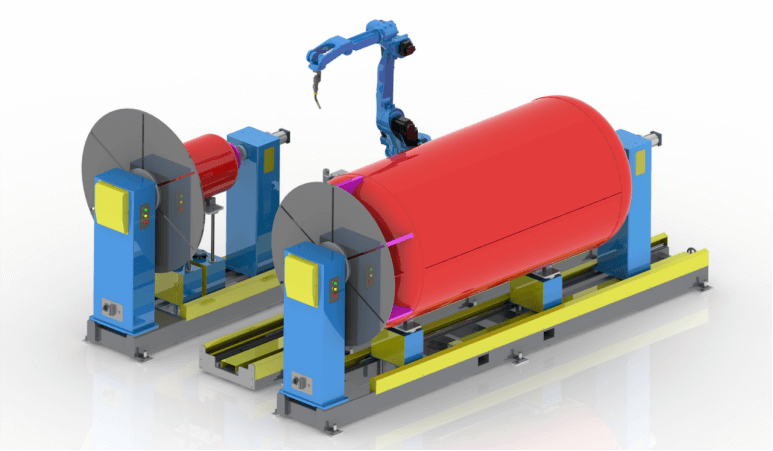 Welding Robot Workstations & Automation Solutions
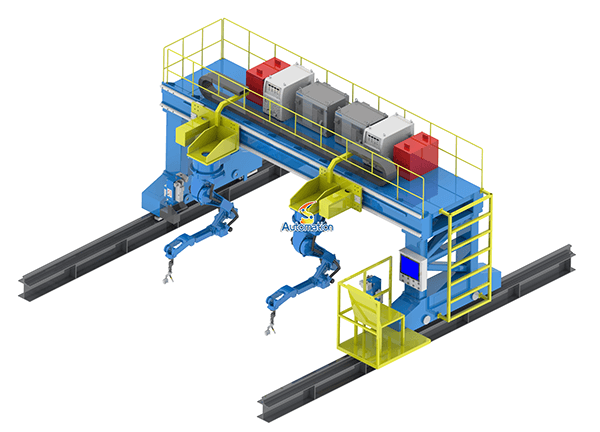 Robot Gantry System
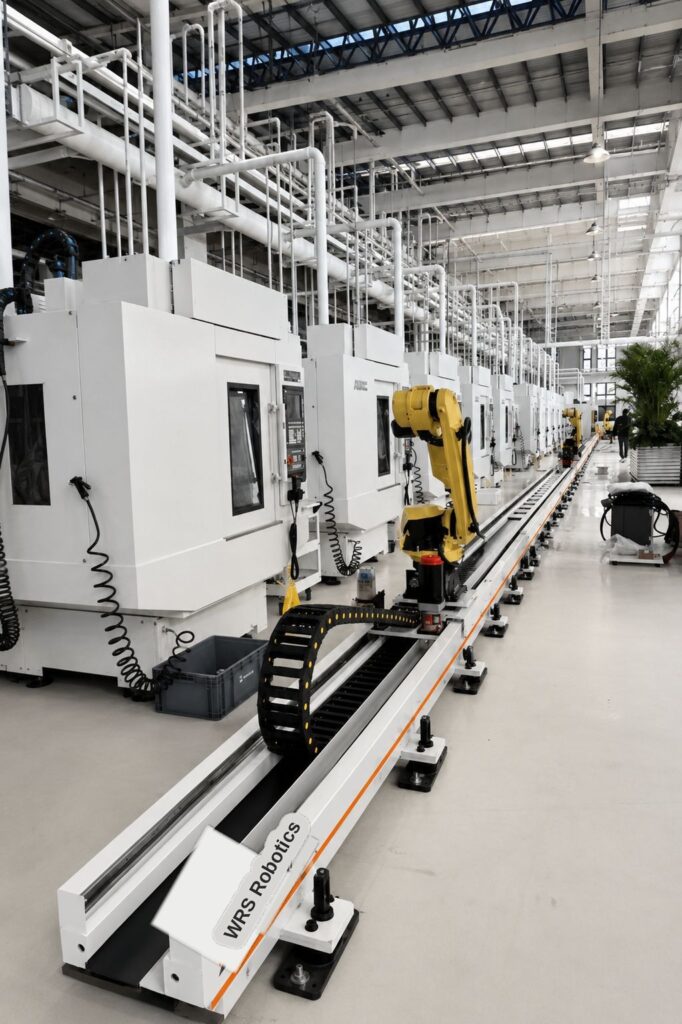
The call usually comes about a week after delivery. The track is installed, the robot is on it, and the first welds are off — not by much, a millimetre or two, but enough that the cell cannot run production. The customer is convinced something is wrong with the track. We ask what the journey looked like, and the story comes out: the track arrived in three crates, the crates were opened with a crowbar, the sections were bolted together in whatever order seemed right, and nobody checked straightness before the robot was calibrated. The track itself is fine. The shipping and the re-assembly are what cost them a week.
A 12-metre robot track is a precision machine, and it is also a very awkward piece of freight. It is long, heavy, and its accuracy lives in surfaces that are measured in hundredths of a millimetre. Everything about shipping it — the container, the crating, the way it is split into sections, the paperwork, and above all the re-alignment on arrival — decides whether the accuracy that left the factory is still there when the first weld runs. This article walks through how long robot tracks actually get overseas, in the order we work through it when a customer sends us an inquiry with a destination country on it.
Why a 12-metre track is a shipping problem, not just a freight booking
Most of the equipment in a welding cell ships without much thought. A positioner goes on a pallet, a control cabinet goes in a crate, and they arrive ready to work. A long linear track is different in three ways, and all three matter before anyone books a container.
First is length. A standard 40-foot container has about 12 metres of internal length, which sounds like exactly enough for a 12-metre track — until you add the things a real track carries. The drive motor sticks out past the end. The drag chain, the cable tray, the end covers, and the mounting feet all add length. And then the export crate itself needs clearance. A bare track that measures 12 metres on the drawing is closer to 12.5 metres once it is packed, and it simply does not fit in a standard box. This is the first surprise in most overseas track projects, and it is much cheaper to discover it during quotation than at the port.
Second is precision. A robot track’s repeatability — typically ±0.1 mm on the tracks we build — depends on the straightness of the guide rails and the mesh of the rack and pinion. Those are ground and machined surfaces, and they do not forgive rough handling. A rail that takes a knock in transit, a rack tooth that picks up a dent from a loose bolt rattling around in the crate, or a section that is stored on its side for six weeks at sea can each cost a day of rework on site. The track does not have to be broken to lose accuracy. It only has to be bent a little, or dirty, or bolted together out of order.
Third is weight distribution. A long track is not uniformly heavy. The slider, the drive unit, and the motor sit at one end; the rail sections are long and comparatively light. A crate that is lifted from the wrong points will flex, and a flexed crate passes that bending straight into the track inside it. Anyone who has watched a 6-metre rail section being lifted by a single sling in the middle knows the sight — it sags, and even if it springs back, the question of whether it sprang back exactly is not one you want to answer on a customer’s shop floor.
The container question: what actually fits, and what does not
When a customer asks how their track will ship, the real question is usually which container it goes in. There are four realistic options for a long track, and the choice is made by length, weight, and what the destination port can handle.
A standard 40-foot container works for tracks up to about 11 metres of packed length. It is the cheapest option, it is available everywhere, and the track is fully enclosed and protected from weather and salt air. If the track can be split so that every packed section fits, this is what we use most often.
A 40-foot high-cube container gives a little more internal height — useful when the track ships with the robot mounting plate, the drag chain, or a tall drive unit attached — but no extra length. It solves a height problem, not a length problem, and it is worth knowing the difference before paying the premium for one.
An open-top container is the answer when a track section is too tall to load through the doors, or when it has to be lowered in by crane. The roof is a tarpaulin rather than steel, so the cargo can be lifted in from above. It costs more, and the tarpaulin needs to be properly secured, but for an assembled drive unit or a tall gantry beam it is often the only practical choice.
A flat rack is the last resort for tracks that cannot be split short enough, or that ship assembled. The cargo sits on a steel platform with no walls and no roof, and it is lashed down and wrapped. It works, and we have shipped tracks this way, but the track is exposed to weather for the whole voyage, so the packing has to do the work the container walls would otherwise do. Flat racks also cost more and need a port with the right handling equipment at both ends.
One thing worth saying plainly: nobody should be deciding this from a freight forwarder’s website alone. The track supplier should be the one saying which container fits, because the supplier knows the packed dimensions, the lifting points, and the centre of gravity of every crate. If a quote for a long track does not mention the container type, ask. The answer tells you a lot about whether the supplier has actually shipped one before.
Splitting the track: how sections are designed to come apart and go back together
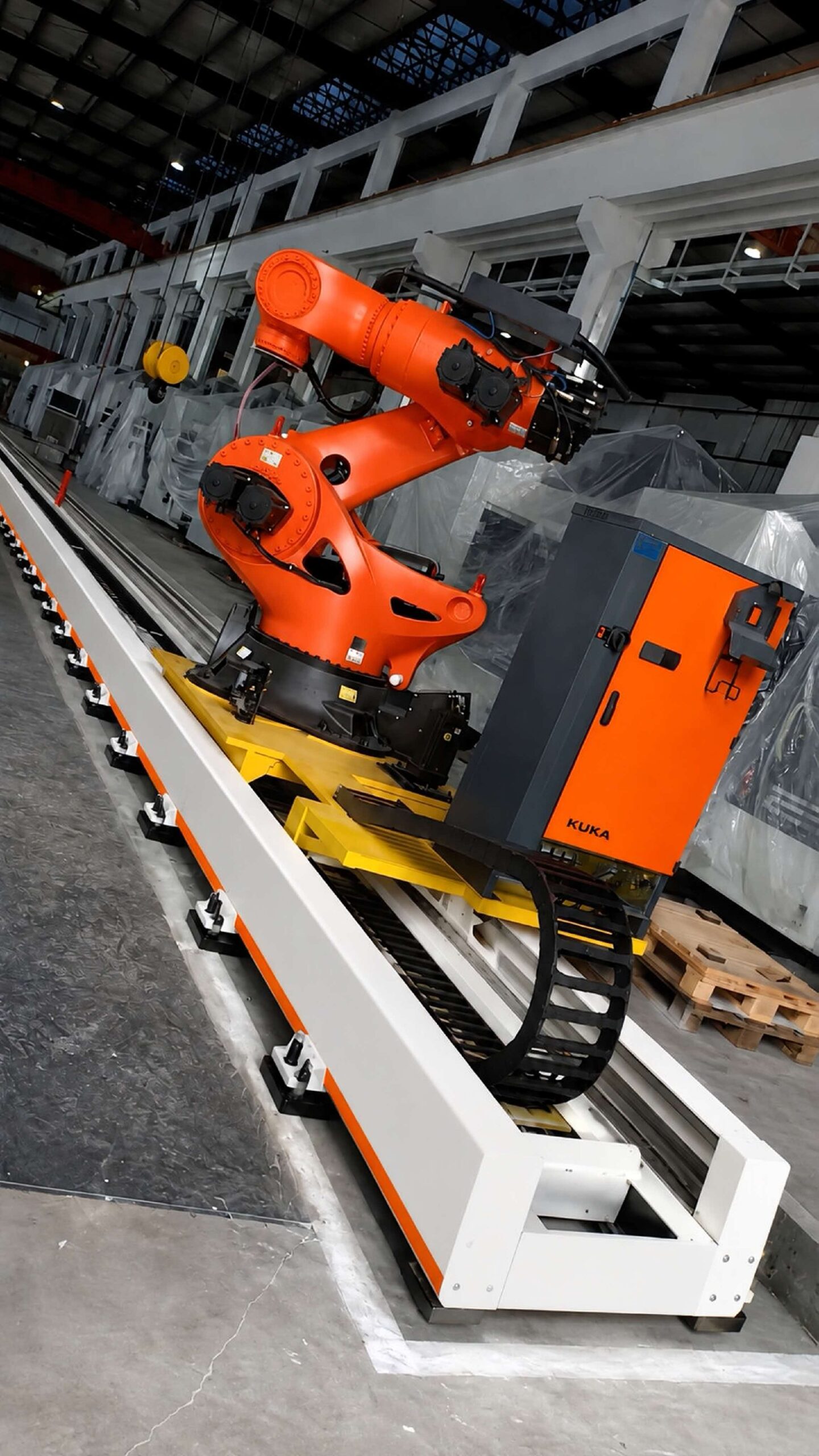
Almost every track over about 6 metres ships in sections. The question is not whether to split it, but how it is split — because a track that is designed to be split reassembles to its factory accuracy, and a track that is cut into pieces as an afterthought does not.
On our tracks, the split points are decided at the design stage, not at the packing stage. The base frame is built in bolted sections, usually 3 or 6 metres long, with machined mating faces. Those faces are ground flat so that when two sections are bolted together, the joint is as true as the rest of the frame. Dowel pins locate the sections to each other — the bolts hold them, but the dowels are what put them back in the same place every time. Each section is match-marked: a stamped number or a paint mark that says, unambiguously, which end of which section meets which. Section 1A meets 1B, not 2A. It sounds obvious. On a shop floor, with three identical-looking sections and a deadline, it is the kind of thing that goes wrong if it is not marked.
The rails and the rack are split at different points from the frame joints, and deliberately so. If the rail joint and the frame joint landed in the same place, you would have a weak spot — a step in the rail exactly where the frame is also joined. Staggering the joints spreads the transition and keeps the slider moving smoothly across it. The rack segments are also match-marked, and the tooth spacing across the joint is checked at the factory before the track is taken apart, so that the pinion does not feel a bump every time it crosses from one section to the next.
Here is the part customers sometimes miss: the track should be fully assembled, aligned, and run at the factory first, and only then taken apart for shipping. That factory run is the factory acceptance test, and it is what proves the track is accurate before it is split. If the track is shipped without ever having been assembled, nobody knows whether the sections fit together properly until they are on the customer’s floor, thousands of kilometres from the factory that made them. That is a bad time to find out.
Packing a precision machine for six weeks at sea
Export packing for a robot track is not the same as packing a pallet of steel parts. The packing has to protect machined surfaces, survive a sea voyage, and still make sense to the people opening it at the other end. A few things we have learned to insist on.
Every exposed machined surface gets protected before it goes in the crate. Guide rails are coated with a corrosion-preventive grease or oil, then wrapped. Rack teeth are covered — a dent in a rack tooth from a loose fastener is a small defect that causes a surprisingly large positioning error. The slider is locked or blocked so it cannot slide along the rail in transit; a slider that has been hammering back and forth inside a crate for six weeks arrives with brinelled bearings and nobody can see why until the track starts running rough.
Moisture is the quiet enemy. A sealed container crossing the equator will sweat — warm humid air during the day, cold steel at night, condensation running down the inside of the walls. Desiccant bags go in every crate, and the track sections are wrapped in vapour-barrier film, not just plastic sheeting. Vapour-corrosion-inhibitor paper on the rails adds another layer. It is cheap insurance, and the alternative is opening a crate to find surface rust on a ground rail, which is a much more expensive problem than a bag of desiccant.
The crates themselves are export crates, built from heat-treated wood that meets ISPM 15 — the international standard for wood packaging, which most destination countries enforce. Untreated wood can be refused at the port, and a refused shipment is a delay nobody budgeted for. The crate is marked on the outside: the contents, the gross weight, the centre of gravity, the lifting points, and which way is up. A crate that does not say where to lift it will be lifted from wherever is convenient, and that is how a long section gets bent.
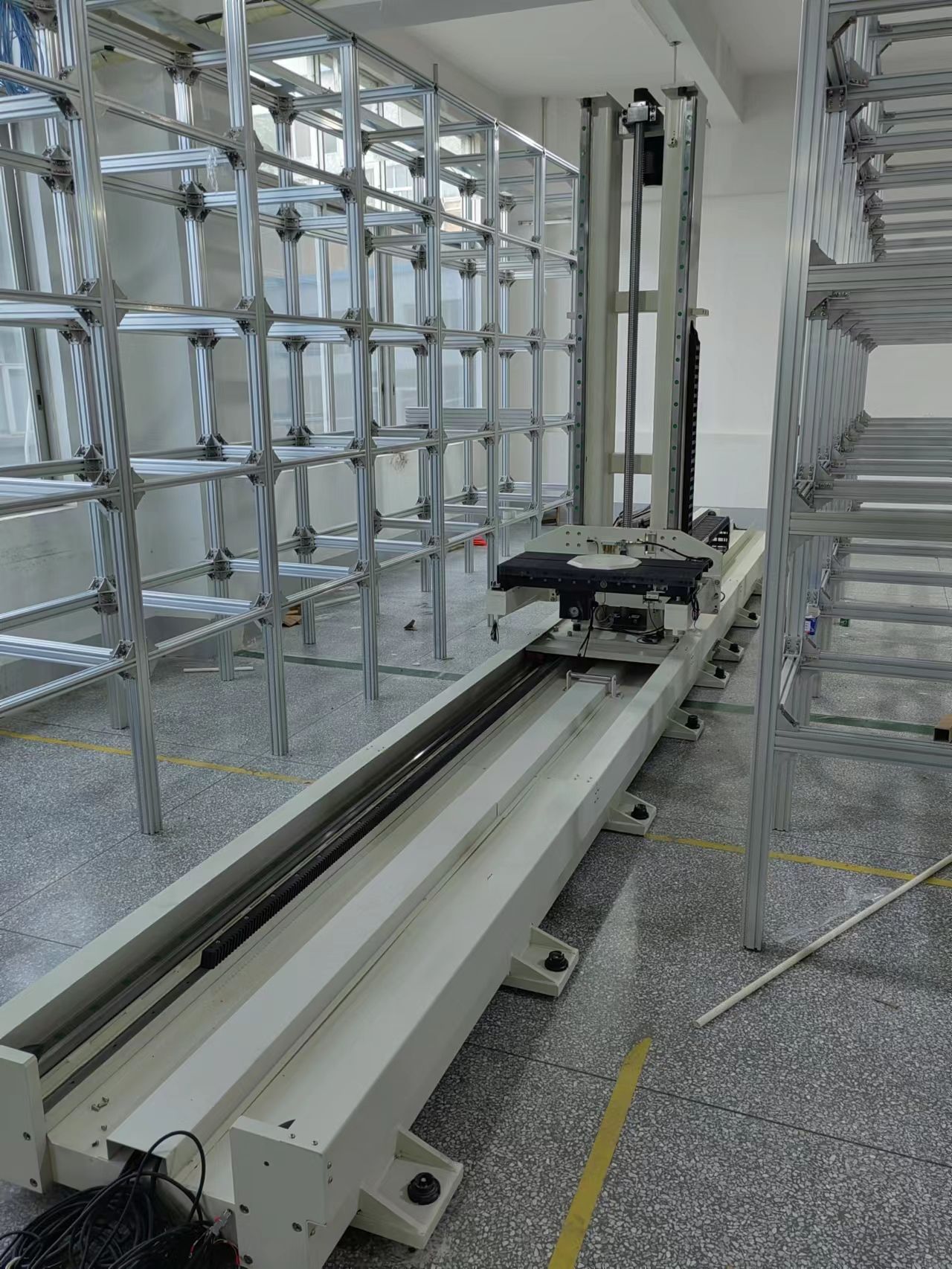
Small parts travel separately, in their own labelled boxes, not loose in the crate with the track. Anchor bolts, levelling screws, the drag chain, cable connectors, spare limit switches, the grease and the touch-up paint — all of it in one clearly marked accessories crate, with a packing list inside the lid. We have seen installations lose a full day because the anchor bolts were buried under a rail section in a crate nobody wanted to unpack twice. The accessories crate is a small thing. It saves a day.
The paperwork that holds up a shipment
Paperwork is the least interesting part of shipping a robot track, and the part most likely to delay it. Three documents cause almost all the trouble.
The packing list has to match what is actually in the crates — every crate, its dimensions, its gross and net weight, and its contents. Customs officers check it. If the packing list says three crates and there are four, or the weights do not add up, the shipment stops while someone sorts it out. The list should be in the shipping documents and also taped inside each crate lid, because the people opening the crates are not the people who cleared customs.
The commercial invoice has to describe the goods accurately and carry the correct commodity code for the destination country. A robot track is industrial automation equipment, and the code and the declared value decide the duty. Getting this wrong does not just cost money — in some countries it triggers an inspection, and an inspection of a sealed export crate is not something you want done by someone in a hurry.
The third document is the one customers forget: the conformity and certification paperwork. For Europe, that means CE documentation for the track as a machine component. For some destinations, it means a certificate of origin. These are not difficult to prepare, but they take time, and they cannot be produced after the ship has sailed. If your supplier cannot tell you what certificates come with the track, that is worth resolving before the order is placed, not while the container is sitting at the port.
Then there is the question of who is responsible for what once the track leaves the factory. The shipping terms — FOB, CIF, DDP, and the rest — decide whether the supplier, the freight forwarder, or the customer handles export clearance, sea freight, insurance, import clearance, and inland transport. There is no universally right answer, but there is a wrong one: assuming the price covers something it does not. A track quoted FOB Shanghai and a track quoted DDP delivered to a factory in Poland are very different prices, and the difference is the whole journey in between. Ask what the quote covers, in writing, before ordering.
What happens on arrival: re-assembly and re-alignment
Delivery is not the end of the shipping story. It is the halfway point. A track that arrives in sections has to be put back together, and the quality of that re-assembly decides whether the accuracy that left the factory survives.
The first job is the foundation. The floor or steel structure the track bolts to has to be ready before the crates arrive — flat, level, and cured, with the anchor bolt positions set out. This is the same foundation work we describe in our robot track foundation design guide, and it cannot be rushed after delivery. A track bolted to a floor that is still curing, or to anchor bolts that are a few millimetres out, will never align properly, no matter how good the track is.
Then the sections go together in order, following the match marks. The dowel pins locate them, the bolts are tightened in sequence — not one side fully torqued and then the other, which pulls the joint out of square — and the mating faces are checked clean before they meet. A single grain of grit or a chip of paint between two mating faces is enough to throw a joint out by more than the track’s repeatability budget. It takes five minutes to clean a face. It takes a day to find out why the track is out after the robot is already calibrated.
Then comes the alignment check, and this is the step that gets skipped most often. The assembled track’s straightness should be checked with a laser level or a laser tracker before the robot is calibrated — the same kind of check we describe in our article on why external axis calibration fails. If the track is out, the time to find out is now, while the bolts are still accessible and the robot is still on its pallet. Calibrating a robot to a track that has not been checked is calibrating to an error, and that error shows up in every weld the cell makes.
Finally, the track is run — full travel, both directions, at working speed, with the robot mounted — and the repeatability is checked against the factory test results. If the numbers match the FAT report, the track is ready. If they do not, the cause is usually in the re-assembly: a joint, a bolt sequence, or a foundation issue, and it is found by working through the joints one at a time rather than by re-running the calibration and hoping.
The mistakes we see most often
Most shipping problems with robot tracks are not dramatic. They are ordinary oversights, repeated often enough that they are worth naming.
Shipping the track assembled because splitting it seemed like too much work. A 12-metre assembled track needs a flat rack, a crane at both ends, and a route that can take the length. It also arrives as one long, flexible beam that has been bouncing on a ship for weeks. Splitting it is not a compromise. It is the design.
No match marks on the sections. Three rail sections look identical, and without marks they get assembled in the wrong order or the wrong way round. The track still bolts together — the bolt holes line up, more or less — and the error only shows up when the slider crosses a joint.
Unprotected rack teeth and rails. A crate is not a clean room. Things move, fasteners come loose, and a single dent in a rack is enough to make a weld position drift by a fraction of a millimetre every time the pinion crosses it.
Forgetting the accessories crate. Anchor bolts, levelling wedges, drag chain brackets, and spare limit switches are small, cheap, and impossible to improvise on a customer’s shop floor. They should travel with the track, labelled, in one place.
Booking the container before asking the supplier for packed dimensions. The freight forwarder works from the numbers they are given. If those numbers are the track’s drawing dimensions rather than its packed dimensions, the container that arrives will be the wrong one.
Calibrating the robot before checking the track. This is the most expensive mistake on the list, because it turns a one-hour alignment check into a full day of re-calibration — and it is entirely avoidable.
Before the track leaves the factory: a checklist
- Factory acceptance test completed on the fully assembled track, with the results recorded — repeatability, straightness, and full-travel run.
- Split points confirmed at the design stage, with machined mating faces, dowel pins, and match marks on every section, rail segment, and rack segment.
- Packed dimensions and weights confirmed for every crate, and the container type chosen from those numbers — not from the drawing dimensions.
- Rails greased and wrapped, rack teeth covered, slider blocked so it cannot move in transit.
- Desiccant and vapour-barrier wrapping in every crate; vapour-corrosion-inhibitor paper on machined surfaces.
- Export crates built from ISPM 15 heat-treated wood, marked with contents, weight, centre of gravity, lifting points, and orientation.
- Accessories crate packed and labelled: anchor bolts, levelling screws, drag chain and brackets, cable connectors, spare limit switches, grease, touch-up paint, and a printed copy of the assembly drawing.
- Packing list, commercial invoice, and conformity/certification documents prepared and checked against the actual crates — one copy with the shipment, one copy inside each crate lid.
- Shipping terms confirmed in writing: who handles export clearance, freight, insurance, import clearance, and inland transport to the site.
- Foundation at the destination confirmed ready — flat, level, cured, anchor positions set out — before the ship sails, not after it docks.
- Alignment tools arranged at the destination: laser level or laser tracker, dial indicators, and torque wrenches, with someone on site who knows how to use them.
- Spare parts for the journey identified: at minimum a spare limit switch and a length of drag chain, because both are cheap and both stop an installation if they are damaged in transit.
Frequently asked questions
Can a 12-metre robot track fit in a standard 40-foot container?
Almost never once it is packed. A 40-foot container has roughly 12 metres of internal length, and a 12-metre track needs more than that once you add the drive motor, the drag chain, the end covers, and the export crating. In practice a 12-metre track ships in sections in a 40-foot container, or assembled on a flat rack. The right answer depends on the packed dimensions, which the supplier should confirm before the container is booked.
How is a robot track split for shipping?
The track is designed in bolted sections, usually 3 or 6 metres long, with machined mating faces and dowel pins that locate the sections to each other. The rails and the rack are split at different points from the frame joints so the joints do not line up. Every section is match-marked so it can only go back together one way. The track is fully assembled, aligned, and tested at the factory first, and only then taken apart for shipping.
How long does it take to re-assemble and align a track on site?
For a 12-metre track in three sections, with the foundation ready and the right tools on site, re-assembly and alignment typically takes one to two days, plus the robot calibration afterwards. The foundation is the long pole: if it is not ready, or the anchor positions are wrong, the installation waits. That is why the foundation should be confirmed before the track ships, not after it arrives.
Does shipping affect a robot track’s accuracy?
It can, but it should not. A track that is split properly, packed properly, and re-assembled and re-aligned properly will hold the same accuracy it had at the factory acceptance test. Accuracy is lost when sections are assembled out of order, when mating faces are not cleaned, when bolts are tightened in the wrong sequence, or when the alignment check is skipped and the robot is calibrated to a track that has not been verified. All of those are avoidable.
What documents are needed to ship a robot track overseas?
At minimum a packing list that matches the crates, a commercial invoice with the correct commodity code and declared value, and the conformity documentation for the destination — CE documentation for Europe, and a certificate of origin where required. The wood packaging must meet ISPM 15. The shipping terms should state in writing who handles export clearance, freight, insurance, import clearance, and inland transport.
Should the robot travel on the track, or separately?
Separately, in almost every case. Shipping a robot mounted on a track section adds weight in the wrong place, risks damage to both the robot and the track, and makes the crate much harder to handle. The robot ships in its own crate, and it is mounted and calibrated after the track has been re-assembled and aligned.
What should I send a supplier when asking for a shipping quote?
The travel length and total length of the track, the robot model, the full slider payload including everything that rides on the slider, the destination country and site address, and whether the site can receive a 40-foot container or needs a smaller truck for the last leg. Those details decide the container, the crating, and the price — a supplier who does not ask for them is guessing.
Conclusion
Shipping a 12-metre robot track overseas is not a freight problem. It is an engineering problem that happens to involve a ship. The container, the split points, the packing, the paperwork, and the re-alignment are all part of the track’s design, and they are all decided long before the crates leave the factory. When they are done properly, the track that arrives is the same track that passed its factory test, and the first weld runs where it should. When they are not, the cost shows up on the customer’s floor, in lost days and re-calibration — which is the most expensive place to discover a shipping mistake.
If you are planning a robot track for an overseas site, send us the travel length, the robot model, the slider payload, and the destination country. Those four details are enough to work out the sections, the container, and the re-alignment plan — and to give you a price that already includes the journey, not just the track. You can reach our engineering team through the contact page, or browse our robot linear track and gantry system ranges to see the track and gantry formats we build for long-travel welding cells.
By WRS Robotics Engineering Team