
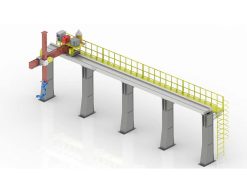
 Robot Linear track
 Robot welding Positioner
 Robot Torch cleaning station
 Welding Robot Workstations & Automation Solutions
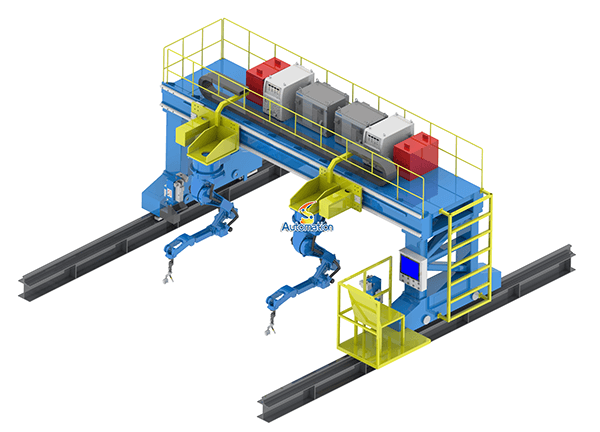 Robot Gantry System
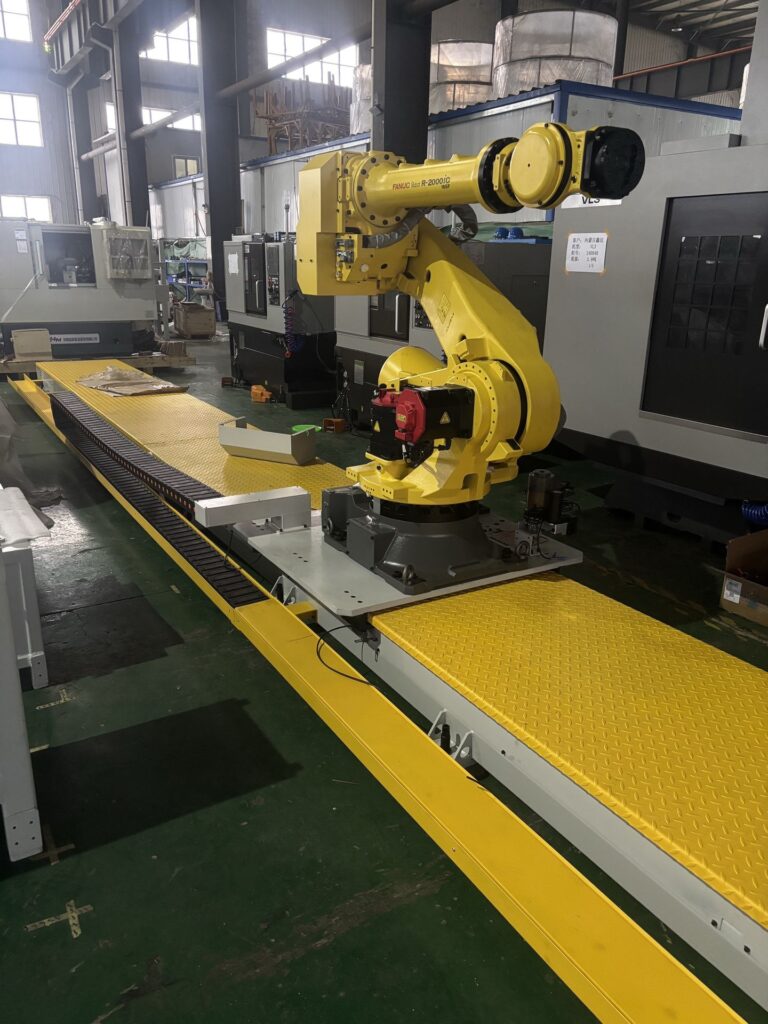
A robot linear track rarely fails without warning. Long before a track stops a production line, it starts giving smaller signals: a faint change in the sound as the slider passes one section of rail, a little more grease on the floor than last week, a weld that lands a fraction off where it landed a month ago. In our experience, the difference between a track that holds its accuracy for years and one that drifts after the first year is almost never the quality of the steel. It is whether anyone was looking — and whether what they saw was written down.
That is what preventive maintenance is for a track. Not a thick manual that sits in a drawer, and not a repair visit after something breaks. A short, regular routine: a few minutes a day from the operator, a closer look every week, a proper inspection every month, and a full check once a year. Most of the items on that routine cost nothing but attention. The failures they prevent — a seized slider, a cracked rack tooth, a cable torn inside a drag chain — cost days.
This article explains what wears on a robot linear track and why, and lays out a practical maintenance schedule — daily, weekly, monthly and annual — that a welding cell team can actually follow. It is written for the people who run the cell: the operator who sees the track every shift, the maintenance technician who gets called when it stops, and the engineer who has to explain to a production manager why the robot is down.
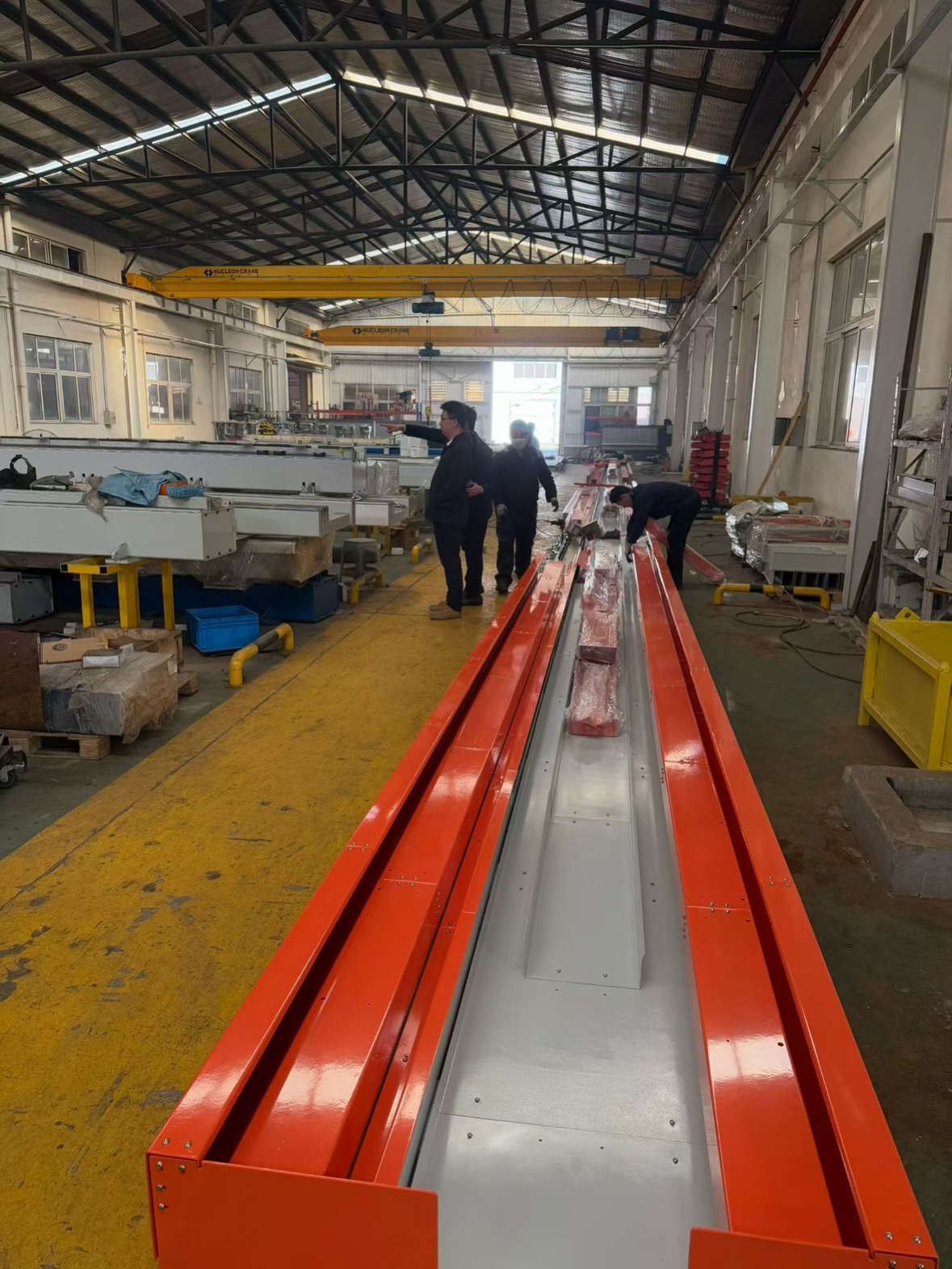
What actually wears on a robot track
A track looks like a simple piece of steel. In practice it is a small system of wearing parts, and each one fails in its own way. Knowing which part does what is the first step to maintaining it, because the checks are different for each.
Guide rails and slider blocks. The rails carry the whole moving load — the robot, the control cabinet, the welding machine and anything else riding on the slider. The slider blocks run on recirculating balls or rollers, and they live or die on lubrication and cleanliness. Dry running scores the raceways. Welding spatter and grinding dust act like grinding paste inside the blocks. Once a raceway is scored, no amount of grease brings the accuracy back; the block has to be replaced. This is why the daily wipe-down matters more than it looks: it is not housekeeping, it is the cheapest accuracy protection the track has.
Rack and pinion — or ball screw. Most long tracks use rack and pinion: the rack is made in sections along the full travel, and the pinion meshes with it. The wear points are the rack teeth, the pinion, and the joints between rack sections, where a step or a gap makes the slider hesitate at the same position every pass. Shorter tracks sometimes use a ball screw instead, where the wear points are the screw, the nut and the end bearings. The maintenance is different for each drive — a rack needs its teeth and mesh checked, a screw needs its supports and its nut play checked — so the first thing to confirm is which drive your track has. Our article on rack and pinion vs ball screw robot tracks explains the difference in detail.
Drag chain and cables. The drag chain carries power, signal and welding cables through every metre of travel, flexing thousands of times a day. Cables inside a chain do not usually fail suddenly; they fail from repeated bending at the same point, and the first sign is intermittent — a signal that drops out only when the slider is at full extension, a fault that disappears when the technician arrives. A chain that is catching, twisting or running dry is telling you the cables inside it are being worked harder than they should be.
Bolts, anchors and the foundation interface. A track is bolted to a floor or a steel base, and the bolts that hold it are part of the accuracy chain. Vibration, thermal cycles and the repeated acceleration of a heavy slider work on them constantly. A bolt that has lost torque does not announce itself; the rail moves a fraction, the robot’s welds drift, and the cause is only found when someone finally puts a level on the rail. Our foundation design guidelines explain what the track is bolted to and why that interface matters.
Servo motor, gearbox and drive. The servo and its gearbox turn electrical commands into motion, and their enemies are heat, contamination and a load they were not tuned for. A servo that runs hot, a gearbox that gets noisy after half an hour of running, or a drive that trips on overload are all maintenance signals — not random faults. They usually mean something mechanical has changed: more friction than the servo was tuned for, a load heavier than the calculation assumed, or a lubrication problem upstream.
Covers, wipers and seals. The least glamorous parts of the track, and the ones that decide how long the expensive parts last. Rail covers keep spatter and dust off the raceways; wipers on the slider blocks scrape debris off the rail before it reaches the balls. A torn cover or a worn wiper is a small part with an outsized effect: it is the difference between a rail that stays clean and one that grinds itself down.
Daily checks: five minutes at the start of the shift
The operator sees the track more than anyone else, so the daily routine belongs to the operator — and it should take about five minutes, not half an hour, or it will not happen. It is a walk-around, not a strip-down.
Walk the length of the track and look at the rails. Is there spatter, grinding dust or metal chips sitting on them? Wipe the rails clean with a lint-free cloth before the first program runs. Check the drag chain as the slider moves: does it run smoothly through the full travel, or does it catch, twist or sag at one point? Listen during the first full-travel move of the day. A track that ran quietly yesterday and clicks or grinds today is telling you something changed overnight — usually a rack joint, a piece of debris on the rail, or a slider block starting to fail.
Check the lubrication indicator if the track has an automatic lubrication pump — the pump should show that it cycled, and the reservoir should not be empty. Our tracks are ordered with either a 220 V direct power supply or a 24 V safety-voltage pump, and the check is the same either way: the pump ran, and there is lubricant left. And look at the floor under the track. Fresh grease or oil on the floor means a seal, a hose or a fitting is leaking, and the lubricant is going where it should not go instead of where it should.
None of this needs a specialist. What it needs is someone who does it every day, and a simple log — a sheet on the cell wall, a line per shift — so that “it sounded different on Tuesday” becomes a dated observation instead of a forgotten one.
Weekly checks: look closer, and listen
Once a week, spend half an hour on the track with the cell stopped and locked out. This is the maintenance technician’s routine, and it is where small problems get caught while they are still small.
Inspect the rack teeth along the full travel — or the ball screw, if that is the drive. Look for chips, scoring or a buildup of grease mixed with dust at the rack joints. Run a finger along a rack joint: a step you can feel is a step the pinion feels on every pass. Check the pinion for wear on the tooth flanks and for backlash by rocking the slider gently by hand with the servo off — free movement at the slider that was not there last month means the mesh has opened up. Our article on why a robot track loses accuracy after six months explains how backlash and joint wear show up as welds drifting in one part of the travel.
Check the slider blocks and their wipers: are the wipers intact, and are they in contact with the rail? A wiper that has lifted off the rail is not wiping. Check the drag chain links for cracks and the cables inside for chafing where they bend. Tighten any loose chain fixings. Check the covers over the rails and the rack for damage — a bent cover can rub on the moving slider, and a missing one lets spatter straight onto the raceway.
Finally, check the servo and gearbox by touch and by ear after a normal production run. Warm is normal. Hot enough that you cannot keep a hand on it is not, and neither is a new whine or a rumble that was not there last week. Record the temperature if you have an infrared thermometer — a number written down beats “it felt hot” when you are trying to work out whether a problem is getting worse.
Monthly checks: measure, don’t guess
The monthly inspection is where maintenance stops being looking and starts being measuring. Once a month, with the cell stopped, work through the measurements that tell you whether the track is still the track that was installed — or whether it has moved.
Re-check bolt torque. Take a torque wrench to the rail fixing bolts and the anchor bolts, working to the torque values in the installation manual. You are not looking for bolts that have come loose — you are looking for bolts that have lost a little torque, which is how a rail starts to move. Pay attention to the bolts near the ends of the track and near the rack joints, where vibration and thermal movement concentrate. Mark torqued bolts with a paint line across bolt and surface, so next month a broken line tells you at a glance that something moved.
Check rail level and straightness. Put a precision level on the rail at several points along the travel, and compare the readings with the installation record — or with the factory acceptance test report, which is the baseline the track was shipped against. Our article on the factory acceptance test for robot tracks explains why that report is the most valuable document in the purchase: it records what the track actually did before it left the factory, and it is the reference your monthly readings should be compared with. A small change in level at one point is usually foundation settlement or a bolt losing torque. A change along the whole length is usually thermal — and worth noting against the season.
Measure repeat positioning accuracy. Drive the slider to the same target position several times, from the same direction and from the opposite direction, at several points along the travel — the same method the FAT used. If the track was ordered with our standard repeat accuracy of ±0.1 mm, that is the number to measure against, loaded as close to the real working payload as you can manage. An unloaded repeatability check proves very little: the slider behaves differently carrying a robot and a welding package than it does empty. Our article on why external axis calibration fails covers the mastering and calibration mistakes that turn a good track into an inaccurate one, and the monthly accuracy check is what catches them before they become weld defects.
Lubrication, properly. Once a month, the lubrication system itself needs attention, not just the reservoir level. Check the pump, the lines and the metering units: is grease actually reaching every slider block and every grease point, or is one line blocked while the others look fine? Grease the points the automatic system does not reach — the pinion bearing, the rack if it is manually lubricated, the drag chain joints if the manual calls for it. Use the grease the manufacturer specified. The wrong grease is worse than no grease in some cases: it can wash out the correct lubricant, or thicken in cold conditions until the blocks run dry. And remember that both over-lubrication and under-lubrication cause problems. Too little and the raceways score. Too much and grease attracts dust and spatter, packs into the wipers, and ends up on the floor instead of in the bearings.
Quarterly and annual checks: the deep inspection
Every three months, add a few items that do not need doing monthly but should not be left a year. Inspect the drag chain cables properly: open the chain, look at each cable along its bending length, and check for a flattened or shiny section where the same bend has been worked thousands of times. Check the servo motor and gearbox oil or grease level, and the drive cabinet filters — welding cells are dusty, and a clogged filter is how a drive overheats on a hot afternoon. Check the limit switches by driving into them at low speed, and confirm the e-stop still stops the slider within the distance recorded at installation. Check the ground plate and the rail width clearance, including the drag chain envelope, against the installation drawing — in a busy cell, something always gets stored against the track eventually, and a pallet leaning on a rail cover is a failure waiting for a shift change.
Once a year, do the full inspection. This is the one worth scheduling with the equipment supplier or a qualified service technician, because it needs measurement equipment and a trained eye — a laser measuring system for straightness along the full travel, a proper backlash measurement at several positions, and a check of the servo tuning against the actual load. The annual check should also re-verify the things that were agreed when the track was ordered: travel stroke and total length, slider payload, robot model, travelling speed, and the operating environment the track is actually in now — which is not always the environment it was ordered for, if the cell has grown a grinding station since installation.
The annual inspection is also the moment to review the maintenance log as a whole. A track that needed its bolts re-torqued every month is telling you something about the foundation or the vibration in the cell. A slider block replaced twice in a year is telling you something about contamination or lubrication. The log is what turns twelve months of small observations into a diagnosis — and into a decision, such as adding rail covers, moving a grinding operation, or changing the lubrication interval.
Lubrication: the most common maintenance failure
If there is one maintenance item that causes more track problems than all the others, it is lubrication — not because it is difficult, but because it is easy to get wrong in both directions, and because the damage is invisible until it is expensive.
Under-lubrication is the more familiar failure. The slider blocks run dry, the balls score the raceways, and the damage is permanent. It usually happens for boring reasons: the reservoir ran empty and nobody noticed, a metering line blocked, or the interval in the manual was never transferred into the maintenance plan. The automatic pump exists precisely to take this out of human hands — but only if someone checks that it is actually running.
Over-lubrication is the quieter failure. Grease pumped into a block that does not need it has to go somewhere, and it goes out past the seals, carrying dust and spatter with it, or it packs into the wipers until they stop wiping. The track looks well cared for and the rails are grinding themselves down. The fix is to follow the manufacturer’s interval and quantity, not to add “a bit extra, just in case”. A track in a clean environment needs less grease than the same track in a welding cell full of spatter and grinding dust — so the interval should be set for the environment the track actually works in, not the one in the brochure.
Two practical rules cover most of it. First, check the pump and the reservoir every day, and the lines and metering units every month — a pump that is not running is the same as no lubrication at all. Second, keep the lubricant specification on the cell wall next to the maintenance log, with the product name, not just “grease”. When the person doing the monthly check changes, the specification should not depend on their memory.
Warning signs that mean stop and call
Most maintenance can be done by the cell team. A few signs mean the track should be stopped and a specialist called, because running on is how a repairable problem becomes a replacement.
The first is a sudden change in accuracy — welds landing off position after months of good results, or a position error that appears only in one section of travel. The second is a new noise that does not go away after cleaning and lubrication: grinding, clicking once per revolution of the pinion, or a rumble that grows with speed. The third is visible damage: a cracked rack tooth, a scored rail you can feel with a fingernail, a slider block that rocks on the rail, or a drag chain link that is broken rather than worn. The fourth is a servo that trips on overload repeatedly, or a drive fault that clears and comes back — that is usually a mechanical problem the servo is reporting, not an electrical one.
None of these means the track is finished. A rack section can be replaced, a slider block can be changed, a servo can be re-tuned. But all of them get worse — and more expensive — the longer the track keeps running. The correct response to a warning sign is the same as at a factory acceptance test: stop, measure, and fix it before the next production run, not after the next breakdown.
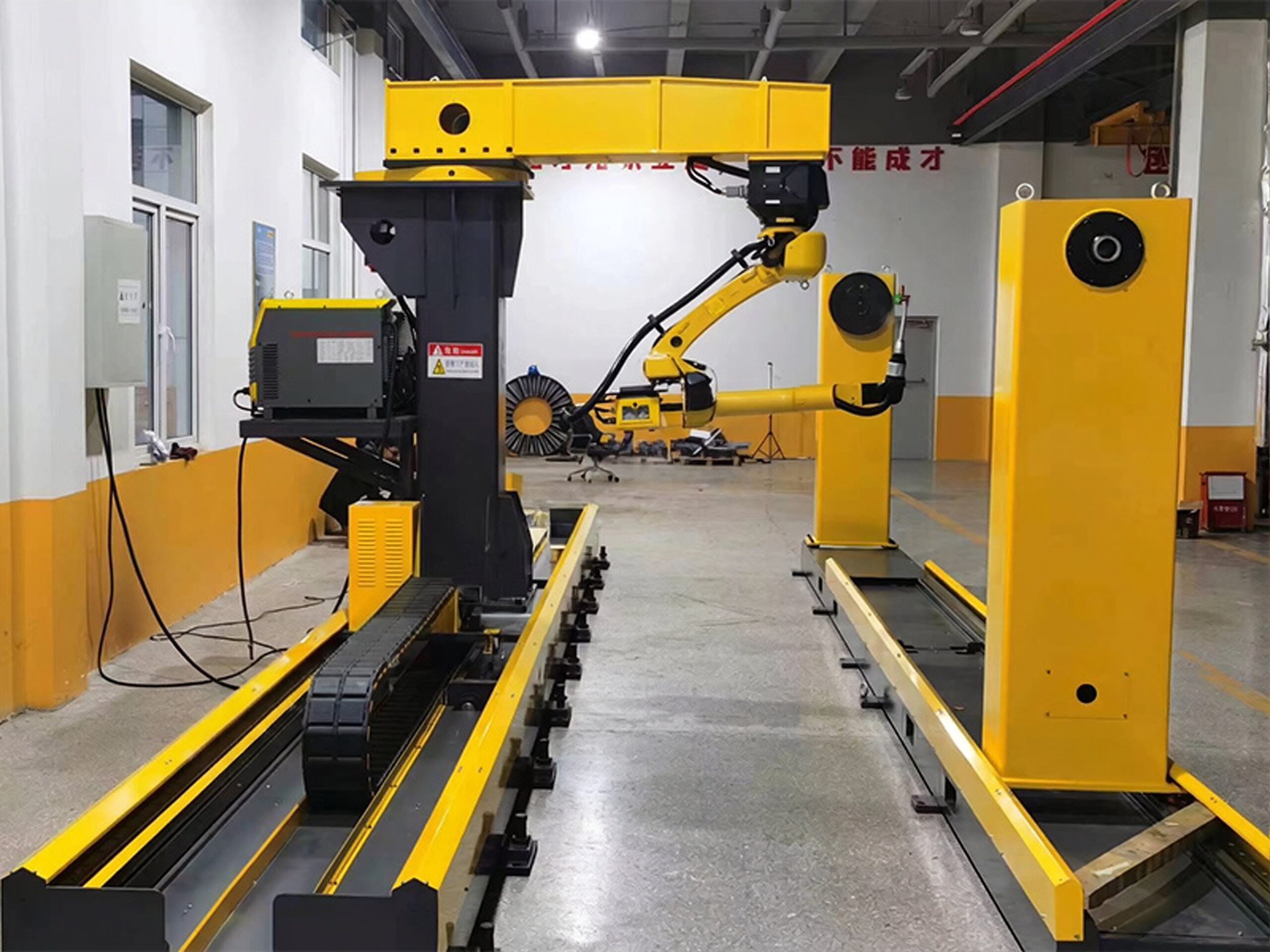
Preventive maintenance checklist
Use this list to build the cell’s maintenance plan. Every item should have a named person, an interval, and a place in the log where the result is written down — a check without a record is a check nobody can prove happened.
- Daily — clean the rails. Wipe spatter, grinding dust and chips off the guide rails before the first program runs; check the lubrication pump ran and the reservoir is not empty.
- Daily — watch and listen. Run the slider through full travel once and check the drag chain runs smoothly; note any new noise, clicking or vibration, and any fresh grease or oil on the floor.
- Daily — log it. One line per shift in the maintenance log: date, operator, anything unusual. A dated observation beats a remembered one.
- Weekly — inspect the drive. Check rack teeth and joints (or ball screw and nut) along the full travel for chips, scoring and dust buildup; check pinion wear and backlash with the servo off.
- Weekly — inspect the slider blocks and wipers. Confirm wipers are intact and in contact with the rail; check rail covers for damage and drag chain links for cracks.
- Weekly — check the servo and gearbox. After a normal production run, check temperature by hand or infrared thermometer and listen for a new whine or rumble; record the reading.
- Monthly — re-torque the bolts. Torque rail fixing bolts and anchor bolts to the manual’s values, starting near the track ends and rack joints; mark torqued bolts with a paint line.
- Monthly — measure level and straightness. Precision level readings at several points along the travel; compare with the FAT report and the installation record, not with memory.
- Monthly — measure repeat accuracy. Same target position, several times, from both directions, at several points along the travel, with the slider loaded to working payload; compare with the ordered accuracy (our standard is ±0.1 mm).
- Monthly — service the lubrication system. Check pump, lines and metering units — confirm grease is reaching every block; grease the points the automatic system does not reach; use the specified lubricant only.
- Quarterly — inspect the cables and safety functions. Open the drag chain and inspect cables along the bending length; clean drive cabinet filters; test limit switches and e-stop stopping distance.
- Quarterly — check the environment around the track. Confirm nothing is stored against the track, rail covers or drag chain; confirm the operating environment still matches what the track was ordered for.
- Annual — full inspection with measurement. Laser straightness check along the full travel, backlash measured at several positions, servo tuning checked against the actual load; review the whole maintenance log for patterns.
- Annual — review the plan itself. Adjust lubrication intervals to the real environment, replace worn covers and wipers as a set, and update the spare parts stock — slider blocks, wipers, rack sections and drag chain links — before they are needed.
- Always — keep the records. File the FAT report, the installation measurements, the monthly readings and the maintenance log together. They are the evidence that decides whether a problem started at installation, in the foundation, or in maintenance — and they are what a supplier needs to help you quickly when you call.
FAQ
How often should a robot linear track be serviced?
Daily cleaning and a visual check by the operator, a closer inspection every week, measurements once a month, and a full inspection once a year. The intervals should be shortened in harsh environments — heavy welding spatter, grinding dust or high duty cycles wear a track faster than a clean, single-shift cell, so the maintenance plan should match the real environment, not the brochure.
What happens if a robot track is not lubricated?
The slider blocks run dry and the balls score the guide rail raceways. That damage is permanent: no amount of grease afterwards restores the accuracy. The track gets noisy, repeat positioning accuracy drifts, and eventually the slider blocks have to be replaced. Checking the automatic lubrication pump daily is the single cheapest thing you can do for a track.
Can I use any grease on a linear track?
No. Use the lubricant the track manufacturer specified, and keep the product name on the cell wall. The wrong grease can wash out the correct lubricant, thicken in cold conditions, or be incompatible with the seals. If the specified product is not available locally, ask the manufacturer for an approved equivalent — do not substitute on the basis of a similar-looking tin.
How do I know if my track has lost accuracy?
Measure it the same way it was tested at the factory: drive the slider to the same target position several times, from both directions, at several points along the travel, with the slider loaded to working payload. Compare the results with the factory acceptance test report and the ordered accuracy — our standard is ±0.1 mm. If the error is worse in one section of travel, the cause is usually local: a rack joint, a rail section, or a bolt that has lost torque. Our article on why a robot track loses accuracy after six months explains the common causes.
Should maintenance be done by the operator or a specialist?
Both. Daily cleaning, visual checks and the lubrication check belong to the operator — they see the track every shift. Weekly and monthly inspections belong to the maintenance technician. The annual full inspection, with laser measurement and servo tuning, is worth doing with the equipment supplier or a qualified service technician. The important part is not who does each check, but that each check has a named person and a written record.
What spare parts should I keep for a robot track?
Keep the wear items on the shelf: slider block wipers, rail covers, a spare slider block, rack sections or a spare pinion for rack-and-pinion tracks, drag chain links, lubrication metering units, and the specified grease. A track waiting a week for a wiper or a rack section is a cell earning nothing. The spare parts list from the factory acceptance test documents is a good starting point — and it should be reviewed at the annual inspection.
Maintenance is what makes a good track stay good
A robot linear track is built to last for years, and most of them do — the ones that do not are usually the ones nobody looked at. The maintenance in this article is not complicated and it is not expensive. It is a five-minute daily routine, a half-hour weekly inspection, a monthly measurement, and an annual deep check, all written down in a log that anyone on the team can follow.
If you are planning a track for a welding cell, the maintenance plan is worth agreeing at the same time as the specification — travel stroke and total length, slider payload, robot model, what else rides on the slider, operating environment, travelling speed, repeat positioning accuracy, and the lubrication power supply. A track ordered for a welding environment with the right covers, wipers and lubrication system is far easier to maintain than one ordered for a clean room and installed next to a grinding station.
If you already have a track and want help setting up a maintenance schedule for it, or if a track you run is showing any of the warning signs in this article, contact us with the track length, robot model and what you are seeing. We will work through the checks with you — because the cheapest repair is the one that never becomes a breakdown.
By WRS Robotics Engineering Team
Related reading: Robot Linear Track · Welding Positioner · Gantry System