
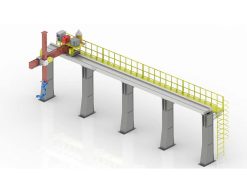
 Robot Linear track
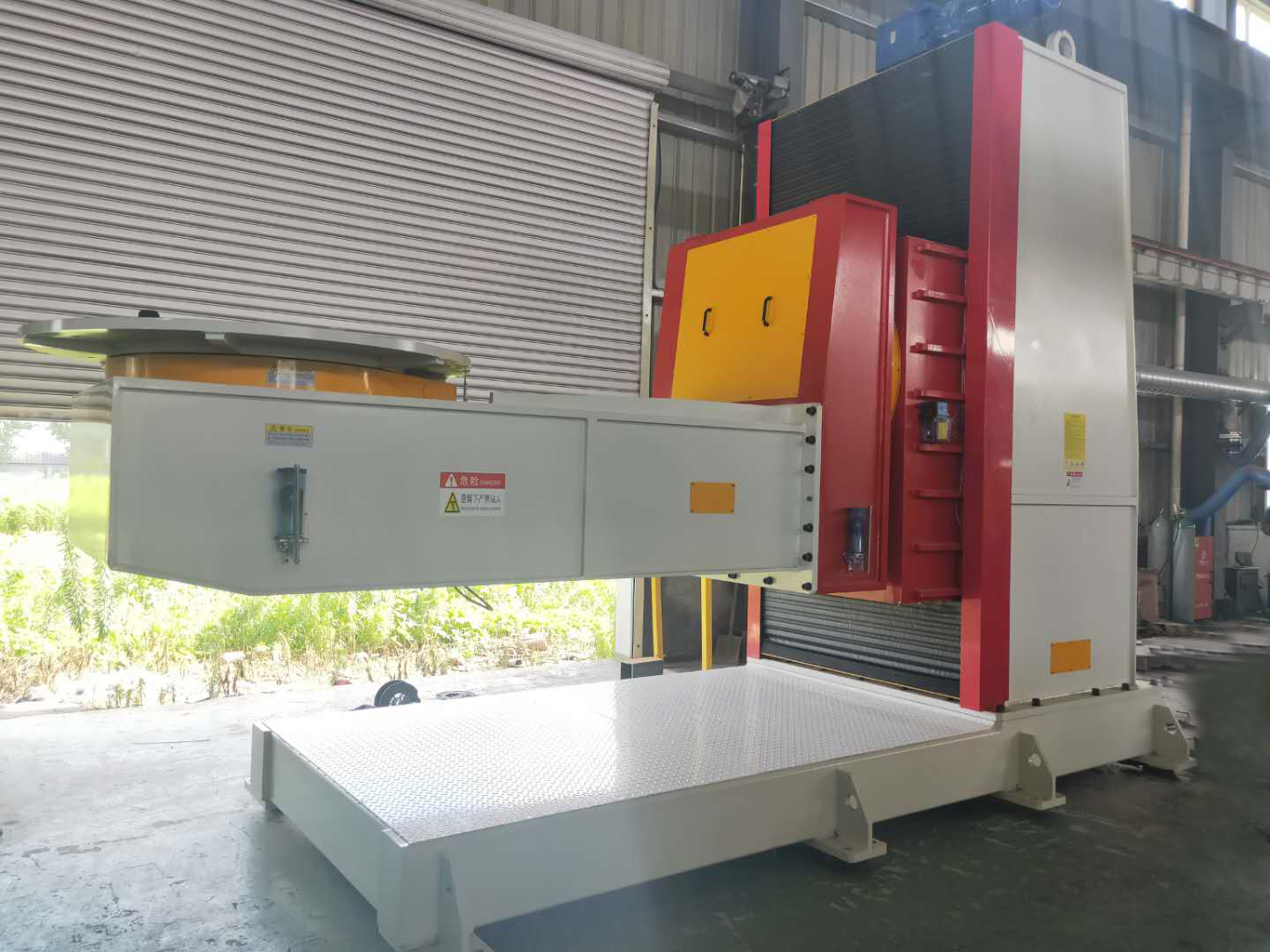
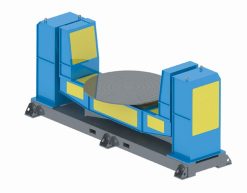 Robot welding Positioner
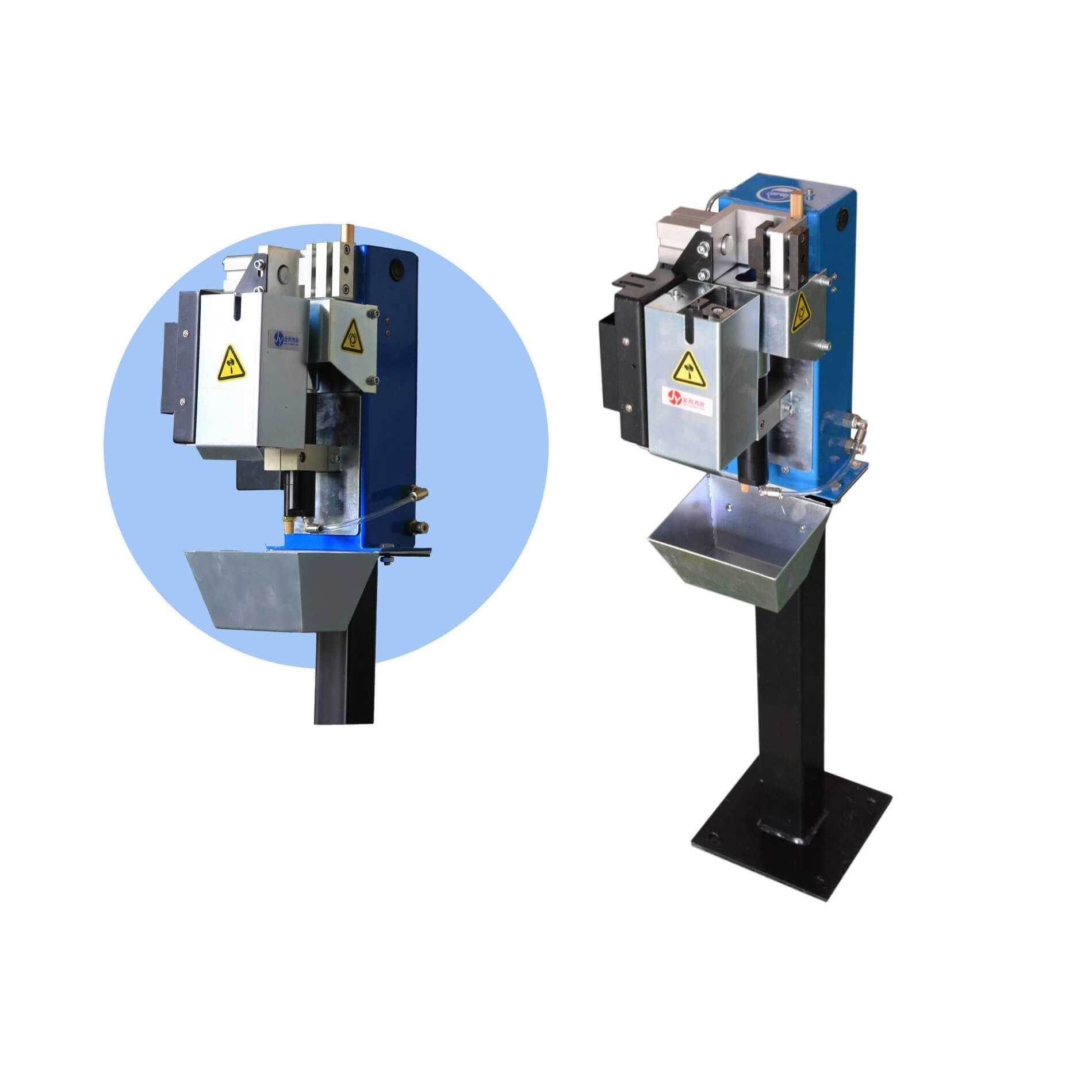 Robot Torch cleaning station
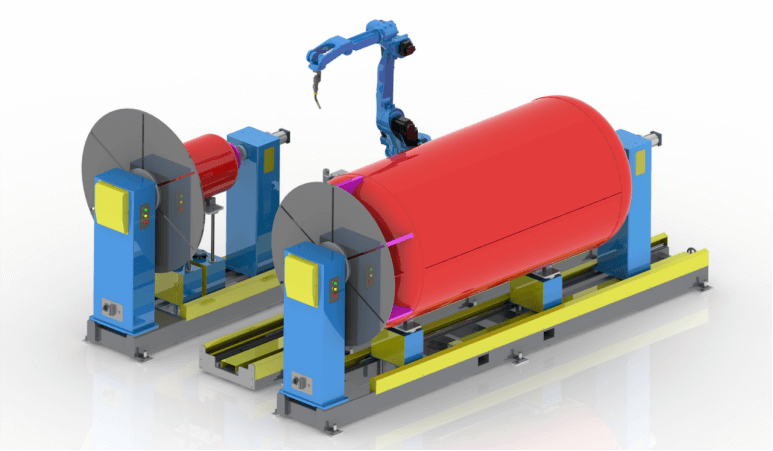 Welding Robot Workstations & Automation Solutions
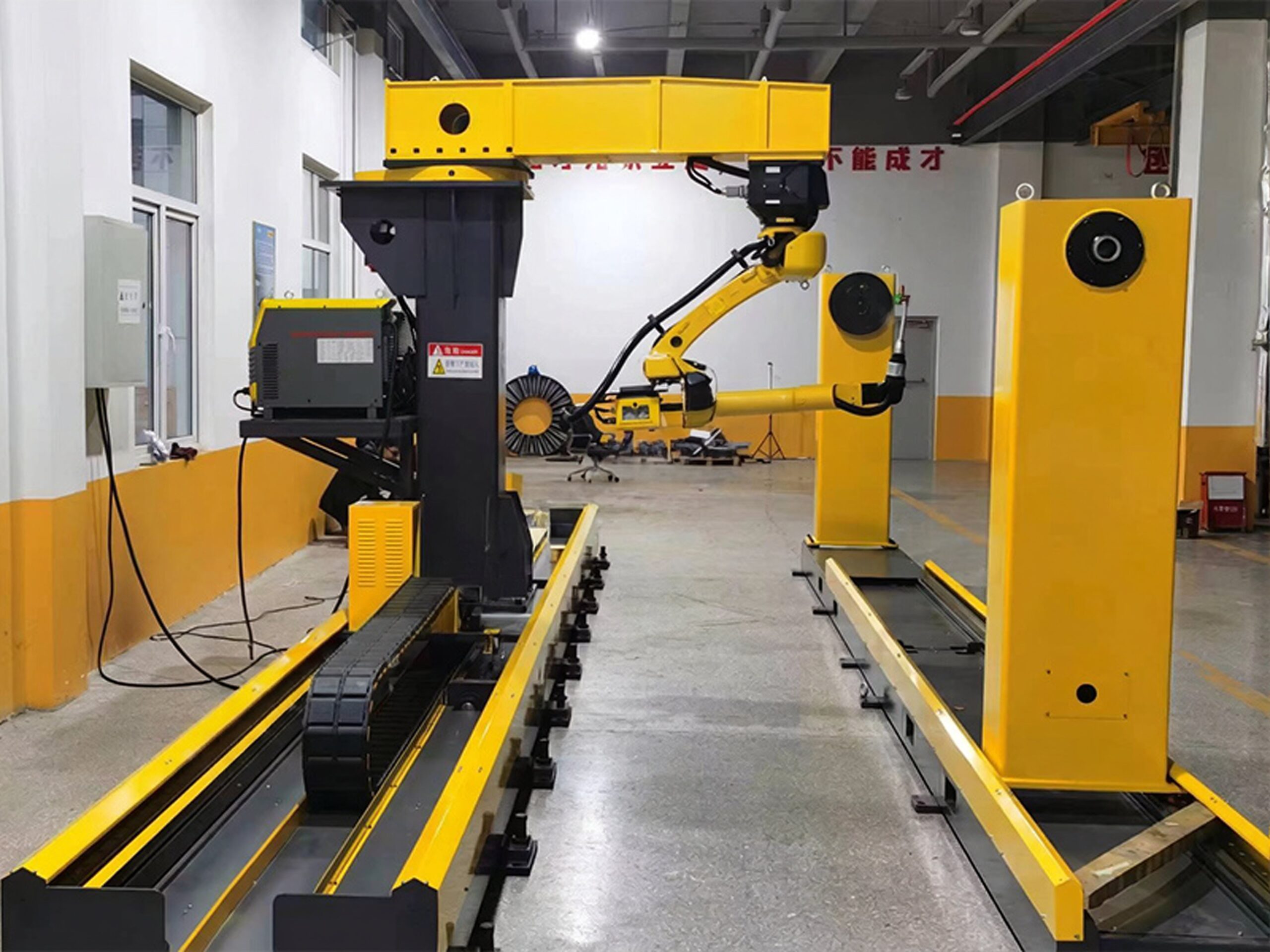
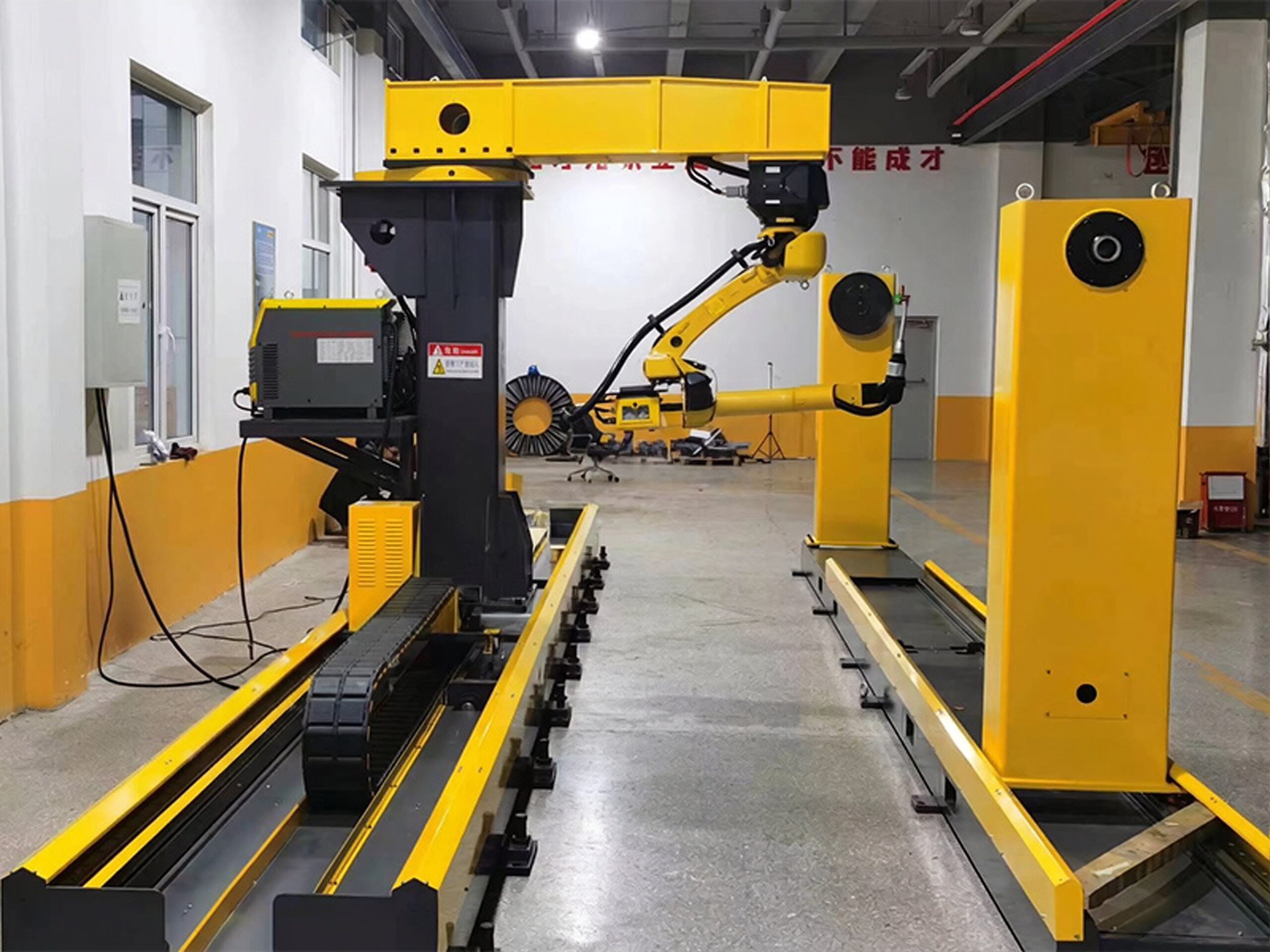
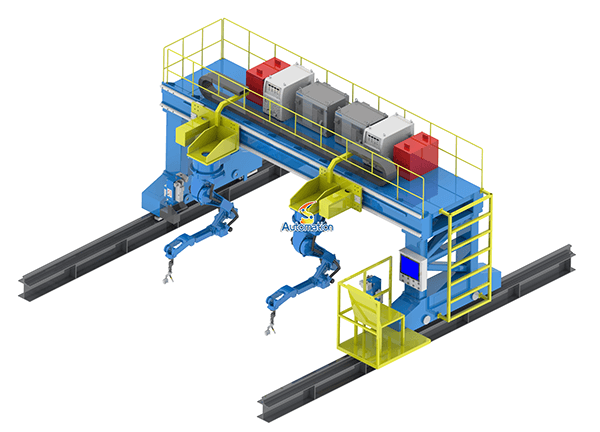 Robot Gantry System
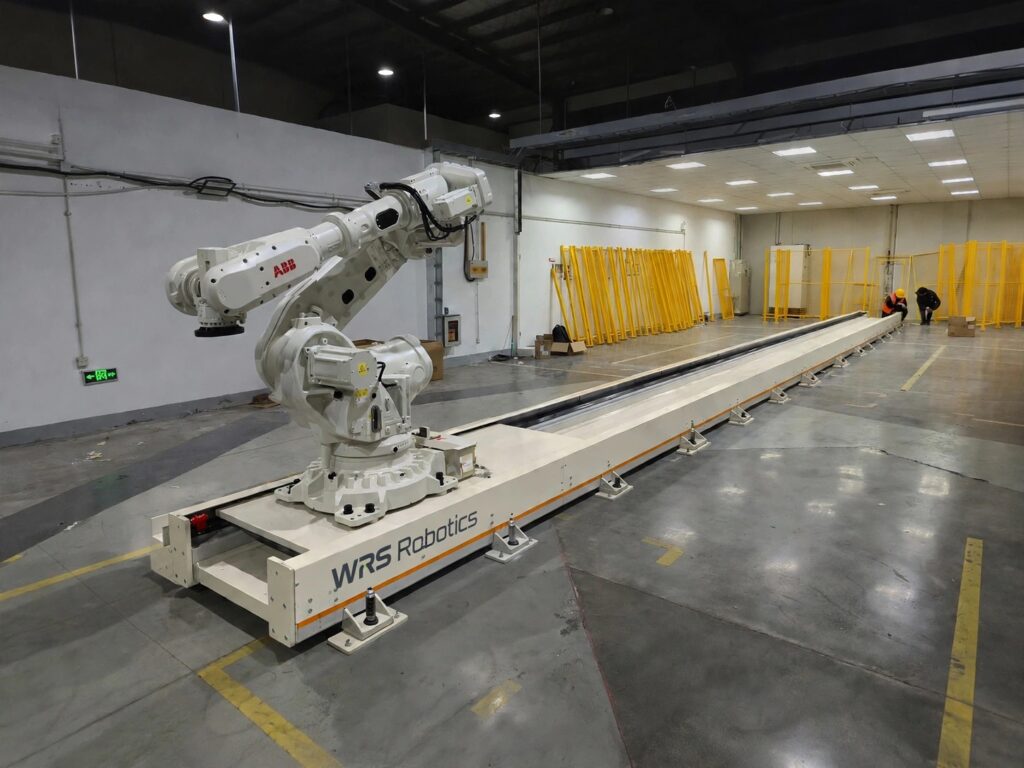
The quotation looked identical. The tracks were not.
A fabrication shop asked two suppliers for a robot track — same travel, same robot, same payload. The two quotations came back within a few percent of each other, and on paper the two tracks looked like the same machine. One of them ran at twice the speed of the other, needed its screw replaced after a year, and cost the shop a week of downtime it had never budgeted for. The difference was not the brand, the steel, or the guide rails. It was the drive system: one track used a rack and pinion, the other a ball screw. Nobody on the buying side had asked which one they were getting, because nobody had told them the question mattered.
It does. The drive system is the part of a robot linear track that turns motor rotation into travel, and it decides more about how the track behaves in real production than almost anything else on the specification sheet — how fast the robot can move between welds, how long the track can be before accuracy falls apart, how the track copes with welding spatter and dust, and what breaks first when it does break. Two tracks with the same travel and the same load rating can behave like completely different machines if their drive systems are different.
This article is about that choice. Not a catalogue comparison — a working explanation of how each drive system actually behaves on a welding cell, where each one wins, where each one fails, and the questions to ask before you sign a quotation. If you are specifying a track, or comparing two quotations that look the same, this is the page to read first.
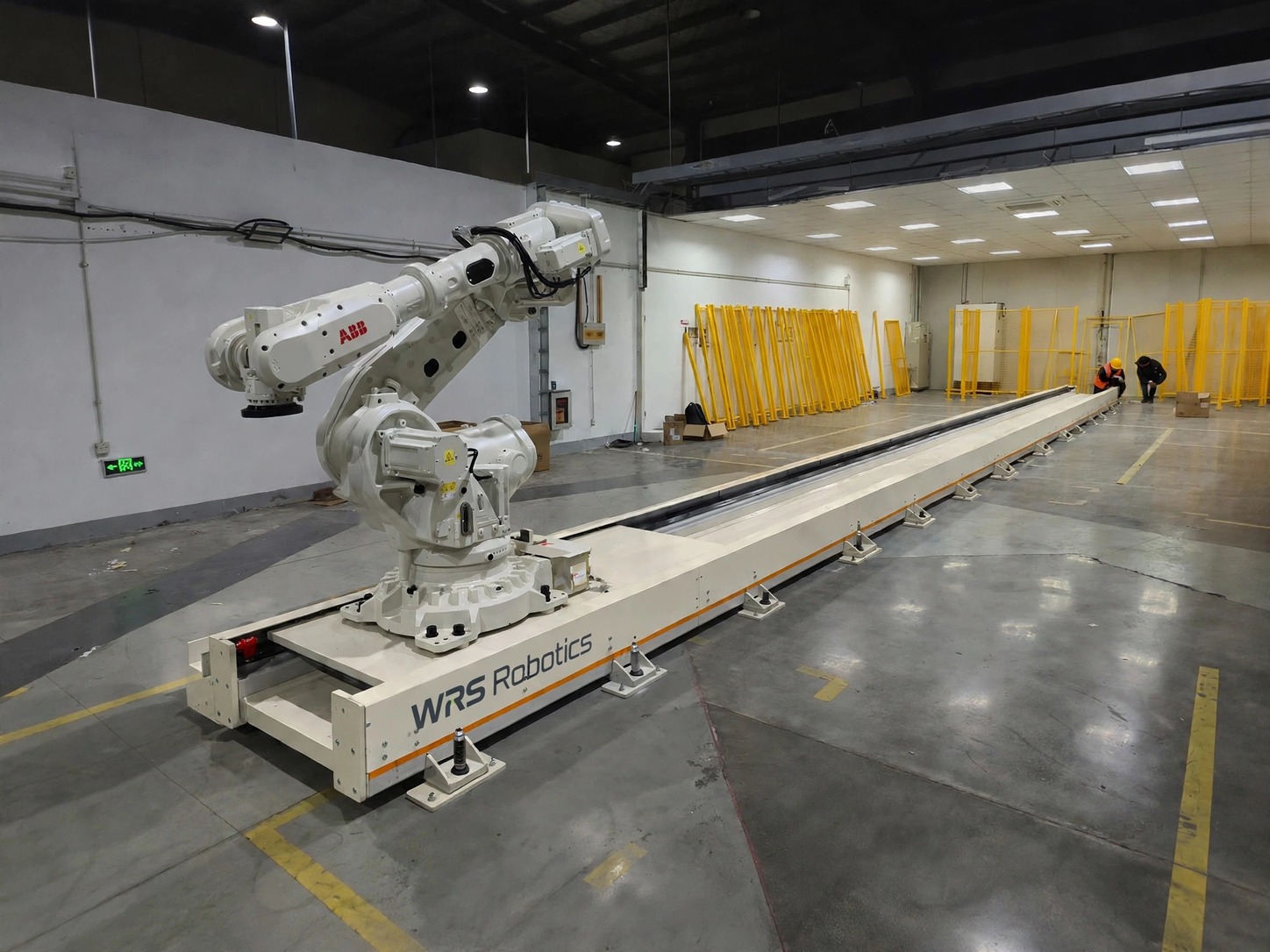
What the two drive systems actually do
Both systems do the same job: convert the rotation of a servo motor into straight-line travel along the track. They do it in very different ways, and the difference shows up in everything that follows.
Rack and pinion. A long toothed rack runs the full length of the track, fixed to the track base. A pinion gear on the moving carriage meshes with the rack, and the servo motor drives the pinion. Turn the pinion, and the carriage walks itself along the rack. The rack is made in sections, so a track can be built to almost any length — a few metres or twenty — simply by adding more rack sections. It is the standard drive for long robot tracks, and it is what most heavy welding tracks use.
Ball screw. A long threaded screw runs the length of the track, supported at both ends. A nut on the carriage rides on the screw, with recirculating steel balls between the nut and the thread. Turn the screw, and the nut — and the carriage — travels along it. It is precise, smooth, and very efficient at converting torque into thrust. It is also, by its nature, a single long precision part, and that fact shapes everything about how it behaves.
Neither system is “better” in the abstract. The right one depends on the travel length, the speed you need, the accuracy you need, the load, and the environment the track lives in. The sections below go through each of those in turn, because the answer changes depending on which one you care about most.
1. Travel length: where the ball screw runs out of road
This is the first question, and for most welding tracks it settles the argument on its own.
A ball screw is a long, slender shaft. As it gets longer, it gets harder to spin fast without whipping — the screw starts to bow and vibrate at a certain rotational speed, called the critical speed, and above that speed it is unusable. A long screw also sags under its own weight, which means it needs intermediate supports, and every support is a complication. In practice, ball-screw robot tracks top out at a few metres of travel. For a short track — a robot moving between two welding stations a couple of metres apart — that is fine. For a ten-metre track along a structural beam line, it is not a realistic option.
A rack and pinion has no such limit. The rack is fixed to the base in sections, it does not rotate, and it does not sag. A twenty-metre track is built the same way as a three-metre track, with more sections. This is why long robot tracks for shipbuilding, structural steel, wind towers and pressure vessels are almost always rack and pinion. If your track needs to be long, the drive choice is already made — and a supplier who quotes a ball screw for a twelve-metre travel either does not understand the application or is hoping you will not notice.
The practical rule we use: under about three metres of travel, both systems are possible, and the choice turns on speed and accuracy. Above five metres, it is rack and pinion, full stop. Between three and five metres is the grey area, where the decision needs a real calculation rather than a rule of thumb.
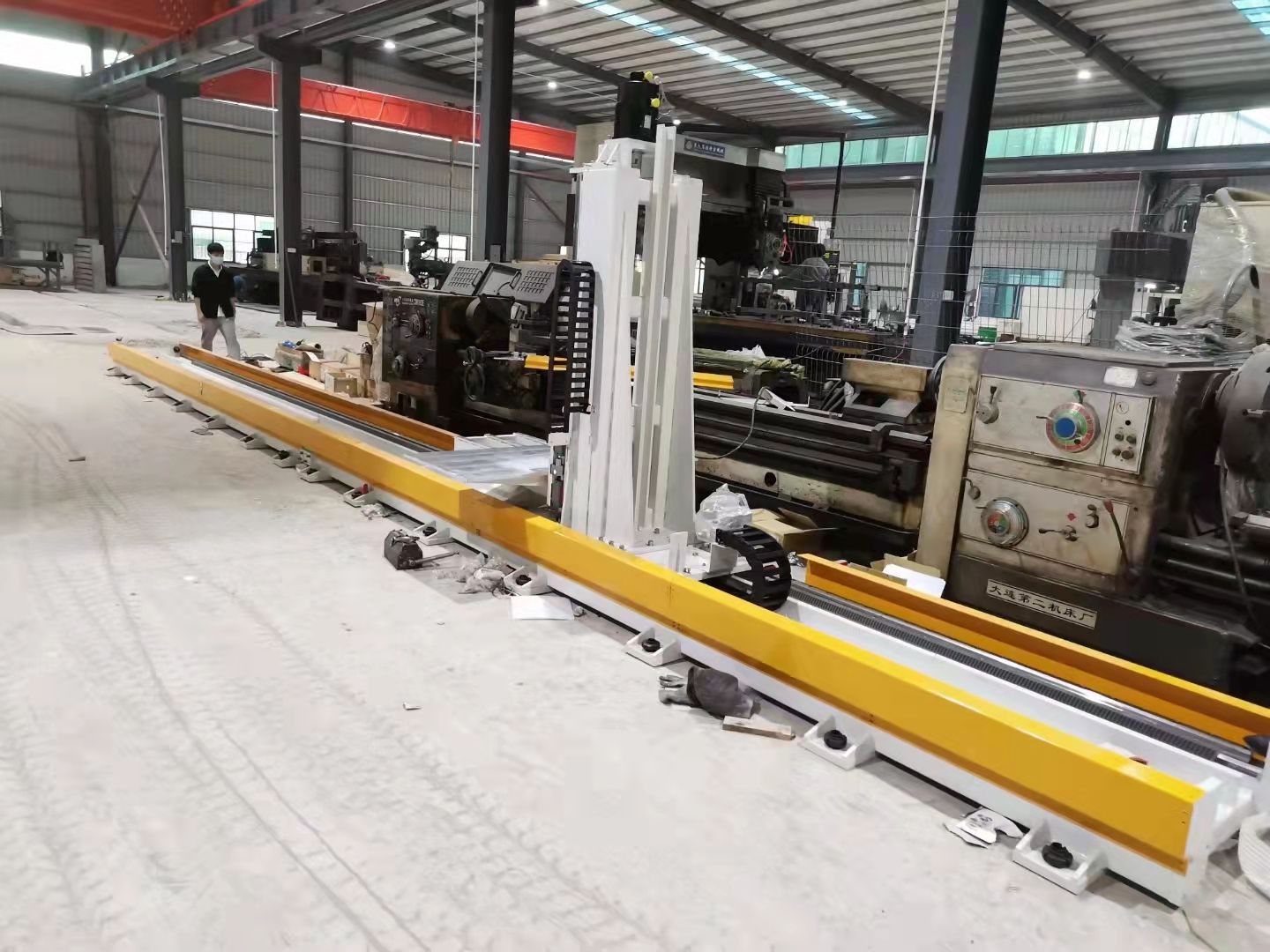
2. Speed: how fast the robot actually moves between welds
Speed matters because a robot track is not just a positioning device. It is part of the cycle time. Every second the robot spends travelling between welds is a second the arc is off, and on a cell with dozens of indexes per part, that adds up to real production time.
Rack and pinion tracks are fast. A standard 7th-axis track runs at around 1 m/s, and higher speeds are straightforward because the pinion can be spun as fast as the servo allows — there is no long rotating shaft to whip. For a welding cell where the robot has to move several metres between welds, that speed is what keeps the cycle time down. We covered cycle time in our hidden-costs article (https://wrsrobotics.com/the-hidden-costs-of-inadequate-positioning-equipment-in-your-robotic-cell/); the drive system is one of the places that cycle time is won or lost.
Ball screws are slower in practice, not because the screw itself is slow, but because of the critical-speed limit described above. To keep a long screw below its critical speed, you have to spin it slowly, and a slow screw means a slow carriage. On a short track that rarely matters — the travel is short, so the time is short either way. On a long track it matters a lot, and it is another reason long tracks are rack and pinion.
One caution here: do not compare catalogue maximum speeds. Compare the speed the track can actually sustain with your robot and payload on it, over your travel length. A ball screw quoted at 1 m/s on a two-metre track will not run at 1 m/s on a six-metre track, and a rack and pinion quoted at 1 m/s will run at 1 m/s on a twenty-metre track. Ask the supplier for the speed at your travel length, with your load — not the number on the front page.
3. Accuracy and repeatability: the ball screw’s home ground
If the ball screw has a weak point in length and speed, its strong point is accuracy. A ground ball screw with a preloaded nut is one of the most precise linear drive systems there is. The rolling balls give very low friction, the preload removes backlash almost completely, and the screw’s lead is ground to tight tolerances. On a short track, a ball screw will typically hold better repeatability than a rack and pinion of the same price — which is why ball screws are the standard choice for machine tools, precision assembly, and short robot tracks where the positioning tolerance is tight.
A rack and pinion can be accurate too, but it takes more work. The rack has to be machined and aligned section by section, the pinion mesh has to be set correctly, and backlash has to be managed — usually with a preloaded split pinion or a dual-pinion drive. A well-built rack and pinion track holds ±0.10 mm repeatability, which is the standard we work to, and that is good enough for almost all robotic welding. But it does not come for free: it comes from careful alignment, good rack quality, and a drive design that controls backlash rather than hoping it will not matter.
The practical question is not “which is more accurate” but “how accurate do you actually need”. Robotic arc welding is forgiving compared with machining — the weld pool is several millimetres wide, and the robot’s own repeatability is usually the limiting factor, not the track. If your application genuinely needs better than ±0.05 mm over the full travel, a ball screw on a short track is the honest answer. If ±0.10 mm is enough, and it is for most welding cells, a well-built rack and pinion will hold it over any length — and the money is better spent on the foundation and the alignment, which we covered in our foundation design article (https://wrsrobotics.com/robot-track-foundation-design-engineering-guidelines-every-integrator-should-know/), than on a more precise drive.
4. Load and thrust: what the drive has to push
A robot track does not just carry the robot. It carries the robot, the control cabinet if it is mounted on the carriage, the welding machine, the torch cleaning station, the wire feeder — everything that moves with the slider. That is the payload, and it is the number the drive system has to handle, not just the robot’s weight. We wrote about payload calculation in detail in an earlier article (https://wrsrobotics.com/how-to-calculate-the-correct-payload-for-a-robot-linear-track/); the drive angle is simple: a heavier carriage needs more thrust, and the two drive systems deliver thrust differently.
A ball screw is very good at turning torque into thrust — the rolling balls are efficient, and a screw with a fine lead gives a large mechanical advantage. For a heavy load on a short track, a ball screw can move a lot of weight with a modest servo. The limit is the screw itself: a long screw under a heavy axial load can buckle, and a screw that is too small for the load will wear quickly.
A rack and pinion delivers thrust through the gear mesh, and the thrust is limited by the size of the pinion and the strength of the rack teeth. For very heavy loads — a large robot plus a full welding package, or a gantry carriage — the rack and pinion is usually the stronger option, because the rack can be made heavier and the pinion larger without changing the fundamental design. It also handles shock loads better: a rack tooth can take a knock that would dent a ball screw thread.
For most welding tracks the load is not the deciding factor — both systems can be sized to handle it. The deciding factors are length and speed, above, and environment, below. But if the payload is genuinely heavy, ask the supplier to show the thrust calculation, not just the load rating. A track rated for the weight is not automatically a track whose drive can accelerate that weight at the speed the cycle time needs.
5. Environment: welding spatter, dust, and the drive that survives them
A robot track in a welding cell lives in a hostile environment. Spatter flies, grinding dust settles, and the track is usually at floor level where everything lands. The drive system has to survive that, and the two systems cope very differently.
A ball screw is an exposed precision surface. The thread is ground, the balls run in the thread, and anything that gets into the nut — spatter, dust, grinding grit — damages the thread and the balls. A ball screw in a welding environment needs proper covers: telescopic covers, bellows, or a fully enclosed design. Without them it will not last. With them it will, but the covers are a maintenance item themselves, and a damaged cover that lets spatter in is a slow failure that shows up months later as accuracy loss. We wrote about accuracy loss over time in an earlier article (https://wrsrobotics.com/why-your-robot-track-loses-accuracy-after-six-months/); a contaminated ball screw is one of the causes.
A rack and pinion is more forgiving. The rack teeth are larger, the mesh is open, and a bit of spatter or dust on the rack is less likely to cause damage — though it still needs covers and regular cleaning, and a rack that is never cleaned will wear faster and get noisier. The pinion is also easier to inspect and replace: you can see the wear on a rack, and a worn pinion is a straightforward spare part. A worn ball screw is a whole new screw, which on a long track is an expensive part and a long lead time.
The honest summary: in a clean environment, both systems are fine. In a welding environment, the rack and pinion is the tougher, more forgiving choice, and the ball screw needs better protection and more disciplined maintenance. If your cell is in a dusty fabrication shop — and most welding cells are — that is worth weighing.
6. Maintenance and service life: what breaks, and what it costs to fix
Maintenance is where the two systems diverge most in running cost.
A ball screw needs lubrication on a schedule — usually automatic, from a lubrication pump — and the nut and screw need to be kept clean. The wear parts are the nut and the screw, and when the screw wears, the whole screw has to be replaced. On a short track that is a manageable job. On a long track it is a major one, and the replacement screw has to be made to order, which means lead time. The good news is that a well-maintained ball screw in a clean environment lasts a long time, and its accuracy degrades gradually, so you get warning.
A rack and pinion needs lubrication too — usually grease on the rack, applied automatically or by hand — and the rack needs to be kept clean. The wear parts are the pinion and the rack sections, and both are replaceable in pieces: a worn rack section can be swapped without replacing the whole rack, and a pinion is a standard spare. The accuracy of a rack and pinion degrades differently: backlash grows as the pinion and rack wear, and it shows up as positioning error that grows over time. Regular backlash checks — a simple dial-indicator test — catch it early.
Neither system is maintenance-free, and neither should be sold as such. The difference is in the failure mode and the repair cost. A ball screw failure is usually a bigger, more expensive job. A rack and pinion failure is usually smaller and more local. Over a ten-year service life in a welding environment, that difference adds up, and it is one of the reasons long welding tracks are built on rack and pinion.
7. Cost: what you pay, and what you pay for
On a short track, a ball screw is often the cheaper option. The screw, the nut and the supports are standard parts, and the design is simpler. On a long track, the ball screw becomes expensive — a long ground screw is a costly precision part, it needs intermediate supports, and the engineering to keep it below critical speed adds cost. A rack and pinion is the opposite: the cost scales gently with length, because you are just adding rack sections, and the pinion and drive are the same whatever the length.
So the cost comparison flips with travel length. Short track: ball screw is usually cheaper, and often the right choice. Long track: rack and pinion is usually cheaper, and usually the only realistic choice. In the middle, the comparison needs a real quotation for both, with the same accuracy, the same speed, and the same covers — because a cheap ball screw without covers and a rack and pinion with covers are not the same product, and the quotation that looks cheaper may just be missing the parts that keep the drive alive in a welding shop.
One more cost to check: the servo and drive. A ball screw with a fine lead needs less torque for the same thrust, so it can use a smaller servo. A rack and pinion with a large pinion needs more torque. That difference can offset some of the drive cost, and it is worth asking the supplier to show it in the quotation rather than guessing.
Which one should you choose? A decision guide
If you have read this far, you probably want a straight answer. Here it is, as a set of rules we use when specifying a track:
- Travel over 5 metres: rack and pinion. A ball screw is not a realistic option at this length for a welding cell.
- Travel under 3 metres, accuracy tighter than ±0.05 mm: ball screw. This is its home ground, and nothing else matches it at the price.
- Travel under 3 metres, standard welding accuracy (±0.10 mm): either system works. Choose on speed, environment, and maintenance preference. If the cell is dusty or spattery, lean rack and pinion. If it is clean and the track is short, a ball screw is fine and often cheaper.
- Travel 3 to 5 metres: get both quoted, with the same accuracy, speed and covers, and compare the real numbers — including the critical-speed calculation for the ball screw. Do not decide on the catalogue figures.
- Heavy payload with high acceleration: check the thrust calculation for both. A ball screw can be the more efficient choice; a rack and pinion can be the stronger one. The answer depends on the numbers, not the type.
- Welding environment, long service life, easy maintenance: rack and pinion. It is more forgiving, its wear parts are cheaper and more local, and it survives the shop floor better.
- Floor-mounted or ceiling-mounted: the drive choice is independent of the mounting — both systems work either way. We compared floor and ceiling mounting in an earlier article (https://wrsrobotics.com/floor-mounted-vs-ceiling-mounted-robot-tracks-which-one-is-better/); the drive decision and the mounting decision are separate, and they should be made separately.
And one rule that applies to both: ask the supplier to show their working. The thrust calculation, the critical-speed calculation for a ball screw, the backlash figure for a rack and pinion, the accuracy figure with the measurement method behind it. A supplier that can show those numbers has done the engineering. A supplier that quotes from a load figure alone is guessing — and we have written before about what guessing costs.
Checklist: specifying the drive system for your robot track
- Travel length and total track length confirmed — and the drive system matched to that length
- Required travel speed confirmed, at your travel length and with your payload — not the catalogue maximum
- Repeatability requirement confirmed, with a number — and the drive system able to hold it over the full travel
- Payload confirmed including everything on the carriage (robot, cabinet, welding machine, torch cleaner, wire feeder)
- Centre of gravity and load distribution checked — an off-centre load changes the drive requirement
- Environment assessed: welding spatter, dust, grinding — and covers specified to match
- Lubrication system specified (automatic pump, 220V or 24V supply) and the maintenance schedule confirmed
- Backlash figure given for rack and pinion, or preload and lead accuracy given for a ball screw
- Wear parts and spares confirmed: pinion and rack sections, or nut and screw — with lead times
- Acceptance test agreed: real robot, real payload, measured speed and repeatability over the full travel
FAQ
Can I use a ball screw for a 10-metre robot track?
In theory, with intermediate supports and a very slow speed, yes. In practice, no — not for a welding cell. The critical-speed limit means the screw has to run slowly, the supports add complexity and maintenance, and the cost of a long ground screw is high. A rack and pinion is the standard drive for tracks of that length, and it is what we recommend.
Is rack and pinion accurate enough for robotic welding?
Yes, for almost all robotic welding. A well-built rack and pinion track holds ±0.10 mm repeatability, which is the standard accuracy for a welding 7th axis, and the robot’s own repeatability is usually the limiting factor, not the track. If your application needs better than ±0.05 mm, that is a different conversation — and a ball screw on a short track is the honest answer.
Does a ball screw need more maintenance than rack and pinion?
Not necessarily more, but different, and less forgiving. A ball screw needs its lubrication schedule kept and its covers intact — if spatter or dust gets into the nut, the screw is damaged. A rack and pinion tolerates a dirtier environment and its wear parts are cheaper to replace. In a welding shop, the rack and pinion is usually the lower-maintenance choice in practice.
What is backlash, and why does it matter on a rack and pinion track?
Backlash is the small amount of free play between the pinion teeth and the rack teeth. When the carriage changes direction, the pinion has to take up that play before it starts driving, and that shows up as a positioning error. It matters because a robot track reverses direction constantly. Good rack and pinion tracks control it with a preloaded split pinion or a dual-pinion drive. Ask the supplier for the backlash figure, and how it is measured.
How long does a robot track drive system last?
With proper lubrication and covers, both systems last many years — a decade or more in a welding cell is realistic. What shortens life is contamination, lack of lubrication, and overloading. A track that is specified correctly and maintained on schedule will outlast the robot program it was bought for. A track that is undersized or neglected will not, and the failure will look like an accuracy problem, not a drive problem.
Can I convert a ball screw track to rack and pinion later?
Not practically. The two systems need different track bases, different carriages, and different servo sizing. Changing the drive means rebuilding the track. That is why the drive decision has to be made at specification time, not after commissioning. If the travel length might grow later — a common situation when a cell is extended — specify rack and pinion from the start, because it is the only system that grows with the track.
What information should I send a supplier so they can recommend the right drive?
The same information we ask for on our track questionnaire: travel stroke and total length, slider payload, robot model, what sits on the track (robot, control cabinet, welding machine, torch cleaning station, wire feeder), operating environment, rail width limits, mounting height, travel speed, repeatability, guide rail brand, drag chain position, lubrication power supply, and the destination country. A recommendation based on a travel figure alone is a guess. A recommendation based on the full picture is an engineering answer.
Which drive system is quieter?
A ball screw is generally quieter, because the rolling balls run smoothly and there is no gear mesh. A rack and pinion has a gear mesh, and a worn or poorly lubricated rack is audible. In a welding shop, neither is usually the loudest thing in the room — but if the cell is in a quieter environment, or next to an office, it is worth asking about.
The drive system is a decision, not a detail
The drive system is the kind of thing that is easy to overlook when you are comparing quotations, because it is not on the front page and it does not have a price next to it. But it decides how fast your track runs, how long it can be, how accurate it stays, and what breaks first. Two tracks with the same travel and the same load rating are not the same machine if their drive systems are different — and the quotation that looks cheaper may just be the one with the drive system that does not fit your job.
If you are specifying a track, start with the travel length and the accuracy you actually need, and let those two numbers narrow the choice. Then check the speed, the environment, and the maintenance — and ask the supplier to show the calculations behind their recommendation. A good supplier will welcome those questions. A supplier that cannot answer them is telling you something.
And if you are comparing two quotations and they do not say which drive system they are offering, ask. It is a one-line question, and the answer will tell you more about the track than the price will.
Related reading: 7 Common Robot Linear Track Installation Mistakes That Reduce Accuracy — and How to Avoid Them, How to Synchronize a Welding Positioner with ABB, FANUC, KUKA and Yaskawa Robots, and How to Reduce Welding Distortion Using a Robotic Welding Positioner. You can also browse our robot linear track, welding positioner and gantry system ranges.
By WRS Robotics Engineering Team