
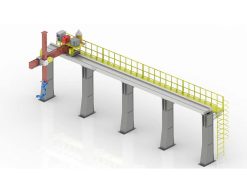
 Robot Linear track
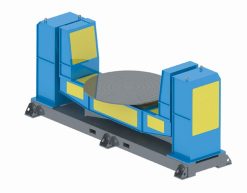 Robot welding Positioner
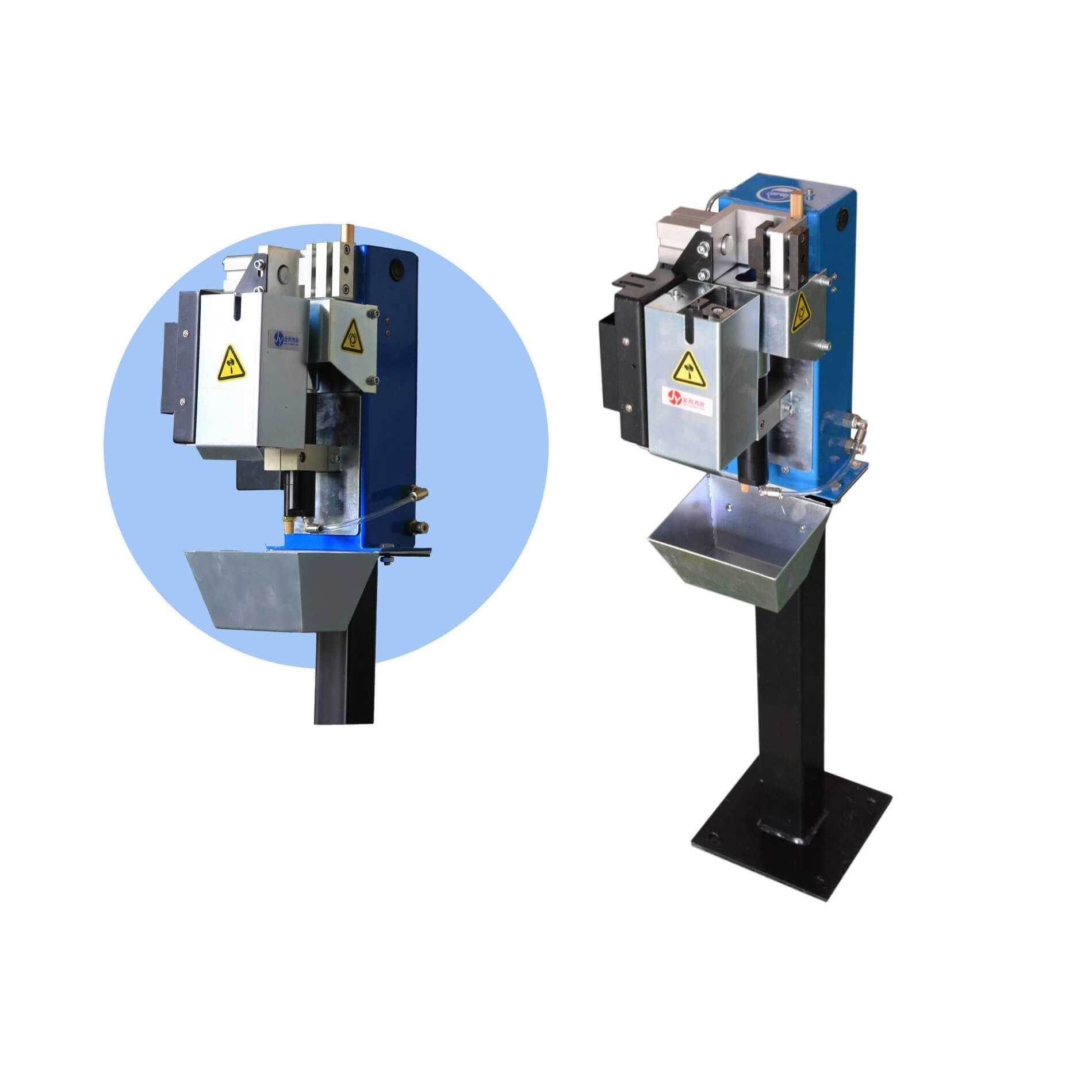 Robot Torch cleaning station
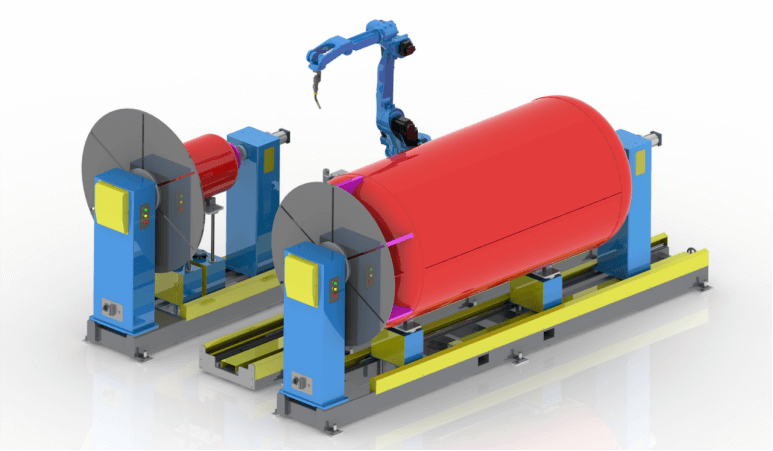 Welding Robot Workstations & Automation Solutions
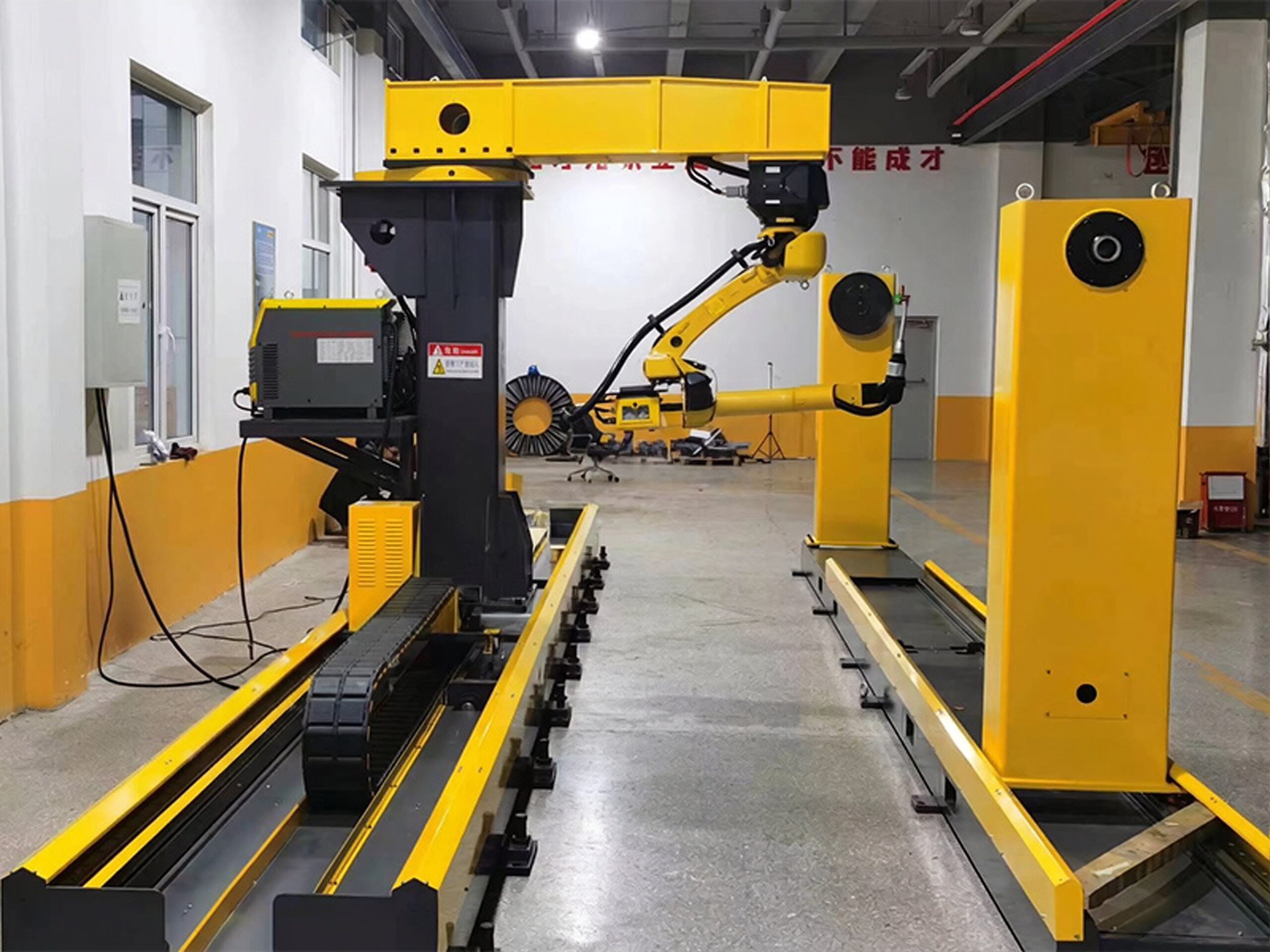
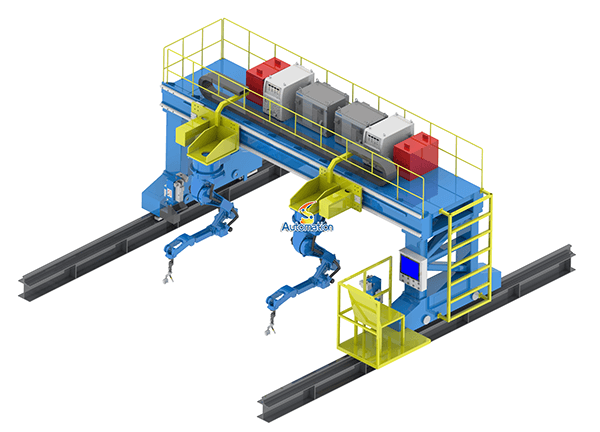 Robot Gantry System
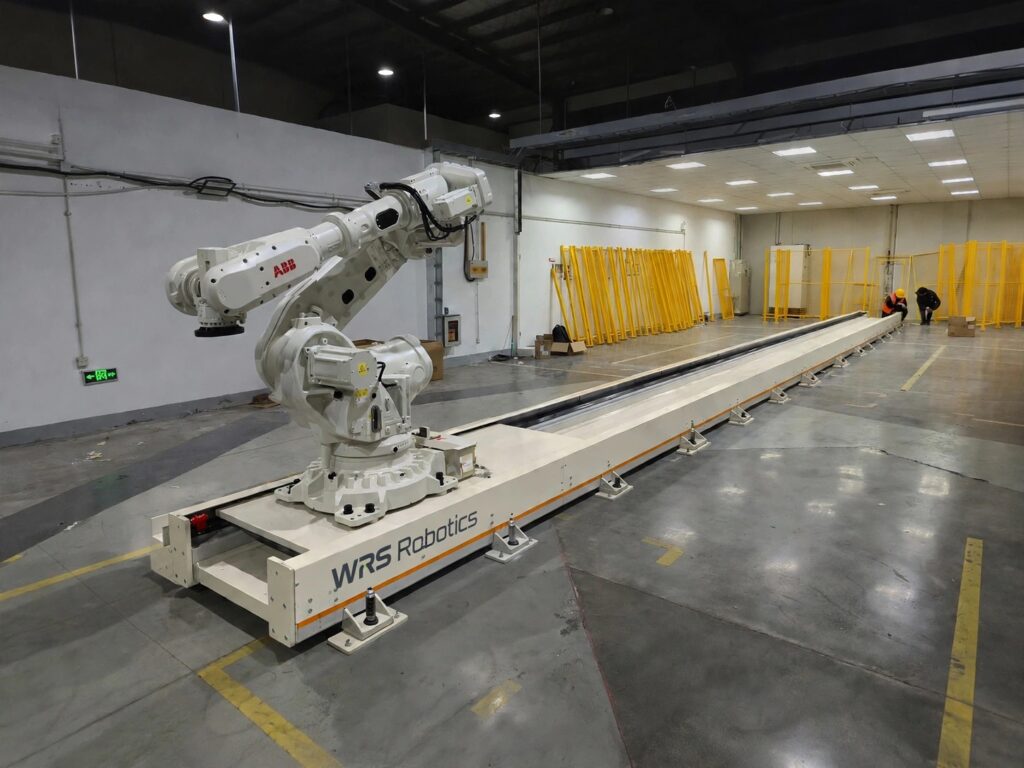
The track was six metres long. The robot could only use four and a half.
A welding integrator called us about a cell that was finished, commissioned, and wrong. He had ordered a six-metre robot track for a line of structural beams. The beams were spaced along the line, the last welding station sat near the far end, and on paper everything fitted. In reality the robot could not reach the last station. Not by a little — by the better part of a metre. The track was six metres long, exactly as ordered. The robot’s usable travel along it was about four and a half metres, and nobody had noticed the difference until the cell was bolted to the floor.
Nobody had lied to him. The supplier had quoted a six-metre track, and six metres of track is what arrived. The problem was that “six metres” meant the length of the track, and the integrator had read it as six metres of robot movement. Those are two different numbers, and the gap between them is where projects quietly go wrong.
This is one of the most common misunderstandings in robot track specification, and it is also one of the easiest to avoid once you know it exists. A robot linear track has a total length, a travel stroke, and an effective travel — three numbers that sound like the same thing and are not. This article explains what each one means, what eats into your usable travel, how to work out the number you actually need, and the questions to ask before you sign a quotation. If you are specifying a track, or comparing two quotations with different lengths on them, read this first.
Travel, stroke, and total length: three numbers, not one
Start with the definitions, because most of the confusion lives here.
Total length is the physical length of the track assembly, end to end — the steel base, the rails, the end plates, everything. It is the number that decides whether the track fits in your hall, how it ships, and what the foundation has to carry. It is not a movement number at all.
Travel stroke — sometimes just called “travel” or “stroke” — is the distance the carriage can physically move along the rails, from one mechanical end stop to the other. It is a real movement number, but it is the maximum the hardware allows, not the distance your robot can actually use in production.
Effective travel is the distance the robot can actually use, with the workpiece in place, the torch where it needs to be, and the cell running at production speed. It is always less than the stroke, and on a typical welding cell it is less by a surprising amount — often a metre or more on a six-metre track.
The reason our own track questionnaire asks for both numbers separately — “Robot Rail travel stroke: ___ m, Total length: ___ m” — is exactly this. A supplier who only asks for one of them is guessing at the other. And a buyer who only gives one of them is leaving the most expensive decision in the project to guesswork.
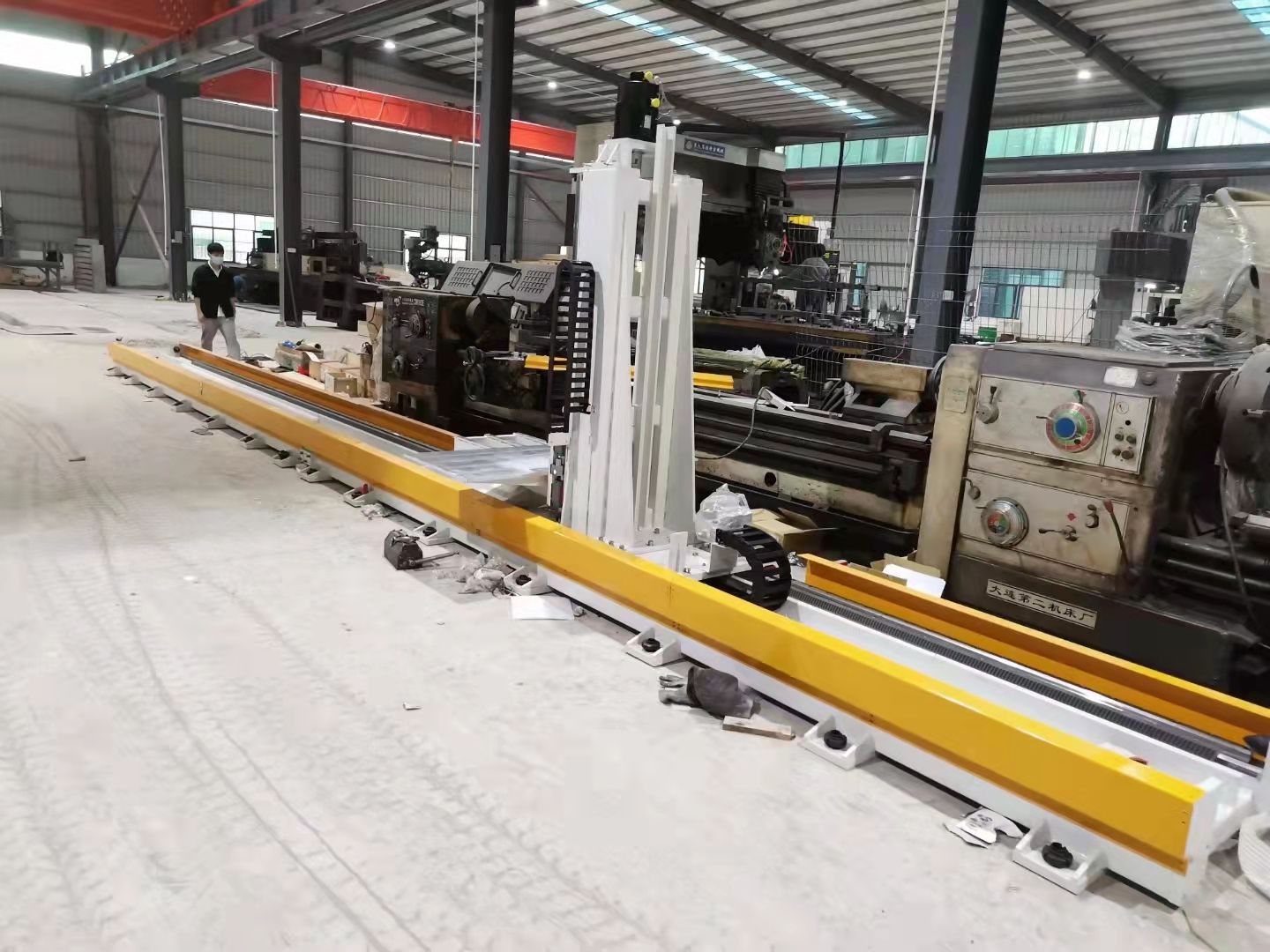
What eats your travel: five things, and none of them are optional
Effective travel is the stroke minus everything the carriage, the robot, and the cell need in order to work. In practice, five things take a bite out of it.
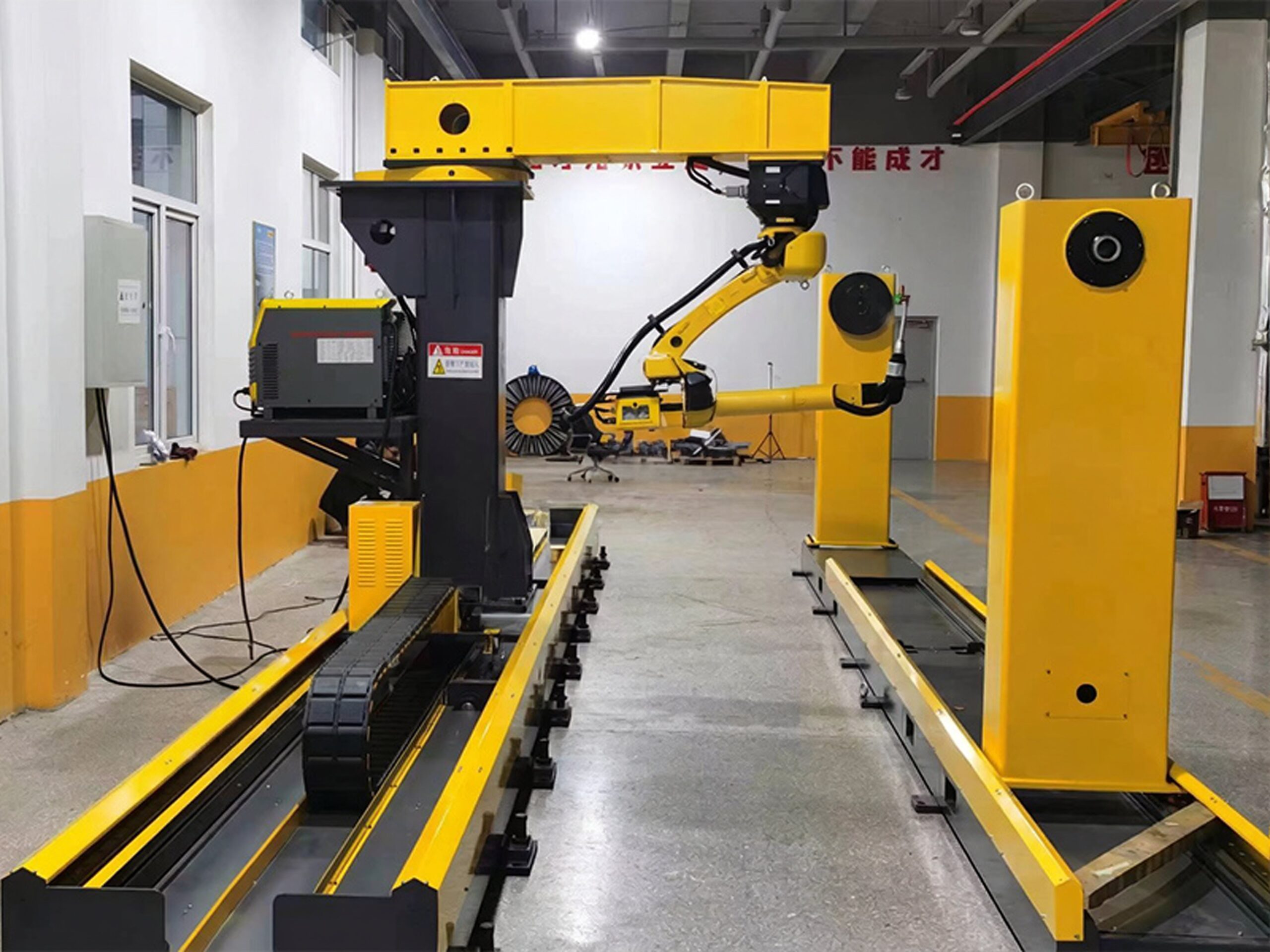
- The carriage itself. The robot does not sit on a point; it sits on a carriage, and the carriage has a length — typically 800 mm to 1,200 mm on a welding track, more on a heavy-duty one. The carriage cannot travel past the end of the rails, so at each end of the stroke the robot’s mounting point stops short of the rail end by roughly half the carriage length. On a six-metre track with a one-metre carriage, that alone costs you about a metre of usable robot movement before anything else is counted. This is the single biggest deduction, and it is the one most often forgotten, because the carriage is in every photograph and nobody thinks of it as something that consumes travel.
- End stops and safety overrun. A track cannot let the carriage run into the end plate at full speed. There are mechanical end stops, and before them a deceleration and safety zone — the distance the servo needs to stop the carriage safely if something goes wrong, plus the physical stop itself. That zone is typically 100–200 mm at each end. It is not usable travel, and it should never be counted as such, no matter how tempting it is when the numbers are tight. If your layout only works by using the safety zone, your layout does not work.
- The drag chain and cable management. The robot’s cables, the welding cables, the water hoses and the air lines all travel with the carriage in a drag chain, and the drag chain has a bend radius and a mounting arrangement that takes up space at one or both ends of the track. On a floor-mounted track the chain usually runs alongside or in the centre of the track; either way, the chain’s end fixings and its minimum bend eat into the stroke at the ends. This is a small deduction — usually 100–300 mm — but it is a real one, and it is easy to miss on a drawing because the chain is drawn as a thin line.
- The robot’s own reach at the ends of the stroke. This is the subtle one, and the one that catches experienced engineers. The robot’s usable reach is not a circle drawn on the floor; it changes with the position of the arm, the orientation of the torch, and the angle of the weld. At the extreme ends of the track, the robot often cannot reach a workpiece that sits beside the track in the same way it can in the middle, because the arm has to stretch sideways or the torch angle goes wrong. A station that is reachable when the robot is mid-track can be unreachable — or reachable only with a bad torch angle and a poor weld — when the robot is at the end of its travel. So the effective travel is not just the stroke minus the hardware; it is the stroke minus the hardware, minus the positions where the robot cannot actually weld properly.
- Home position and reference marks. Most tracks have a home or reference position, and on many cells the robot has a defined park or service position where it waits during loading. If that position sits inside the stroke — and it usually does — it takes a slice out of the usable range as well. It is a small slice, but on a tight layout it matters.
Add those five together on a typical six-metre welding track and the arithmetic is sobering: a stroke of six metres, minus roughly a metre for the carriage, minus 300 mm for the end zones, minus 200 mm for the chain, minus the reach you lose at the ends — and the robot’s genuinely usable travel is somewhere around four to four and a half metres. That is the number the cell is actually built on. The six metres on the quotation is not a lie, but it is not the number that decides whether the last weld gets made.
A worked example: sizing a track for three welding stations
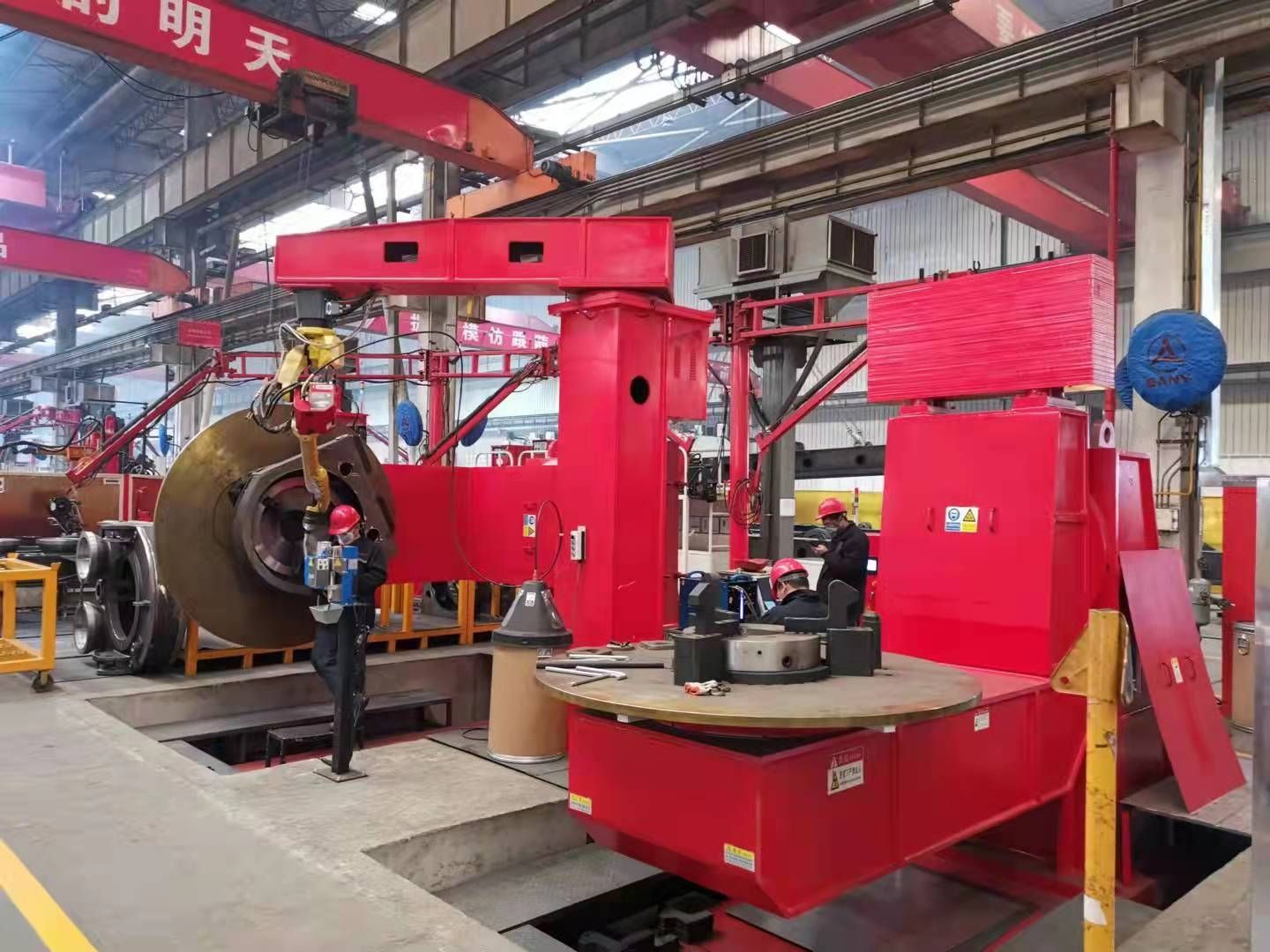
Suppose a fabrication shop has three welding stations in a row — a jig at one end, a positioner in the middle, and a second jig at the far end — and the distance from the centre of the first station to the centre of the last is 4.5 metres. The robot has to reach all three, with a good torch angle at each one, and the track has to be ordered.
The mistake is to order a 4.5-metre track, or even a 5-metre one, and assume the job is done. Working backwards from effective travel instead: the robot needs 4.5 metres of genuinely usable movement. Add the carriage length, say 1.0 metre, because the robot’s mounting point has to be able to sit 4.5 metres apart at the extremes. Add 300 mm for the two end safety zones. Add 200 mm for the drag chain arrangement. Add a margin — 300 to 500 mm — for the reach you lose at the ends and for the fact that the stations will not be exactly where the drawing says they are. The stroke you actually need is around 6.3 to 6.5 metres, and the total length of the track will be longer still, roughly 7 metres with the end plates and the base.
That is a materially bigger track than the 4.5 metres the shop started with, and it costs more. But it is the track that reaches all three stations. The cheaper track would have been installed, commissioned, and then found short — and a track that is a metre too short cannot be stretched. It has to be replaced, or the cell has to be redesigned around it. The extra steel in the correct track is the cheapest metre in the whole project.
The same arithmetic works in reverse when you are comparing quotations. Two suppliers quote you a track for the same cell: one quotes a six-metre stroke, the other quotes a seven-metre total length. Those are not comparable numbers, and the shorter-sounding one may be the longer track. Ask both suppliers for the same three figures — total length, stroke, and effective travel with your robot model and your station layout — and compare those. If a supplier cannot give you the effective travel for your layout, that tells you something about how the track was sized.
Why suppliers quote it this way — and what to ask instead
It is worth saying plainly: quoting total length or stroke is not dishonest. Both are standard, legitimate figures, and both are needed — total length for transport, foundations and floor space; stroke for the drive and the mechanical design. The problem is not the numbers; it is that buyers and suppliers sometimes use the same word for different numbers, and neither side notices until the cell is built.
What protects you is not suspicion. It is a specification that leaves no room for the misunderstanding. Before you order, ask for these five things in writing:
- The effective travel, calculated for your robot model and your station positions — not the stroke, not the total length, but the distance your robot can actually use on your cell.
- A layout drawing showing the robot at both ends of its travel, with the torch positions and the reach to each workpiece marked. If the drawing only shows the robot in the middle of the track, it is not a layout; it is a brochure.
- The carriage length and the end-zone dimensions, stated as numbers, so you can do the subtraction yourself.
- Where the drag chain runs and how much stroke it consumes, including the bend radius at the ends.
- A factory acceptance test that proves it. During FAT, the robot should be driven to both ends of its travel and asked to reach a target at each station. If it cannot, you want to find out in the factory, not on your shop floor. We covered acceptance testing in our article on the hidden costs of inadequate positioning equipment; this is one of the things a good FAT is for.
And one more habit that costs nothing: when you send an enquiry, give the supplier the distance between your outermost workpieces and the robot model, not just a track length. Our questionnaire asks for travel stroke and total length as separate fields for this reason — but the most useful number you can give a supplier is the distance between the furthest two points your robot has to weld, and the robot that has to weld them. A good supplier will work the track length out from that. A supplier who just takes your length at face value and quotes it back to you has not done any engineering at all.
Checklist: before you approve a track length
- You have the distance between your outermost welding points, measured on the real layout, not estimated from a brochure.
- The supplier has confirmed the effective travel for your robot model — not just the stroke or the total length.
- You have the carriage length in writing, and you have subtracted it.
- End stops, safety overrun and drag-chain space are accounted for at both ends.
- The robot’s reach has been checked at both ends of the travel, with the torch at the correct angle — not just in the middle of the track.
- The layout drawing shows the robot at both extremes, with the workpiece positions marked.
- There is a margin of at least 300 mm beyond your outermost station, for the stations not being exactly where the drawing says they are.
- The FAT plan includes driving the robot to both ends and reaching a target at each station.
- The foundation and floor space are sized for the total length, not the stroke — the track is longer than the distance the robot travels.
- The quotation states total length, stroke and effective travel as three separate figures.
FAQ
What is the difference between robot track travel and total length?
Total length is the physical length of the whole track assembly, end to end. Travel — or stroke — is the distance the carriage can move along the rails. Effective travel is the distance the robot can actually use in production, after the carriage length, end zones, cable chain and reach limits are taken out. Effective travel is always the smallest of the three, and it is the only one that decides whether your robot reaches every weld.
How much travel do I lose on a typical robot track?
On a welding track it is commonly 1 to 1.5 metres of a six-metre stroke, sometimes more on a heavy-duty track with a long carriage. The carriage alone usually accounts for 800 mm to 1,200 mm. The exact figure depends on the carriage length, the end-stop arrangement, the drag chain, and the robot model — which is why it should be calculated for your layout rather than guessed from a rule of thumb.
Can I just order a longer track to be safe?
Up to a point, yes — a longer track is cheap insurance compared with a track that is too short. But there are limits. A longer track costs more, needs a bigger foundation, takes more floor space, and on a rack-and-pinion drive the extra length is straightforward, while on a ball-screw drive it may not be possible at all. The right approach is to calculate the effective travel you need, add a sensible margin, and order that — not to guess a length and hope.
Does effective travel matter on a gantry system too?
Yes, the same logic applies. A gantry‘s X-axis stroke is reduced by the bridge width, the end zones and the carriage, and the Y and Z axes have their own versions of the same problem. The numbers are different but the principle is identical: the movement the machine can physically make is not the movement you can use.
Should effective travel be in the contract?
Yes. Ask for total length, stroke and effective travel to be stated as three separate figures in the quotation and the contract, calculated for your robot model and your station layout. If a dispute ever arises about whether the track reaches, that line in the contract is what settles it.
The number that matters is the one your robot can use
A robot track is sold by the metre, but it is used by the weld. The length on the quotation is a starting point, not an answer. The answer is the effective travel — the distance your robot can actually use, with the workpiece in place and the torch at the right angle, at both ends of the line. Work that number out before you order, get it in writing, and prove it at the factory acceptance test. It is a short calculation, and it is the difference between a cell that reaches every station and a cell that is a metre short with a track that cannot be stretched.
If you are planning a cell and working out what length of track you need, send us your robot model, the distance between your outermost welding points, and a sketch of the station layout. We will work out the stroke, the total length and the effective travel for your cell, and tell you where the margin needs to be — before you order, not after. You can reach our engineering team through the contact page, or browse our robot linear track range to see the track types we build.
By WRS Robotics Engineering Team