
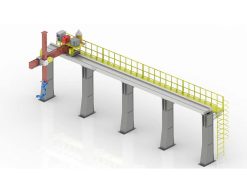
 Robot Linear track
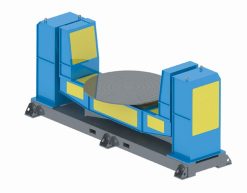 Robot welding Positioner
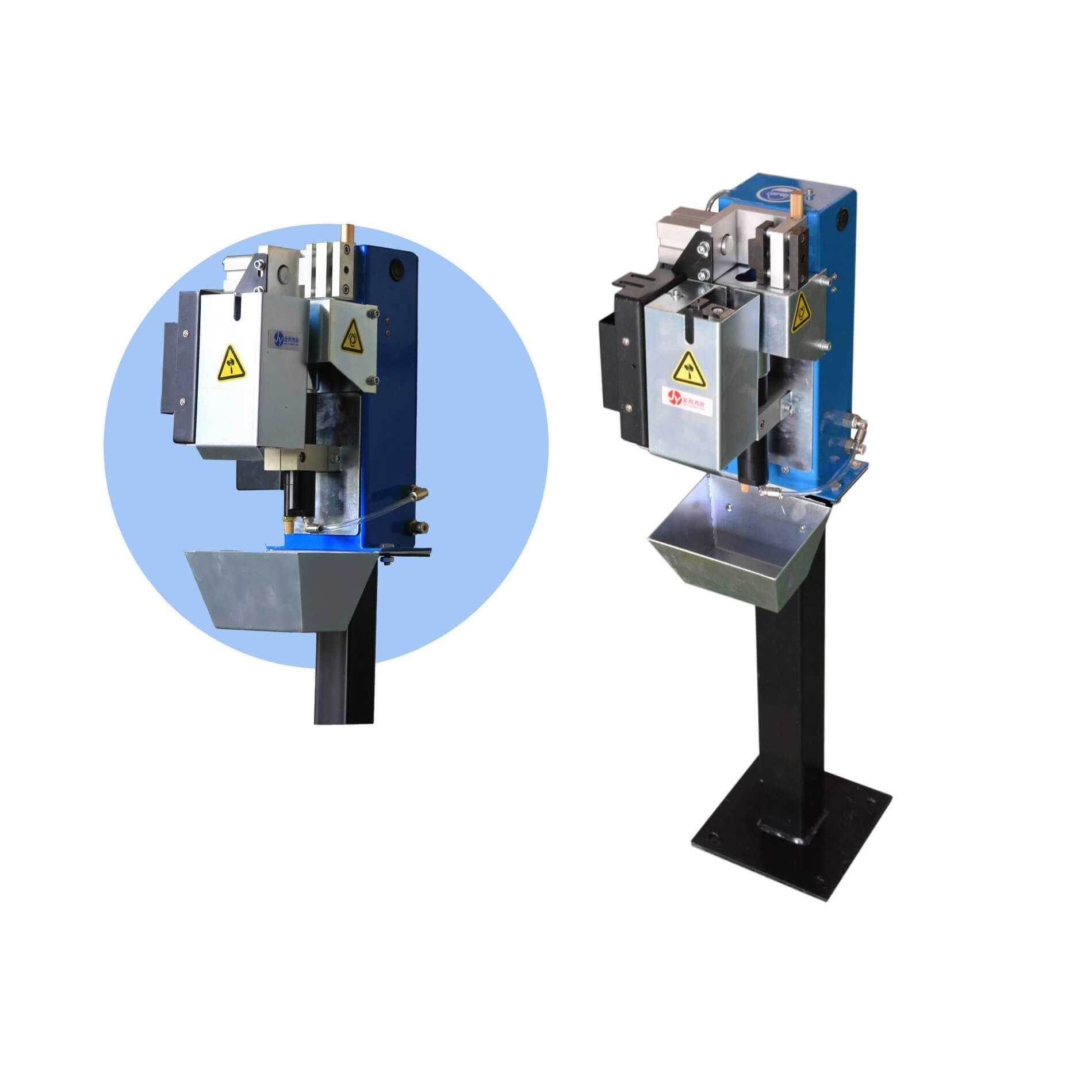 Robot Torch cleaning station
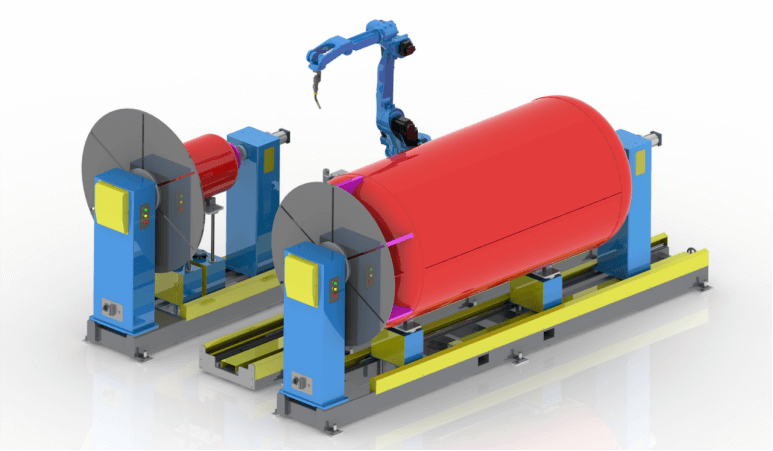 Welding Robot Workstations & Automation Solutions
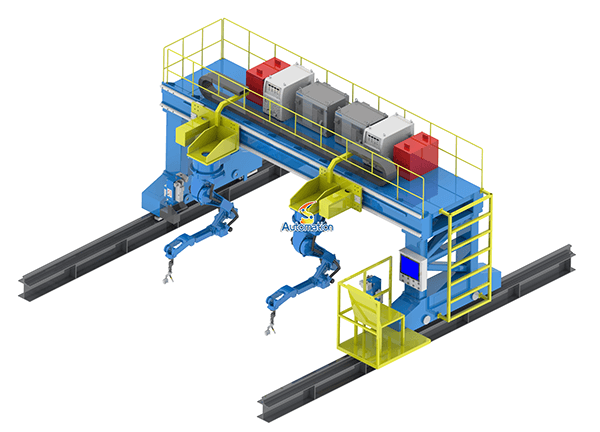 Robot Gantry System
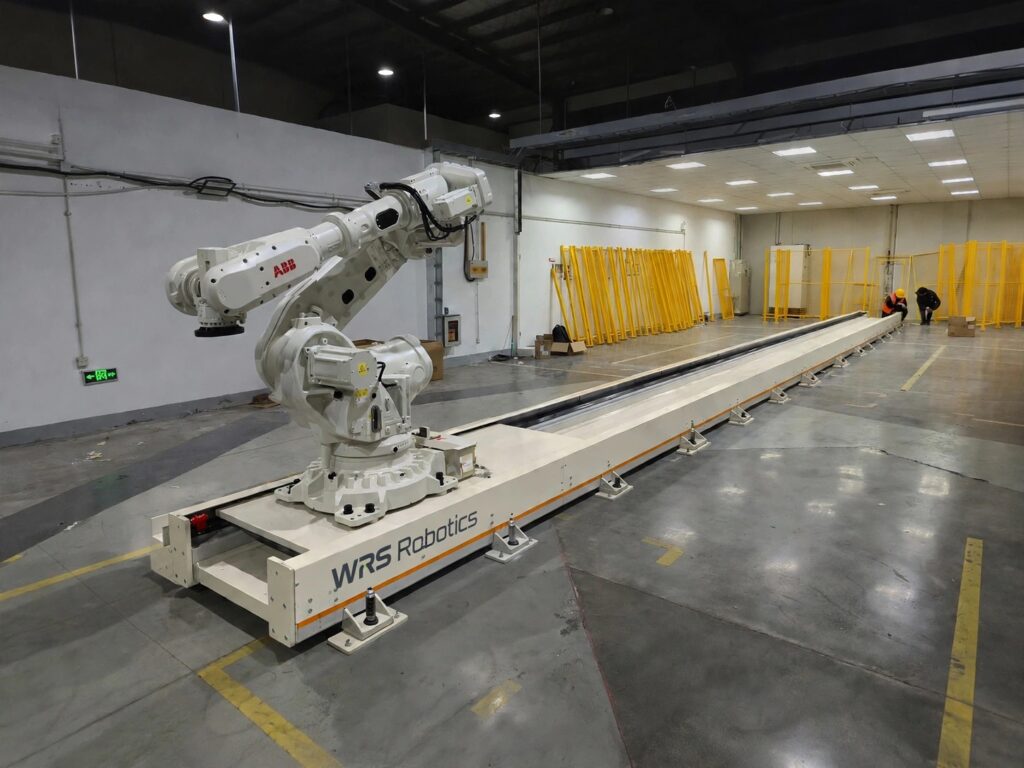
The track that could not carry its robot
A heavy fabrication shop ordered a linear track for a new welding robot. The robot weighed about 600 kg. The track they bought was rated for 800 kg. On paper, that looked comfortable — 200 kg of margin.
Then the cell was built. The robot went on the carriage, and so did the riser, the dress pack, the control cabinet, the welding power source, and the torch cleaning station. By the time everything was bolted down, the moving mass was closer to 1,100 kg than 600. The servo started throwing overload alarms on fast moves. The track ran hot. Positioning repeatability drifted. Within a year the guides were worn in a way they should not have been.
Nothing was wrong with the track. It was doing exactly what it was built to do. It was just carrying far more than anyone had counted.
This happens more often than integrators like to admit, because the payload of a robot track is almost always underestimated. People size the track for the robot. The track carries much more than the robot. This article works through the calculation the way we do it on real projects — every load on the carriage, the dynamic forces most people skip, and the margin that keeps the track accurate for years instead of months.
What payload actually means on a linear track
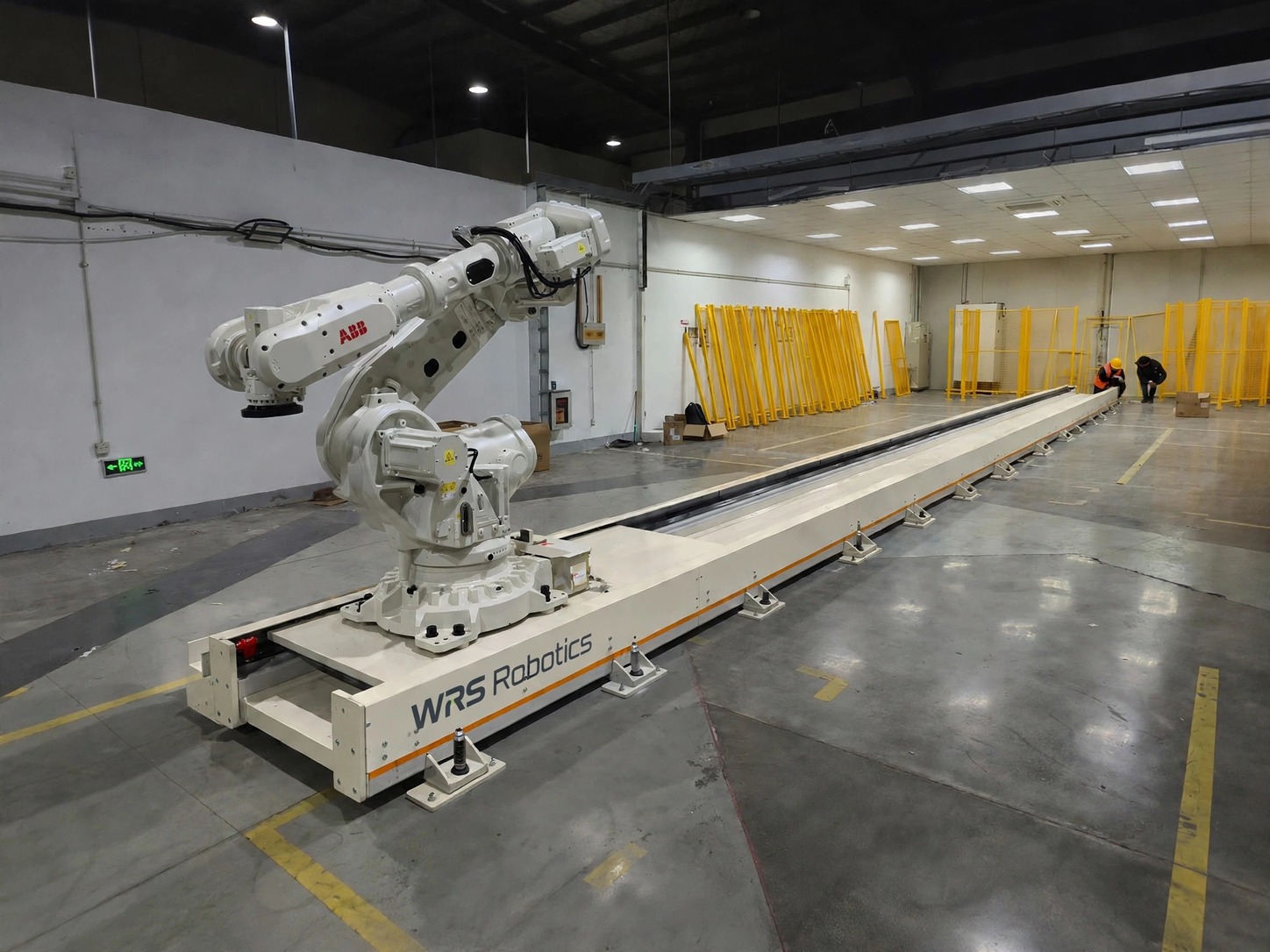
When a track maker quotes a payload rating, that number means the total mass the carriage is designed to carry and move — everything bolted to the moving slider, not just the robot sitting on top of it.
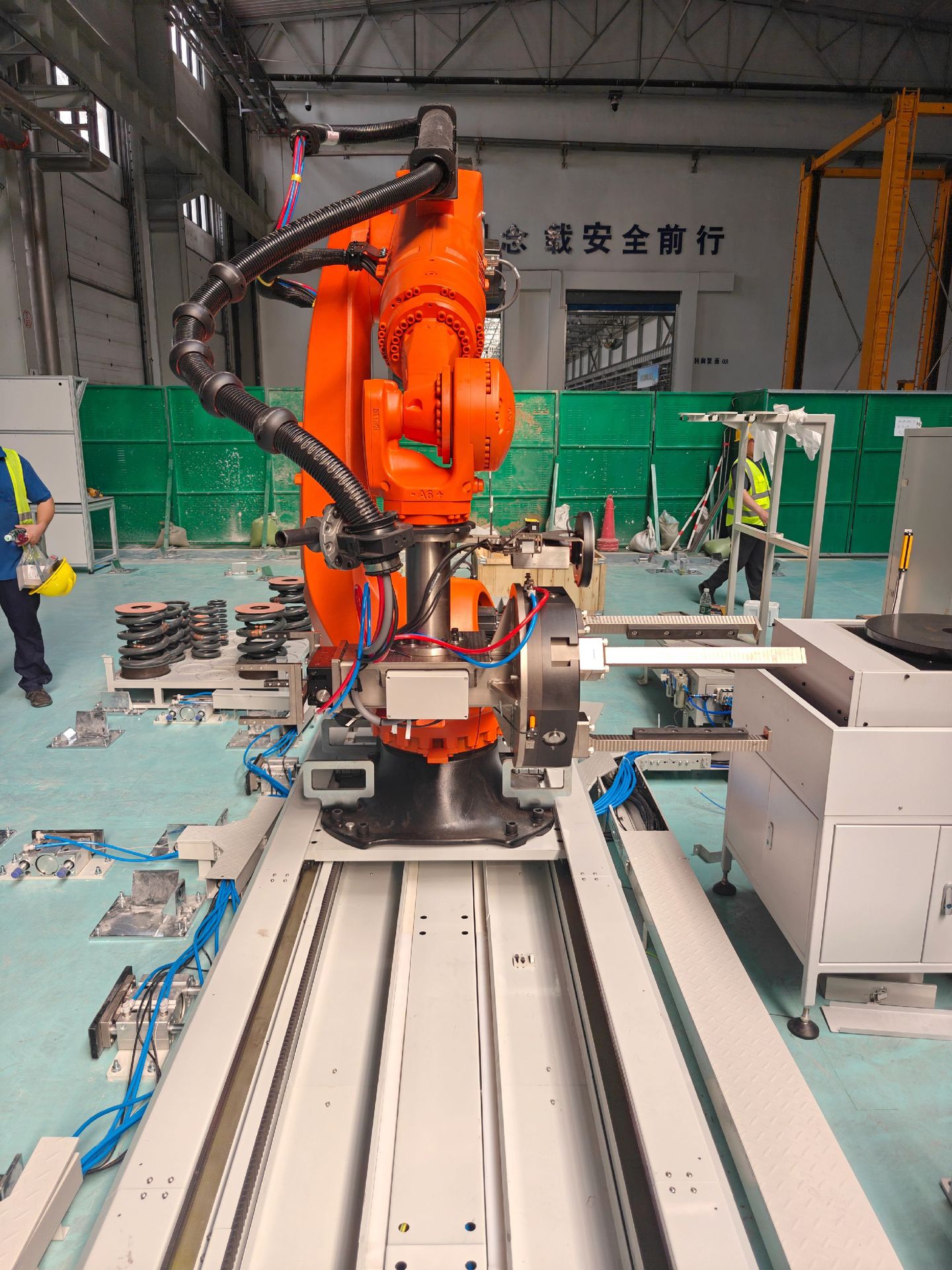
That distinction matters because a robot cell puts a lot of equipment on the carriage. The robot is usually the biggest single item, but it is rarely more than two-thirds of the total. The rest is the equipment that has to travel with the robot: the riser or mounting base, the dress pack and its brackets, the cable chain, the control cabinet if it rides on the carriage, the welding power source, the wire feeder, the torch cleaning station, and any tooling or fixture the robot carries along the track.
In our experience, the forgotten equipment adds 30 to 60 percent on top of the robot’s own weight. A 500 kg robot routinely becomes an 800 kg carriage load. A 1,000 kg robot becomes 1,400 kg or more. If the track was sized for the robot alone, it is already overloaded before the first weld — and overload on a linear track does not fail loudly. It shows up slowly, as heat, as wear, as a few tenths of a millimetre that the robot program cannot explain.
So the first rule of payload calculation is simple: count everything that moves. If it is bolted to the carriage, it counts. If it is not, it does not.
Step 1: List everything riding on the carriage
Before any numbers, make the list. Walk the cell on paper, or better, walk the real cell if it exists, and write down every item that will travel with the carriage. A typical welding cell list looks like this:
| Item on the carriage | Typical weight range | Easy to forget? |
|---|---|---|
| Industrial robot | 150–2,000 kg, by model | No — this is the number everyone starts with |
| Riser / mounting base plate | 80–300 kg | Yes — a tall steel riser is heavy |
| Robot dress pack and brackets | 20–60 kg | Yes |
| Cable chain (moving portion) | 15–50 kg | Yes |
| Robot control cabinet | 120–250 kg, if mounted on the carriage | Yes — often assumed to sit on the floor |
| Welding power source | 50–150 kg, if mounted on the carriage | Yes |
| Wire feeder and wire spool | 15–40 kg | Yes |
| Torch cleaning station | 20–60 kg | Often forgotten |
| Tooling, grippers, or fixture parts carried on the carriage | Varies | Yes |
| Operator platform or guarding attached to the carriage | Varies | Yes |
Some of these items sit on the floor in some cells and on the carriage in others. A control cabinet usually stands beside the track — but on long tracks and multi-station cells it is often mounted on the carriage so the cables stay short. That one decision can add 200 kg. The same goes for the welding power source.
The point of the list is not precision to the kilogram. It is completeness. A payload calculation that misses a 200 kg cabinet is wrong by 200 kg, and no safety factor can rescue a list that left out a whole item.
If you are working from a quotation, the questionnaire we send customers asks exactly these questions — travel, robot model, and what else goes on the track — because the answer changes the track we recommend. The robot model alone does not.
Step 2: Add it up — a worked example
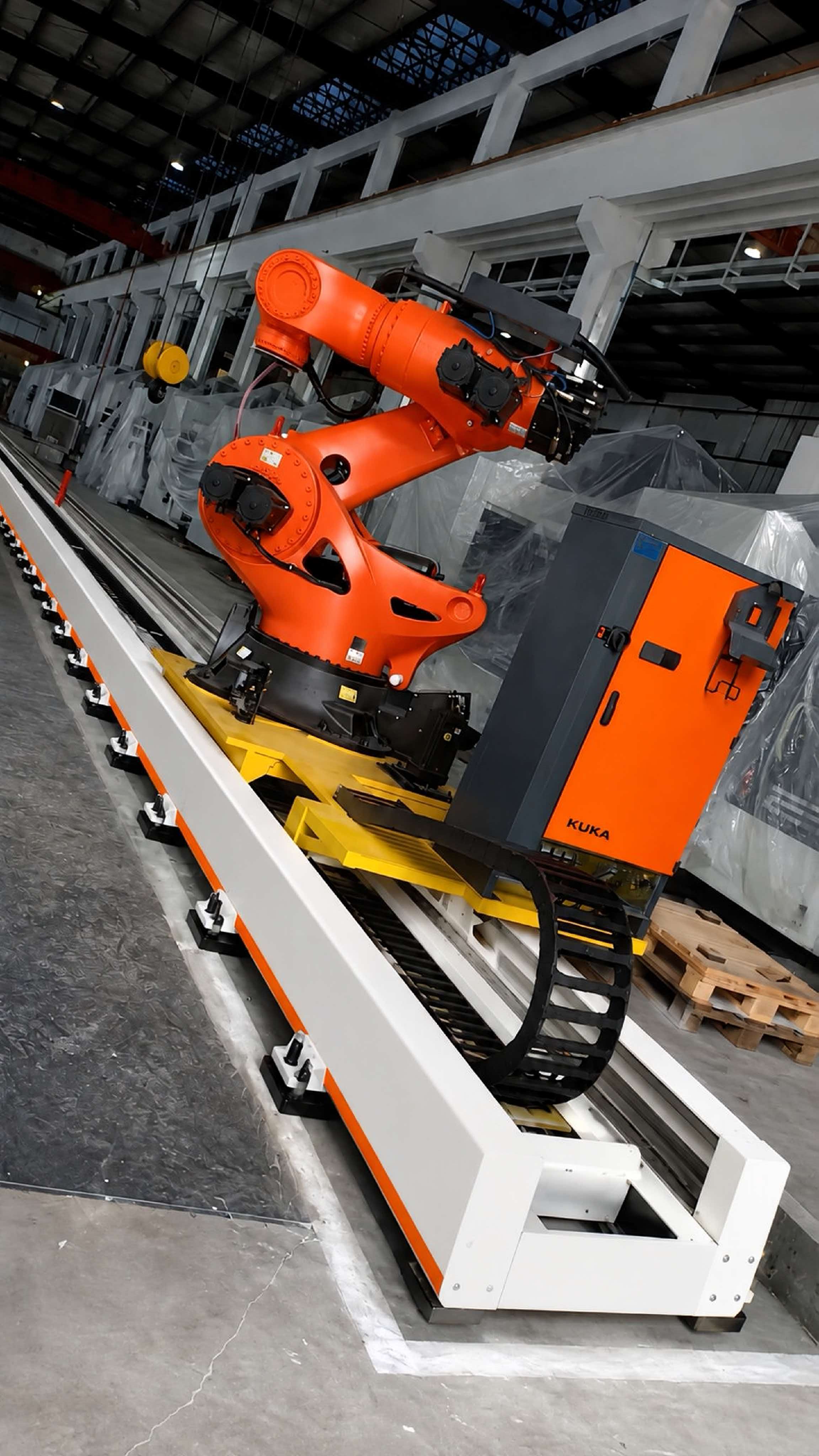
Let us run the numbers for a realistic cell: a mid-size welding robot on a 7th-axis track, serving two welding stations. The figures below are an example, not a catalogue rating — run the same steps with your own equipment weights.
- Welding robot, 6-axis, mid-size: 580 kg
- Steel riser and base plate: 140 kg
- Dress pack, brackets and cable chain: 45 kg
- Control cabinet mounted on the carriage: 180 kg
- Welding power source on the carriage: 90 kg
- Wire feeder, spool and torch cleaning station: 55 kg
Total moving mass: 580 + 140 + 45 + 180 + 90 + 55 = 1,090 kg
Now compare that with where the sizing started. The robot alone weighs 580 kg. The track that was sized for the robot would have been rated for 600 or 800 kg. The real load is 1,090 kg — nearly double the robot weight, and well above an 800 kg rating.
That gap is the whole story. Most payload mistakes are not calculation errors. They are counting errors. The arithmetic is easy; the list is where it goes wrong.
One more check at this stage: ask whether anything will be added later. A second welding torch, a bigger wire spool, a heavier robot at the next upgrade — tracks live for ten years or more, and the robot on top of them often changes. If there is any chance the cell grows, say so now. It is far cheaper to buy the next size up at the start than to replace a track that has run overloaded for two years.
Step 3: The dynamic loads most people skip
Static weight is only half the calculation. A track does not just hold its payload; it accelerates it, stops it, and holds it steady while the robot moves. That is where the forces grow.
Acceleration force. Every time the carriage speeds up or slows down, the drive has to push the full moving mass. The force is simple physics: force equals mass times acceleration. At 1,090 kg and a typical track acceleration of 1 m/s², that is about 1,090 N of force just to accelerate — before friction, before any gradient, before the robot’s own movement. Push the acceleration to 2 m/s² for a faster cycle time and the force doubles. This is why a track that holds a load fine at rest can still stall or alarm on fast moves: the rating that matters is the dynamic one, under acceleration, not the static one on the data sheet.
The robot’s own motion. The robot does not sit still while the track moves. When a heavy robot swings its arm, the reaction forces travel down through the base into the carriage. A robot at full reach, braking hard, can put a momentary force on the track well above the static load. Tracks are designed for this, but only within their rated envelope. A carriage running at 95 percent of its rated load has almost no headroom left for these peaks.
Moment loads from a high center of gravity. A robot is tall. Its center of gravity sits a metre or more above the rail. When the carriage accelerates, that height turns the payload into a tilting moment on the guides — the load tries to tip the carriage forward, and the guide blocks take the force. The higher the center of gravity and the heavier the robot, the larger the moment. A tall robot on a narrow rail spacing loads the guides much harder than the same weight sitting low and centered. If your robot sits on a tall riser, tell the supplier the riser height. The moment check is part of the sizing, not an afterthought.
Vertical and side loads. On a floor-mounted track the weight pushes straight down into the rail. On a ceiling-mounted or wall-mounted track the load direction changes, and the guides see the weight differently. We compared floor and ceiling mounting in detail in our guide to floor-mounted vs ceiling-mounted robot tracks — the payload calculation is the same, but the forces on the guides are not. Whatever the mounting, the supplier needs to know it before sizing the track.
A good rule of thumb: if your cycle time demands high acceleration, or the robot works at long reach with a heavy torch and dress pack, treat the dynamic check as seriously as the static one. Ask the supplier to confirm the sizing against your acceleration and speed, not just the total weight.

Step 4: Apply a safety margin and pick the rating
Once the total moving mass is known, the track rating should sit comfortably above it — not just above it.
Our practice is to add a margin of 25 to 50 percent on top of the calculated total, depending on the application:
- 25 percent for a standard welding cell with moderate speeds and a known, fixed payload.
- 35 to 50 percent for high-acceleration cells, heavy robots at long reach, dirty or hot environments, or any cell where the payload might grow.
Back to the example: the calculated total was 1,090 kg. With a 35 percent margin, the track should be rated for at least 1,090 × 1.35 ≈ 1,470 kg. In practice that means selecting a track rated for 1,500 kg, not 1,100 kg and certainly not 800 kg.
That margin is not wasted money. It is what keeps the guides, the rack and pinion, and the servo inside their comfortable operating range. A track running at 70 percent of its rating stays accurate, runs cool, and lasts. A track running at 100 percent of its rating wears faster, and a track running above it — which is what an undersized track does from day one — starts losing accuracy in ways that look like other problems. We wrote about that slow accuracy loss in why your robot track loses accuracy after six months — overload is one of the causes that hides behind the symptoms.
There is one more reason for the margin: the rating itself. Different makers test and state payload differently. Some state the maximum static load; some state the rated moving load. Always ask which one the number on the data sheet is, and what acceleration and duty cycle it assumes. Two tracks rated 1,500 kg can be very different machines if one rating is static and the other is dynamic.

Step 5: Check the drive and the servo, not just the rail
A track that can carry the load still needs to move it. The payload calculation feeds directly into three more sizing decisions, and a supplier who only checks the rail has only done part of the job.
Rack and pinion or ball screw. The drive has to deliver the acceleration force we calculated in step 3, plus friction, every cycle, for years. An undersized drive runs hot and wears the pinion. This is also why the choice between rack and pinion and ball screw matters for long, heavy tracks — the drive type sets the practical limit on speed and load over a long stroke.
Servo motor and gearbox. The servo is sized from the same numbers: total mass, acceleration, friction, and the inertia the motor sees through the gearbox. A servo that is too small will fault on overload during fast moves — the exact symptom the shop in our opening story saw. If the servo faults appear only on the fastest moves or the longest strokes, the payload calculation is the first place to look.
Guides and guide spacing. The moment loads from step 3 land on the guide blocks. Wider guide spacing handles tilting moments better, which is one reason heavy-payload tracks use wider rails and larger carriages. If the robot is tall or the riser is high, guide spacing matters as much as the headline payload number.
If a supplier quotes a track from the robot weight alone, without asking about the cabinet, the acceleration, or the riser height, that is a warning sign. The right questions are the ones in our robot track questionnaire — travel, payload, robot model, what else rides on the track, environment, accuracy, and speed. A quotation built on those answers will be for the track the cell actually needs.
Five payload mistakes we see most often
- 1. Sizing for the robot weight alone. The single most common mistake. The robot is usually only half to two-thirds of the moving mass. Count everything on the carriage, or the calculation is wrong before it starts.
- 2. Forgetting the control cabinet and welding equipment. A cabinet on the carriage adds 120–250 kg. A welding power source adds 50–150 kg. Together they can be a third of the total load. Decide early whether they ride on the carriage or stand on the floor — and size for the answer.
- 3. Ignoring acceleration. A track that holds a load at rest can still be overloaded in motion. High acceleration, short cycle times, and long strokes all raise the dynamic forces. Size for the motion, not just the weight.
- 4. Forgetting the height of the load. A tall robot on a tall riser creates a tilting moment on the guides every time the carriage accelerates. The higher the center of gravity, the harder the guides work. Send the riser height with the payload numbers.
- 5. Buying with no margin for growth. The robot changes, the torch gets heavier, a second process is added to the cell. A track bought at exactly 100 percent of today’s payload has nowhere to go. Leave 25–50 percent, and the track will still be the right size in five years.
Payload calculation checklist
Use this before you request a quotation. If you can answer every line, the supplier can size the track correctly the first time.
- Robot model and weight, from the robot maker’s data sheet
- Riser / base plate weight and height
- Everything else on the carriage: cabinet, welding power source, wire feeder, torch cleaning station, dress pack, cable chain
- Total moving mass, added up item by item
- Center of gravity height above the rail
- Required travel speed and acceleration (standard is around 1 m/s — state it if yours differs)
- Travel length and duty cycle — how many cycles per hour, how many hours per day
- Mounting: floor, ceiling, or wall — and the foundation or structure it fixes to
- Required repeat positioning accuracy (standard ±0.1 mm)
- Environment: welding, dust, temperature, washdown
- Future plans: a heavier robot, a second torch, a longer stroke
- Safety margin applied: 25–50 percent above the calculated total
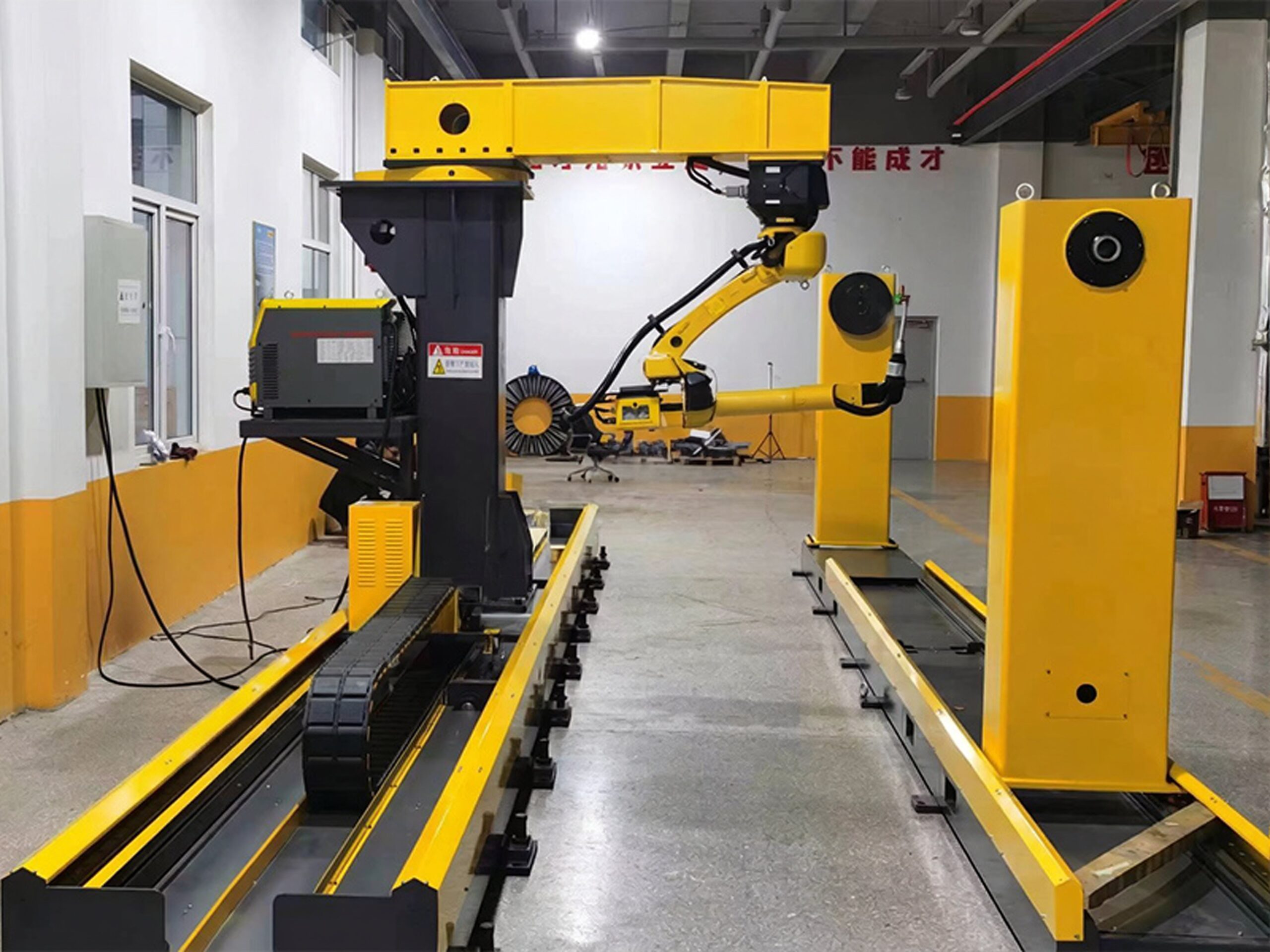
For the positioner side of the same cell, the same logic applies with different numbers — center of gravity offset and tilting torque instead of carriage mass. Our guide to choosing the right welding positioner for heavy-duty robotic welding works through that calculation, and our robot linear track pages show the track sizes the calculation usually leads to. If the cell also needs a positioner and a track together, size them as one system — the track carries the robot, the positioner carries the part, and the two ratings have to match the same cell.
FAQ
Q1: Is the robot’s weight the payload of the track?
A1: No. The robot’s weight is only part of it. The track payload is the total mass of everything mounted on the moving carriage: the robot, the riser, the dress pack, the cable chain, and any control cabinet, welding power source, wire feeder, or torch cleaning station that rides on the carriage. In a typical welding cell that total is 30–60 percent more than the robot alone.
Q2: How much safety margin should I leave on a robot track payload?
A2: We recommend 25–50 percent above the calculated total moving mass. Use 25 percent for a standard cell with moderate speeds and a fixed payload, and 35–50 percent for high acceleration, heavy robots at long reach, or any cell where the payload may grow. A track running at 70 percent of its rating will hold its accuracy far longer than one running at its limit.
Q3: What happens if a robot track is overloaded?
A3: Usually nothing dramatic at first. The servo may fault on fast moves, the drive may run hot, and the guides wear faster than they should. Over months, repeatability drifts and the robot program starts missing positions. Overload rarely breaks a track outright — it shortens its accurate life, and the symptoms look like calibration or programming problems, which makes it hard to diagnose.
Q4: Does the control cabinet count toward the track payload?
A4: It counts if it is mounted on the carriage. Many cells stand the cabinet on the floor beside the track, in which case it does not count. But on long tracks and multi-station cells the cabinet often rides on the carriage to keep cables short — and then its 120–250 kg is part of the payload. Decide where the cabinet goes before sizing the track, not after.
Q5: How does acceleration affect the payload a track can carry?
A5: Acceleration creates force: force equals mass times acceleration. Doubling the acceleration doubles the force the drive must deliver to the same mass. A track rated for a given payload at 1 m/s² may be overloaded at 2 m/s² with the same load. Always size the track for your actual speed and acceleration, and tell the supplier what they are.
Q6: Do I need a bigger track if the robot sits on a tall riser?
A6: Often yes. A tall riser raises the center of gravity, and a high center of gravity creates a larger tilting moment on the guides every time the carriage accelerates or stops. The track may need wider guide spacing or a larger carriage to handle that moment, even if the total weight is unchanged. Send the riser height with the payload numbers.
Q7: What information should I send for a track quotation?
A7: Robot model and weight, travel length, everything that will ride on the carriage, required speed and acceleration, repeatability, mounting type, environment, and any future growth plans. With those numbers a supplier can calculate the real payload and recommend the right track size the first time. Our welding positioner and gantry system pages cover the other equipment in the same cell, and our guide to choosing the right robot positioner covers the sizing logic on the positioner side.
The bottom line
Payload is not the robot’s weight. It is everything that moves — the robot, the riser, the cabinet, the welding equipment, the dress pack, and the cable chain — plus the forces that appear when all of it accelerates and stops. Add the list up item by item, check the dynamic loads, add a 25–50 percent margin, and check the drive and the servo against the same numbers. Do that, and the track you buy will be the track your cell actually needs.
If you are sizing a track and want a second pair of eyes on the numbers, send us the details: the robot model, the travel length, what else rides on the carriage, and the speed and acceleration you need. We will help you work out the payload and the track size — before you spend money on the wrong one. You can reach us at info@wrsrobotics.com or through the contact form on our robot linear track page.