
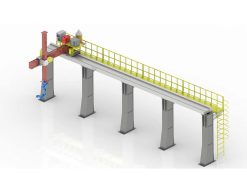
 Robot Linear track
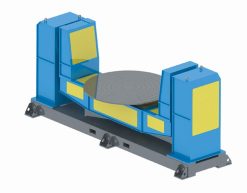 Robot welding Positioner
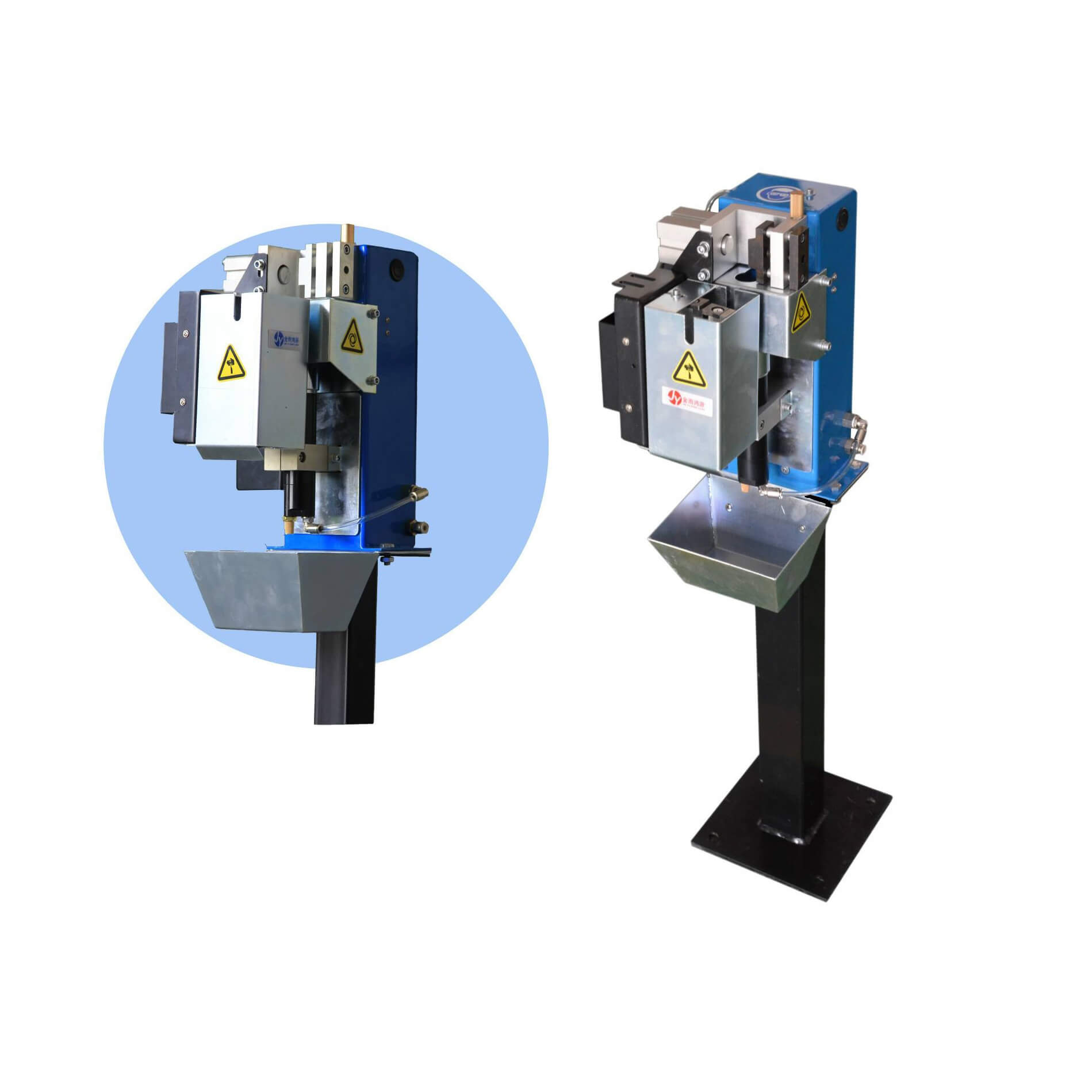 Robot Torch cleaning station
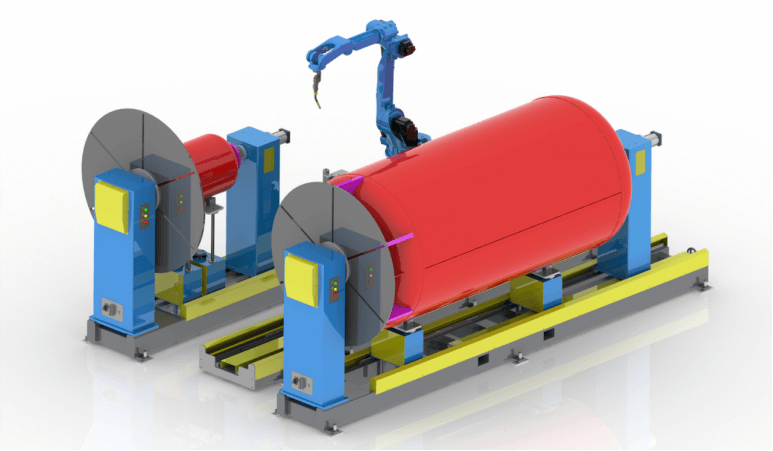 Welding Robot Workstations & Automation Solutions
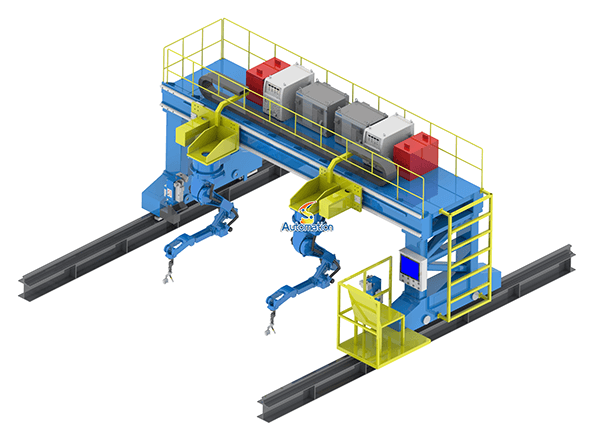 Robot Gantry System
Introduction
Workplace safety remains a critical priority in modern manufacturing. This is especially true in robotic welding environments where operations involve heavy workpieces, high temperatures, and repetitive tasks. While welding robots reduce direct human exposure to hazards, improper workpiece positioning can still create significant safety risks for operators.
Furthermore, manufacturers design ergonomic robot welding turntables to address these specific challenges. By enabling safe and controlled positioning, these tools play a key role in improving workplace safety while simultaneously boosting productivity.
Common Safety Risks in Welding Workpiece Handling
Before the rise of automation, welding operators often manually repositioned heavy components using cranes or forklifts. However, even in partially automated cells, poor positioning solutions can lead to several issues:
- Operator fatigue and musculoskeletal strain.
- Increased risk of pinch points and collisions.
- Unsafe lifting and manual adjustment of workpieces.
- Inconsistent welding positions that affect final quality.
Consequently, ergonomic turntables help eliminate these risks because they allow the system to position workpieces precisely without manual intervention.
What Is an Ergonomic Robot Welding Turntable?
An ergonomic robot welding turntable is a motorized device that rotates the workpiece to an optimal angle. Specifically, it keeps the operator at a safe distance while working seamlessly with industrial welding robots.
In addition, key design principles for these systems include:
- Smooth and controlled rotation
- Stable load support for heavy parts
- Easy integration with existing robotic systems
- Advanced, operator-focused safety features
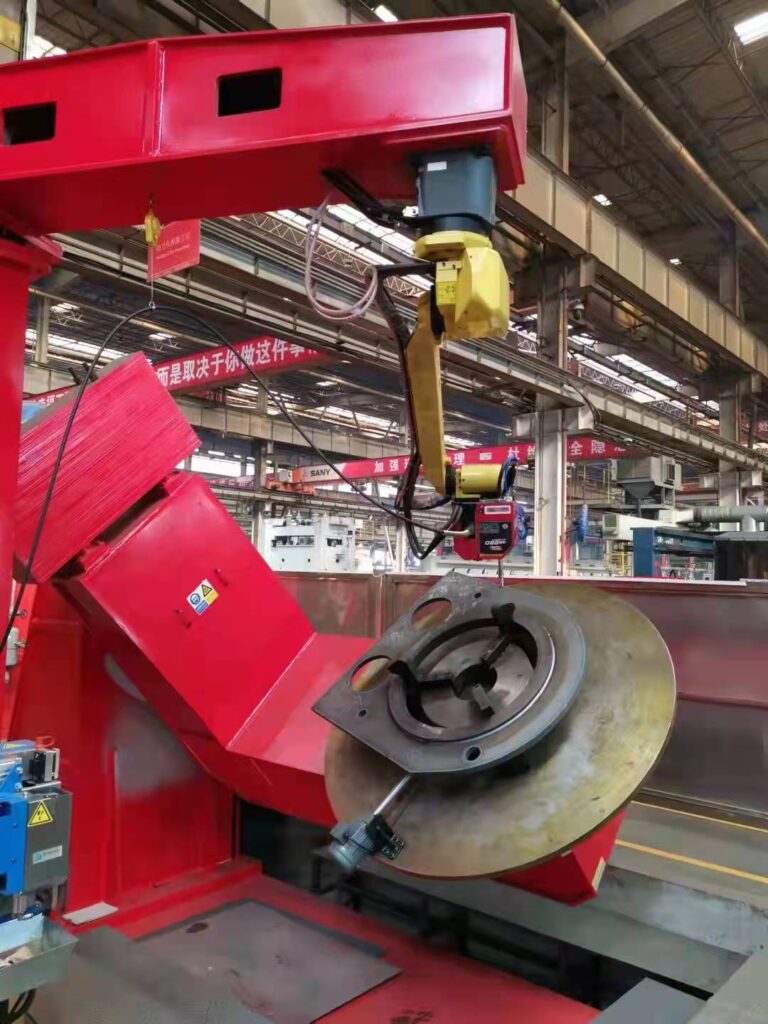
How Ergonomic Turntables Improve Workplace Safety
Reduced Manual Handling By automating workpiece rotation, these turntables eliminate the need for operators to manually lift or push heavy parts. As a result, this significantly reduces the risk of back injuries and repetitive strain.
Improved Operator Posture and Accessibility Moreover, turntables allow the system to present workpieces at comfortable working heights. This minimizes awkward body positions and ensures operators can perform setup tasks safely.
Enhanced Separation Between Humans and Robots In robotic welding cells, ergonomic turntables support predictable motion. Therefore, this improves coordination between the robot and the positioner, reducing the likelihood of unexpected movements near personnel.
Stable and Controlled Motion High-quality turntables provide smooth acceleration and precise positioning. Because they offer stable motion, they prevent sudden shifts that could cause safety hazards or damage to expensive workpieces.
Integration with Safety Systems Finally, modern robot welding turntables integrate easily with safety fences, light curtains, and emergency stop systems. This ensures the entire cell complies with the highest industrial safety standards.
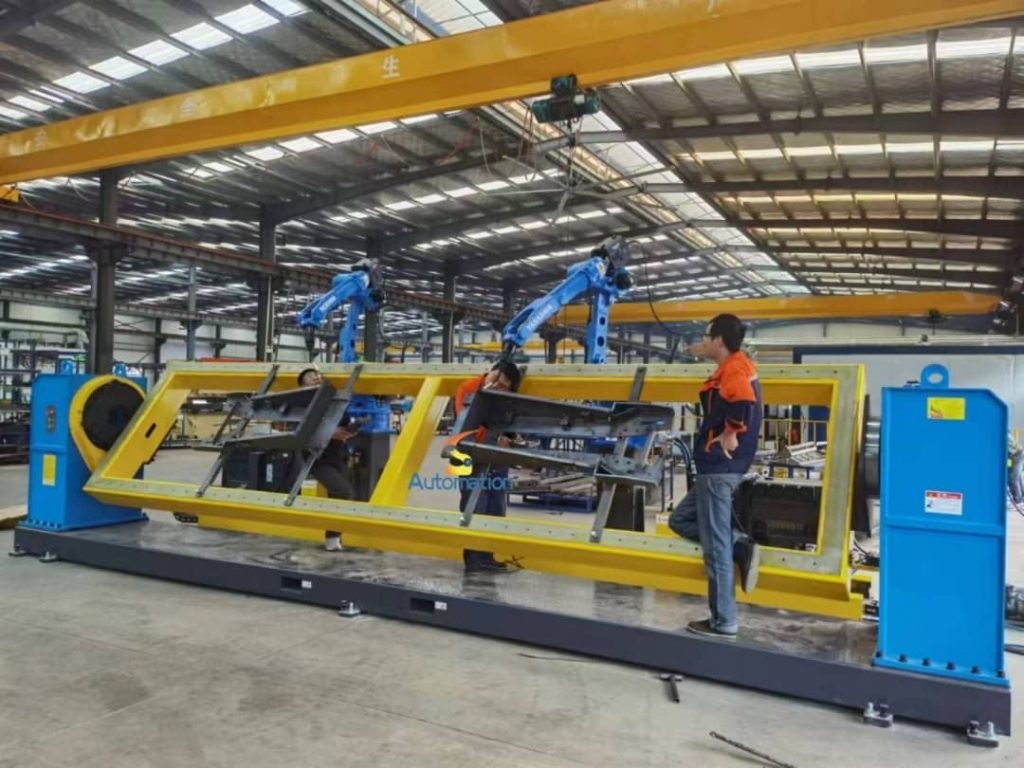
Applications That Benefit Most
Currently, many industries utilize ergonomic robot welding turntables for:
- Robotic arc welding of medium to large components.
- Multi-station welding cells.
- High-mix, low-volume production environments.
- Applications requiring frequent and complex part repositioning.
Conclusion
To summarize, ergonomic robot welding turntables are a vital component of safe welding automation. By reducing manual handling and ensuring controlled motion, these systems enhance workplace safety while supporting consistent performance. For manufacturers seeking to improve safety standards, ergonomic turntables offer a practical and effective solution.
Contact us today to learn how our ergonomic welding turntables can enhance your robotic welding system.