
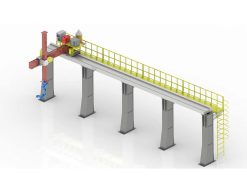
 Robot Linear track
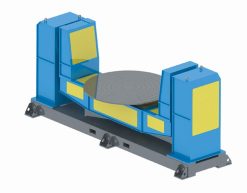 Robot welding Positioner
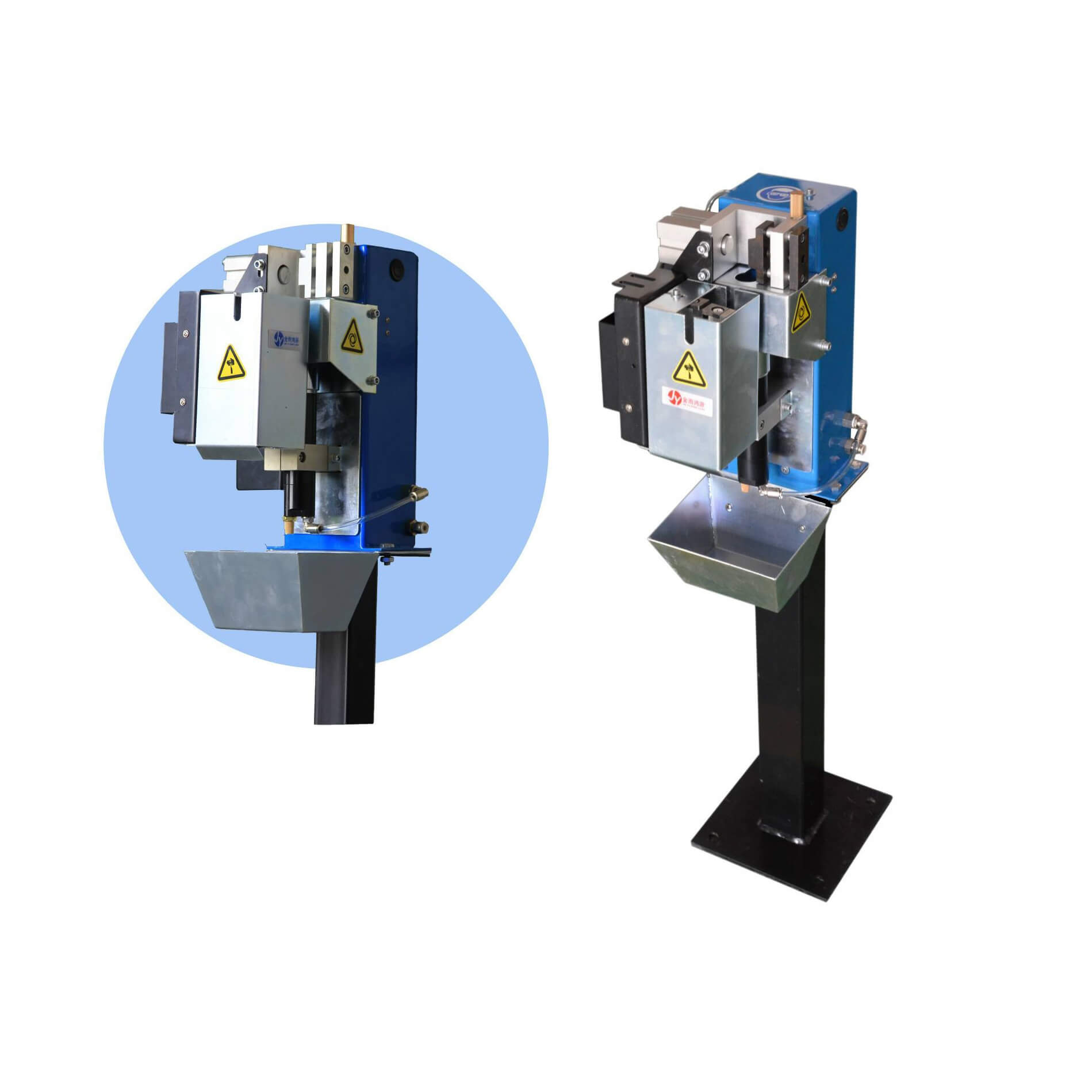 Robot Torch cleaning station
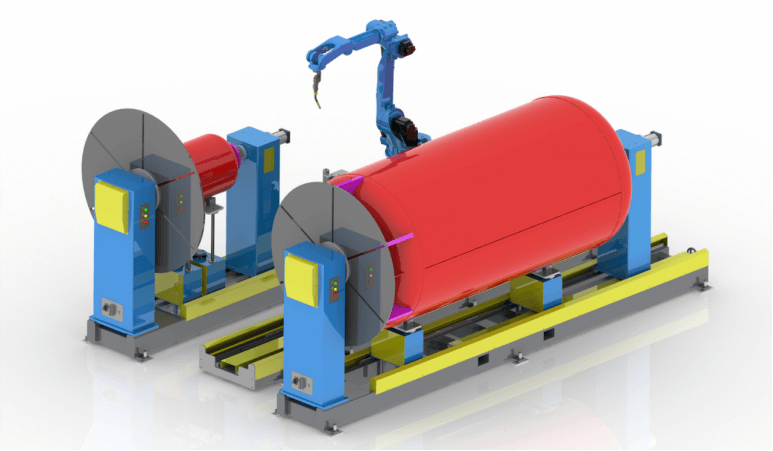 Welding Robot Workstations & Automation Solutions
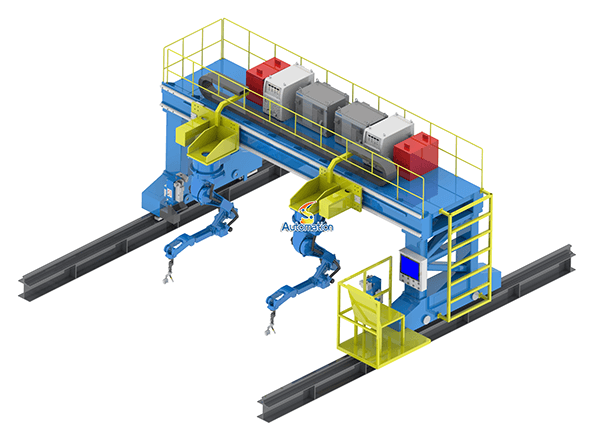 Robot Gantry System
Introduction
Overhead Gantry Robots are widely used in modern manufacturing to optimize floor space and improve automation efficiency. By relocating robotic motion systems above the production area, overhead gantry robots free up floor space while maintaining high payload capacity, precision, and automation flexibility. This makes them an increasingly popular choice in welding, material handling, and large-scale fabrication applications.
What Are Overhead Gantry Robots?
Overhead gantry robots are robotic systems mounted on elevated gantry structures or rails above the working area. Instead of occupying valuable floor space, the robot travels along overhead axes, performing tasks such as welding, handling, assembly, or inspection from above.
Key characteristics include:
- Elevated rail or gantry mounting
- Long travel strokes
- High payload capacity
- Multi-axis coordinated motion
These systems are commonly used where conventional floor-mounted robots would restrict layout flexibility or interfere with material flow.
Why Floor Space Optimization Matters in Automation
Efficient use of floor space directly impacts:
- Production capacity
- Workflow efficiency
- Safety and accessibility
- Future scalability
Traditional robotic cells often require safety fencing, robot bases, and auxiliary equipment that consume significant floor area. As production expands, this can lead to congestion, longer material transfer paths, and reduced operational efficiency.
Overhead gantry robots address these issues by shifting automation infrastructure vertically rather than horizontally.
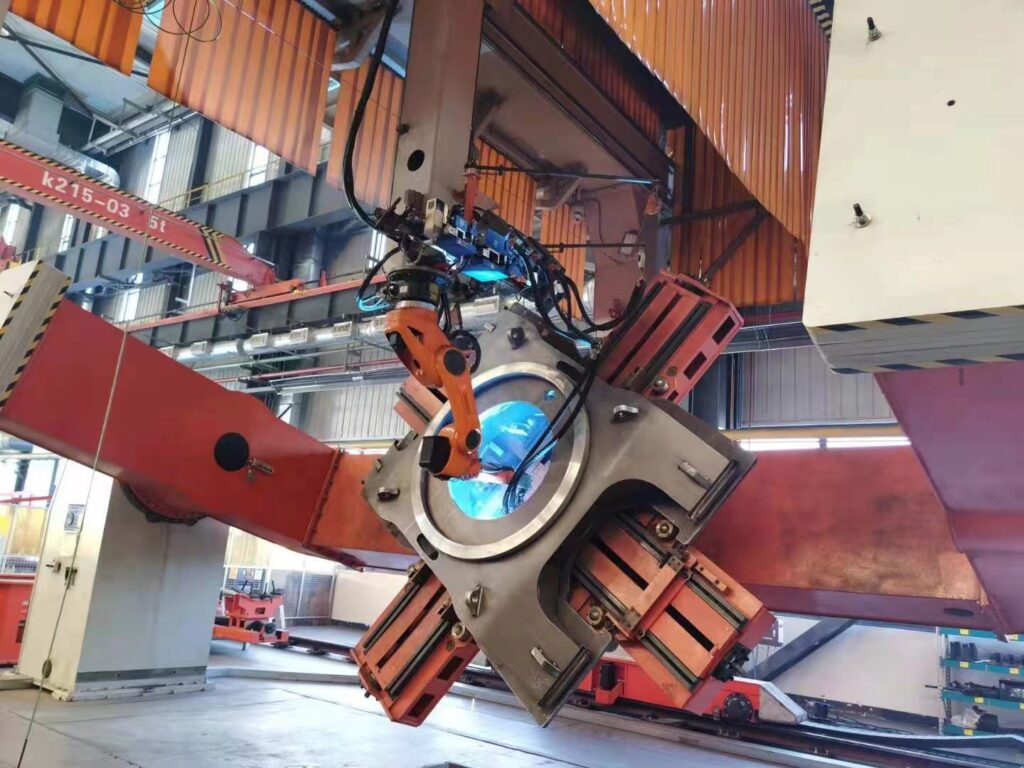
How Overhead Gantry Robots Optimize Floor Space
Eliminating Floor-Mounted Robot Bases
By moving the robot off the floor, overhead gantry systems remove the need for large robot pedestals and safety zones at ground level. This allows manufacturers to:
Install additional equipment in the same footprint
Maintain clear aisles for material handling
Improve overall shop floor organization
Supporting Multi-Station Operations
Overhead gantry robots can travel across multiple workstations along extended rails. A single robot can service several welding cells, fixtures, or assembly stations without occupying space at each station.
This centralized automation approach significantly improves space utilization and equipment efficiency.
Improving Material Flow and Accessibility
With robotic motion occurring above the workspace, forklifts, AGVs, and operators can move freely below. This improves material flow, reduces traffic congestion, and enhances overall safety.
Performance Advantages Beyond Space Savings
High Payload and Structural Stability
Overhead gantry robots are designed to handle heavy payloads while maintaining rigidity and precise positioning. Reinforced gantry structures and servo-driven axes ensure stable motion even over long travel distances.
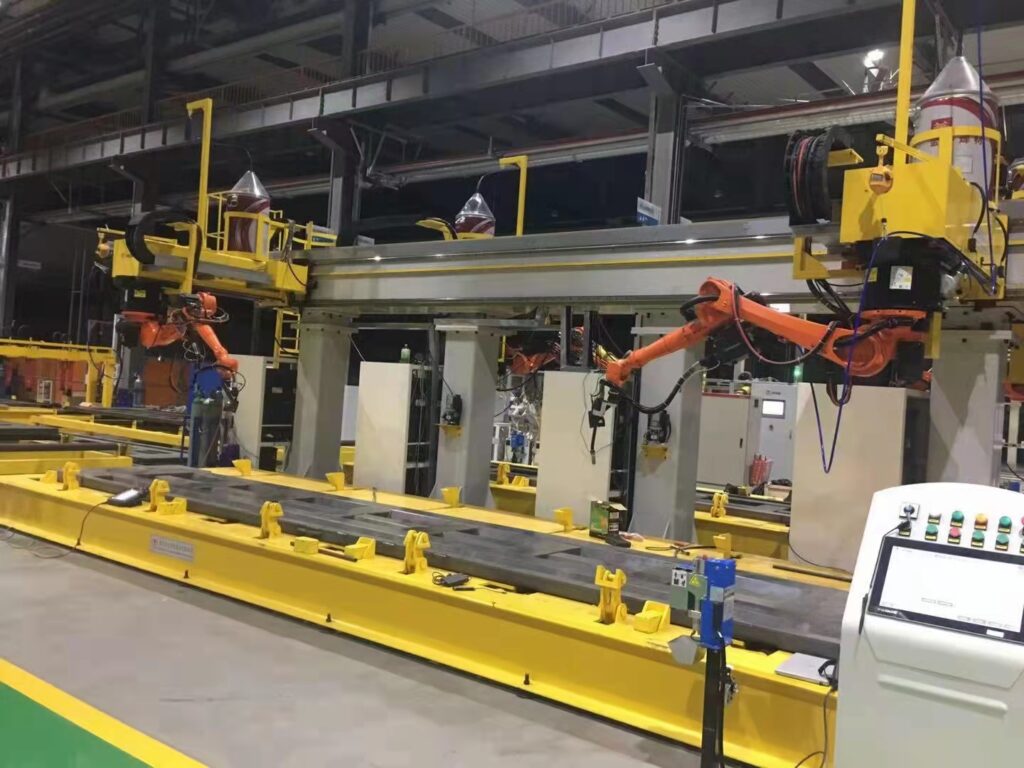
Large Working Envelope
By combining long X-axis travel with vertical and horizontal motion, gantry robots can cover large production areas. This makes them ideal for:
- Large workpieces
- Oversized assemblies
- Long welding seams
Consistent Accuracy and Repeatability
Modern overhead gantry robots use advanced motion control systems to achieve high repeatability across the entire working envelope. This ensures consistent quality in automated welding and fabrication processes.
Typical Applications of Overhead Gantry Robots
Overhead gantry robots are widely used in:
- Robotic welding of large frames and structures
- Heavy fabrication and steel construction
- Material handling and palletizing
- Automated machining and inspection lines
Their flexibility makes them suitable for both high-volume production and customized manufacturing environments.
Key Considerations When Implementing Overhead Gantry Robots
When planning an overhead gantry robot system, manufacturers should evaluate:
- Ceiling height and structural support
- Required payload and reach
- Travel length and axis configuration
- Integration with existing automation systems
Proper system design ensures optimal performance, safety compliance, and long-term reliability.
Cost Efficiency and Long-Term ROI
Although overhead gantry robots may require higher initial investment than floor-mounted systems, they deliver strong ROI through:
- Improved floor space utilization
- Reduced need for additional robots
- Enhanced workflow efficiency
- Greater scalability for future expansion
By maximizing vertical space, manufacturers can increase production capacity without expanding facility size.

Conclusion
Overhead gantry robots provide an effective and scalable solution for manufacturers seeking to optimize floor space while maintaining high automation performance. By relocating robotic motion above the workspace, these systems improve layout flexibility, enhance material flow, and support large-scale automated operations. For facilities facing space constraints and growing automation demands, overhead gantry robots offer a practical path to increased efficiency and long-term productivity.
Contact us to explore how overhead gantry robot solutions can be customized for your production environment.