
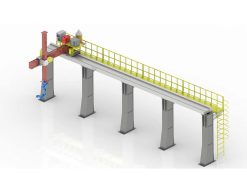
 Robot Linear track
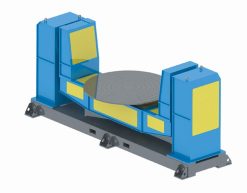 Robot welding Positioner
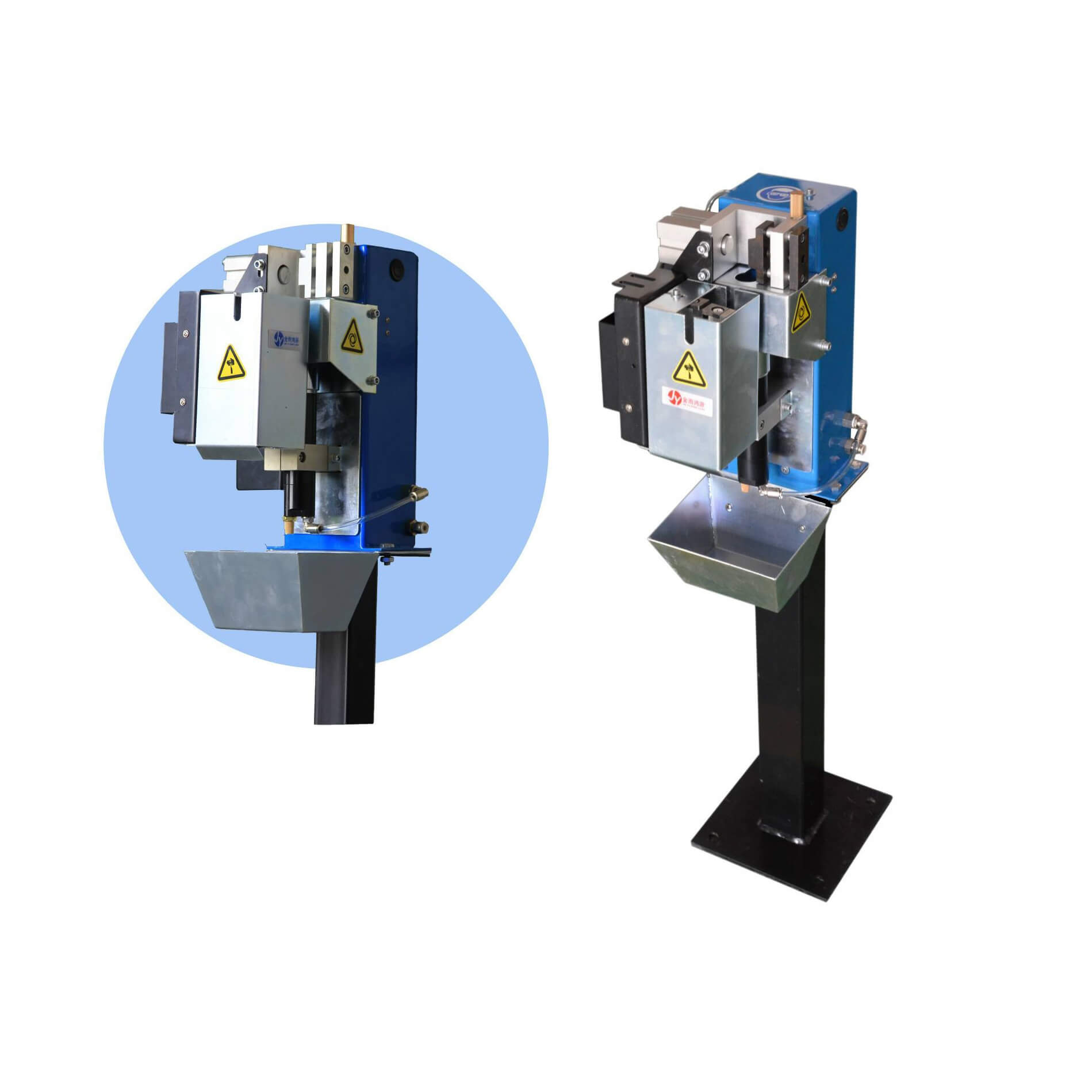 Robot Torch cleaning station
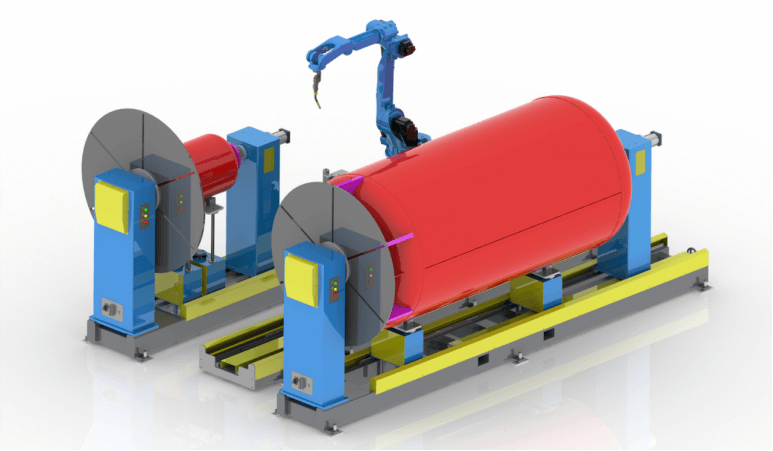 Welding Robot Workstations & Automation Solutions
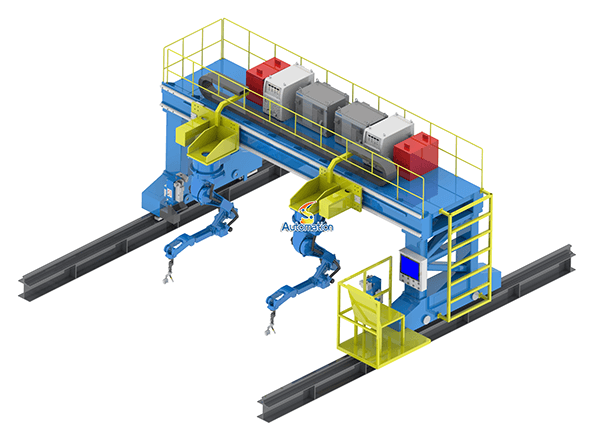 Robot Gantry System
Introduction
In the current manufacturing climate, the layout of a production line is often dictated by a single, expensive constraint: available floor space. For a long time, the standard approach was to use floor-mounted workstations built around 6-axis articulated robots. While effective for certain tasks, these “fixed islands” are increasingly seen as a limit on factory-wide efficiency.
We are seeing a noticeable trend where facility planners are moving automation overhead. Gantry Robot Systems (or Cartesian robots) have moved beyond simple pick-and-place applications to become a primary choice for high-output environments. This shift isn’t about following a trend; it’s a practical transition from 2D floor planning to a more integrated 3D strategy.
The Practical Constraints of Floor-Based Cells
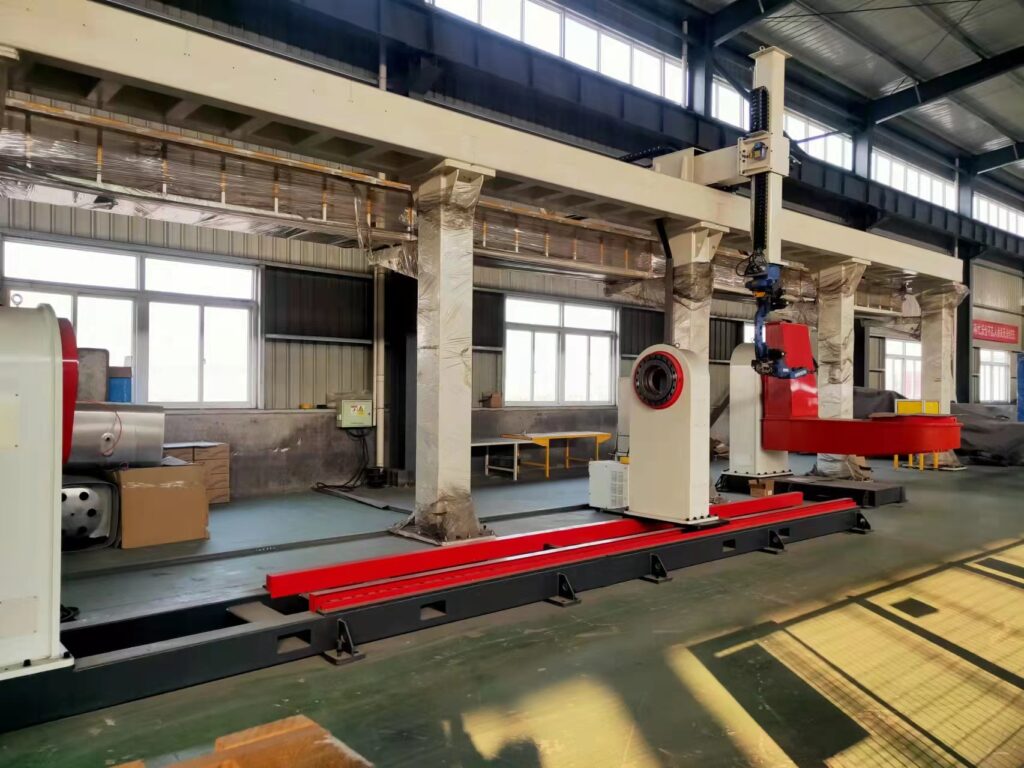
The challenge with traditional workstations isn’t usually the robot’s capability, but its physical footprint. A robot bolted to the floor is a permanent obstacle that shapes the entire shop floor.
Beyond the machine itself, you have to account for safety fencing, cable management, and maintenance access zones. In a busy plant, this creates a “maze” that disrupts the movement of parts and personnel. There is also the issue of reach. A standard robot arm operates within a fixed, circular envelope. If a workpiece is exceptionally long or wide—common in heavy industries—the arm is limited by its own geometry. To compensate, manufacturers often have to add more robots or implement floor tracks, which introduces more mechanical complexity and higher maintenance requirements.
The Gantry Logic: A Structural Perspective on Stability
The reason gantry systems are gaining traction is largely due to the physics of their design. Unlike a cantilevered robot arm that can experience vibrations or minor “sag” when fully extended with a heavy load, a gantry is a bridge structure supported at both ends.
This inherent rigidity is a significant advantage for precision. When you are dropping a heavy component into a frame or performing high-torque fastening, you need a stable platform. The linear motion of a gantry provides this stability naturally, ensuring consistent accuracy across the entire work area, regardless of how heavy the part is.
Key Factors Driving the Shift to Overhead Automation
Scalability and Modular Design
One of the most practical aspects of a gantry is its linear scalability. While a traditional robot has a fixed reach, a gantry’s reach is defined by its rail length. If your production requirements change and you need to cover more distance, you can often extend the rails rather than replacing the entire system. This allows for a more incremental investment as production needs grow.
Freeing the Shop Floor for Logistics
By moving the primary automation tasks to the ceiling, the floor is essentially reclaimed. This is a strategic advantage for plants integrated with Autonomous Mobile Robots (AMRs). Without robot pedestals and safety cages in the way, logistics paths can be much more direct. It allows for a multi-tier operation: the heavy assembly happens above, while the material flow moves freely below.
Handling Large and Heavy Workpieces
As workpieces get larger—such as structural frames or heavy-duty components—traditional workstations often struggle to keep up. Gantry systems can span 20 meters or more with ease. Because the motion is based on simple X-Y-Z coordinates, the mechanical wear is distributed across a large rail system rather than being concentrated on a few rotating joints. This makes them a more durable choice for heavy-duty, long-cycle operations.
Maintenance and Long-Term Reliability
In a production environment, complexity usually leads to more downtime. Articulated robots have complex internal gearboxes that are difficult to service without specialized help. Gantry systems, however, are built on straightforward mechanical principles: linear guides, racks, and pinions. These components are accessible and easy to maintain by an in-house team. Over the long term, this simplicity translates into a lower total cost of ownership (TCO) and more predictable uptime.
Typical Implementation Scenarios
We see the clearest benefits of this transition in a few specific scenarios:
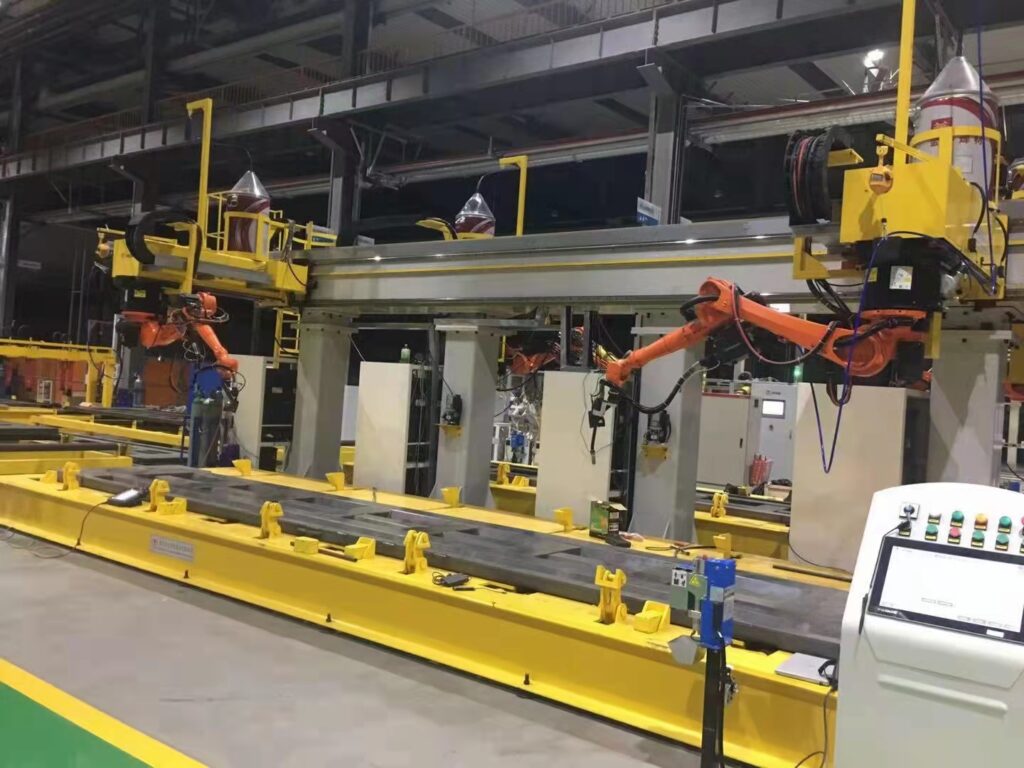
- Multi-Machine Tending:A single overhead gantry can service a whole row of machines, leaving the floor clear for operators and tool changes.
- Large-Scale Assembly:Joining large components that require precise alignment over several meters.
- Intralogistics:Moving heavy materials between different production stages without the need for forklifts to navigate around robot cages.
Practical Considerations for the Transition
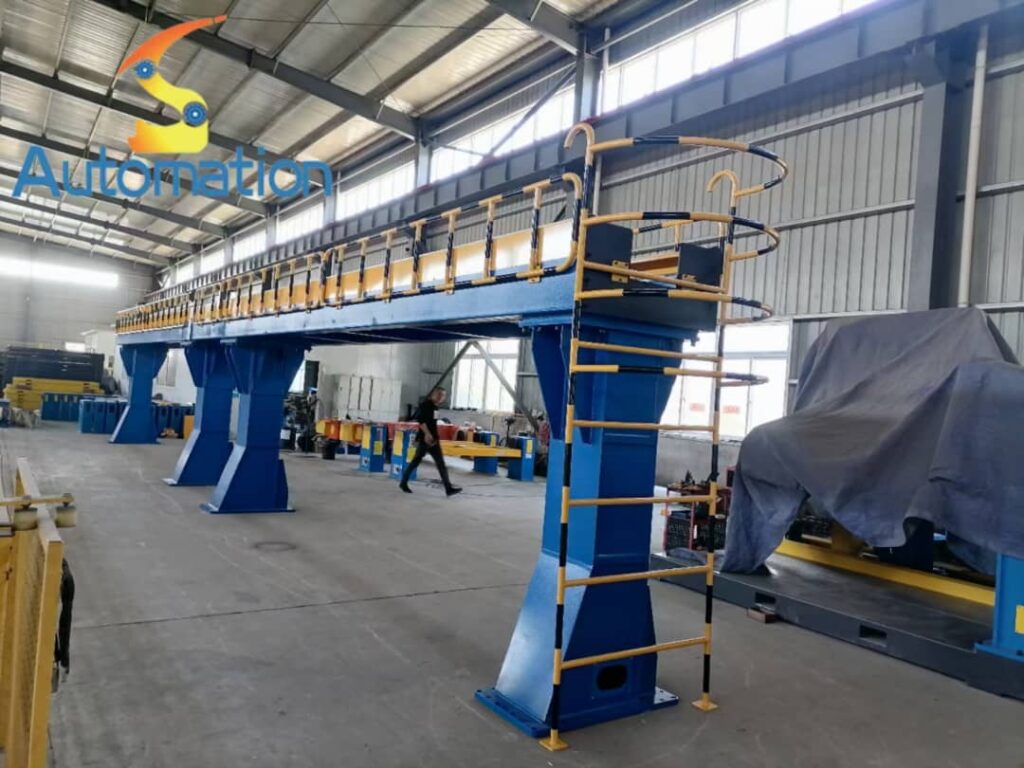
It is worth noting that moving to an overhead system requires proper upfront planning. You have to evaluate the building’s structural load capacity and ensure there is enough ceiling height for the Z-axis stroke. Integrating the gantry’s control logic with existing PLCs also requires a clear technical roadmap. While it takes more initial engineering than a standard floor-mounted robot, the gains in space and flexibility are often the deciding factors.
Conclusion
The shift toward Gantry Robot Systems is a response to the need for higher throughput in limited spaces. By utilizing the vertical dimension of the factory, manufacturers are finding they can achieve better reach, higher payload capacity, and a much cleaner floor layout. For any facility looking to optimize its long-term production logic, the overhead approach is a practical and scalable solution.
Is floor space a bottleneck in your facility?
Contact us. Our engineering team can help you evaluate your current layout and determine if an overhead gantry system is the right move for your production goals.