
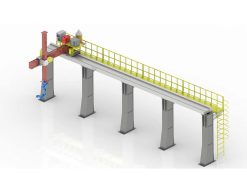
 Robot Linear track
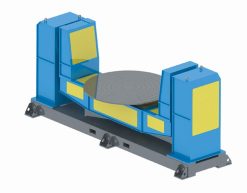 Robot welding Positioner
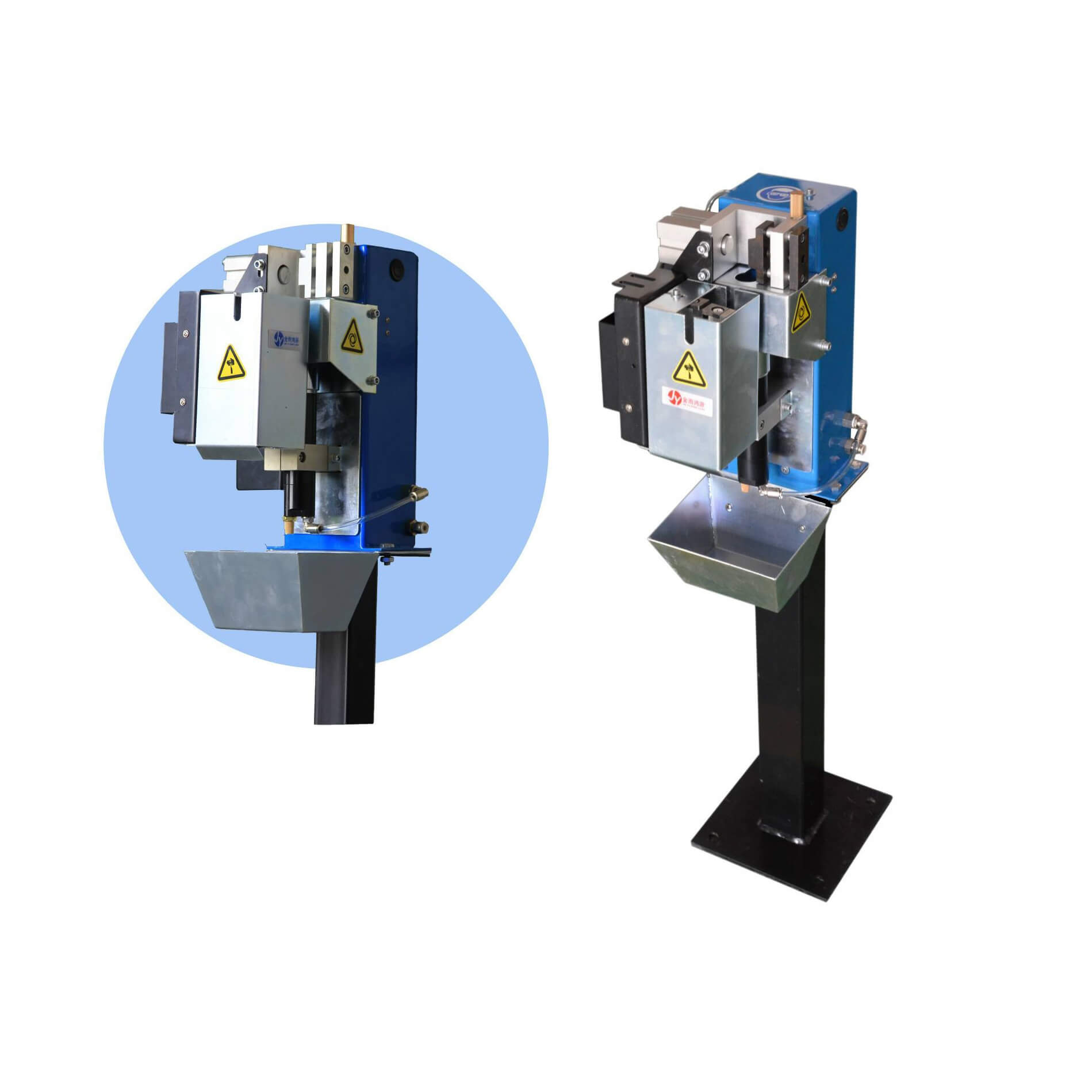 Robot Torch cleaning station
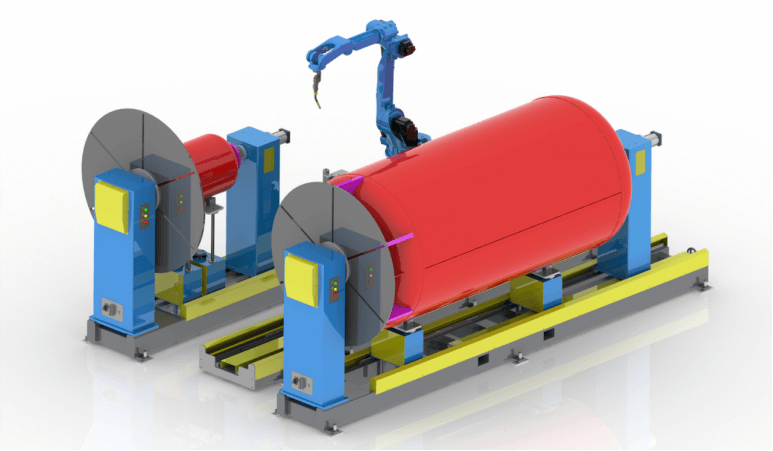 Welding Robot Workstations & Automation Solutions
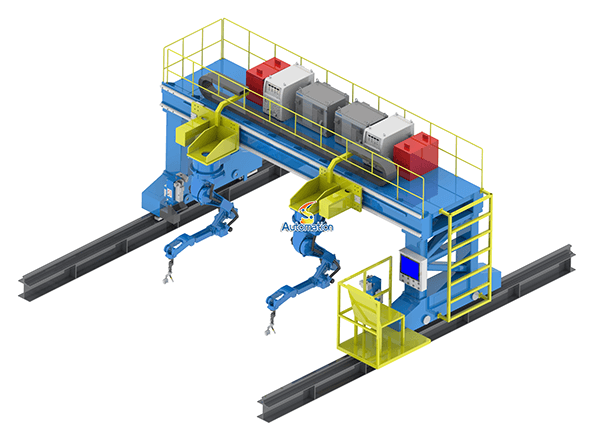 Robot Gantry System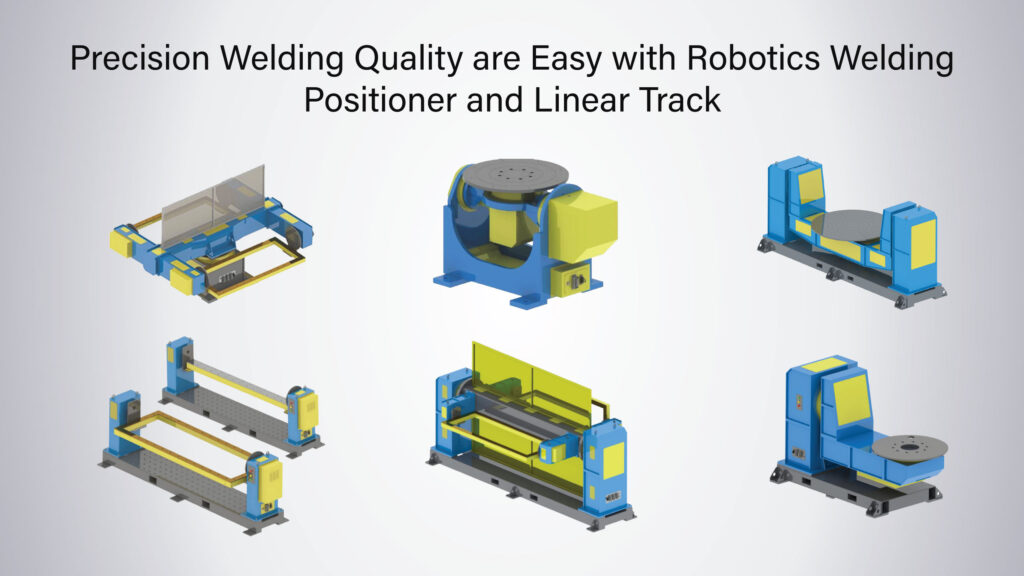
When it comes to heavy-duty robotic welding, stability is everything. Anyone who has worked with large cylinders, pressure vessels, or long pipe sections knows this: if the workpiece isn’t properly supported, even the most advanced welding robot will struggle to deliver consistent results.
This is where headstock-tailstock positioners quietly become the backbone of the entire welding system.
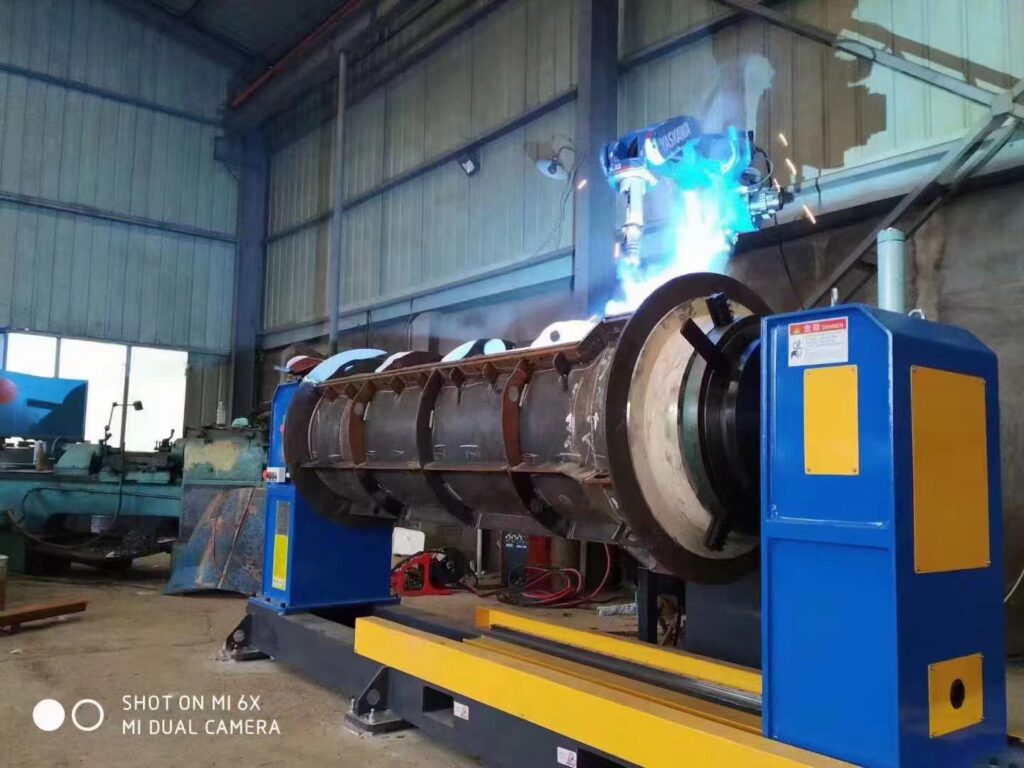
Unlike standard turntables or single-axis positioners, a headstock-tailstock setup is designed to handle long, heavy, and unbalanced workpieces. One end is driven by the headstock, while the tailstock provides synchronized support on the opposite side. The result is not just better positioning, but a noticeable improvement in weld quality and process reliability.
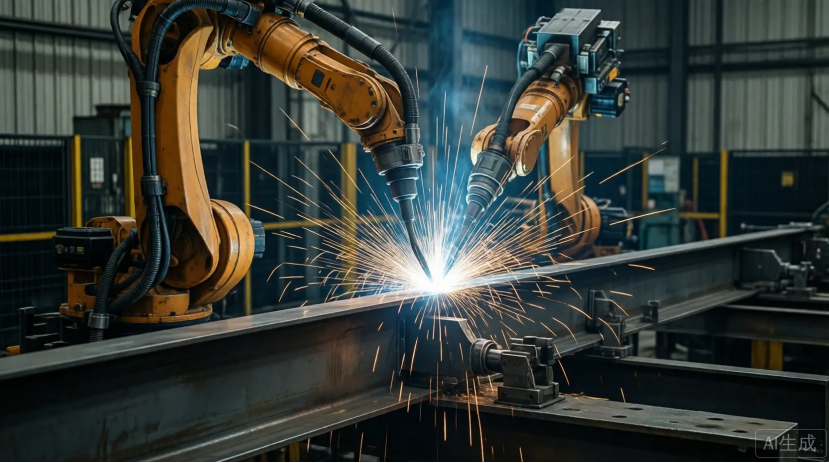
Why heavy workpieces need more than a standard positioner
In real production environments, components are rarely perfect. Large parts often come with uneven wall thickness, off-center loads, or added fixtures. A single support point may work in theory, but in practice it can introduce vibration, sagging, or misalignment during rotation.
With a headstock-tailstock positioner, the load is distributed more evenly. This balanced support helps the robot maintain a stable torch angle and consistent travel speed, especially during circumferential welding. Over long production runs, that stability directly translates into fewer defects and less rework.
Improving weld quality through controlled rotation
One of the biggest advantages of headstock-tailstock positioners is how smoothly they rotate heavy parts. For robotic welding, smooth motion matters just as much as precision. Any sudden movement or micro-vibration can affect penetration and bead appearance.
In applications like pipe welding or vessel fabrication, controlled rotation allows the welding robot to stay in an optimal position—often in the flat or horizontal welding position. This not only improves weld penetration and bead uniformity, but also makes process parameters easier to control and repeat.
Many manufacturers notice that once they switch to a headstock-tailstock system, parameter tuning becomes more forgiving. The process feels more “stable,” even when welding thicker materials or running higher currents.
Flexibility for complex welding stations
From a system integration perspective, headstock-tailstock positioners are surprisingly flexible. They can be combined with:
Multiple robotic arms
External axes for synchronized motion
Dedicated stations for longitudinal and circumferential seams
In heavy-duty automated lines, it’s common to see one station focused on longitudinal welding, followed by another station where the headstock-tailstock positioner handles circumferential seams. This separation of processes helps maintain quality while keeping cycle times under control.
A practical solution, not just a theoretical one
On paper, fully automated “all-in-one” welding solutions sound appealing. In reality, quality welding—especially for thick or critical components—often depends on proven mechanical support and clear process separation.
Headstock-tailstock positioners are not a shortcut. They are a practical, industry-tested solution that reflects how welding actually works on the factory floor. Many experienced engineers favor them not because they are complex, but because they are reliable.
✅ Implementation Checklist and Recommendations
If you are considering introducing or upgrading a Headstock-Tailstock Positioner in your production line, here is my recommended checklist:
- Confirm workpiece specifications: Measure the workpiece’s weight, length, and anticipated welding path to ensure the positioner’s rated load capacity is adequate.
- Evaluate robot travel range: The headstock and tailstock designs should align with the robot’s maximum travel range to prevent reach errors caused by excessive travel.
- Select appropriate drive method: For high-precision requirements, servo motor drives are recommended; for simple push-pull motions, pneumatic systems may be more cost-effective.
- Consider thermal compensation algorithms: Premium positioner systems typically include software that automatically calculates and compensates for thermal deformation based on the welding sequence.
📝 Conclusion
The Headstock-Tailstock Positioner is not merely a “fixture,” but rather the ‘eyes’ and “legs” of heavy-duty welding robots. It compensates for the robot’s shortcomings in rigidity and thermal compensation, enabling automated welding that is not only fast but also stable and precise.
In high-load welding scenarios, the Headstock-Tailstock Positioner is the key to achieving seamless coordination between the robot and workpiece.
As robotic welding continues to move into heavier and more demanding applications, the role of the positioner becomes increasingly important. A high-performance robot alone is not enough. Without proper workpiece handling, even the best automation setup will fall short.
Headstock-tailstock positioners may not always be the most visible part of a robotic welding cell, but they often determine whether the system succeeds or struggles.
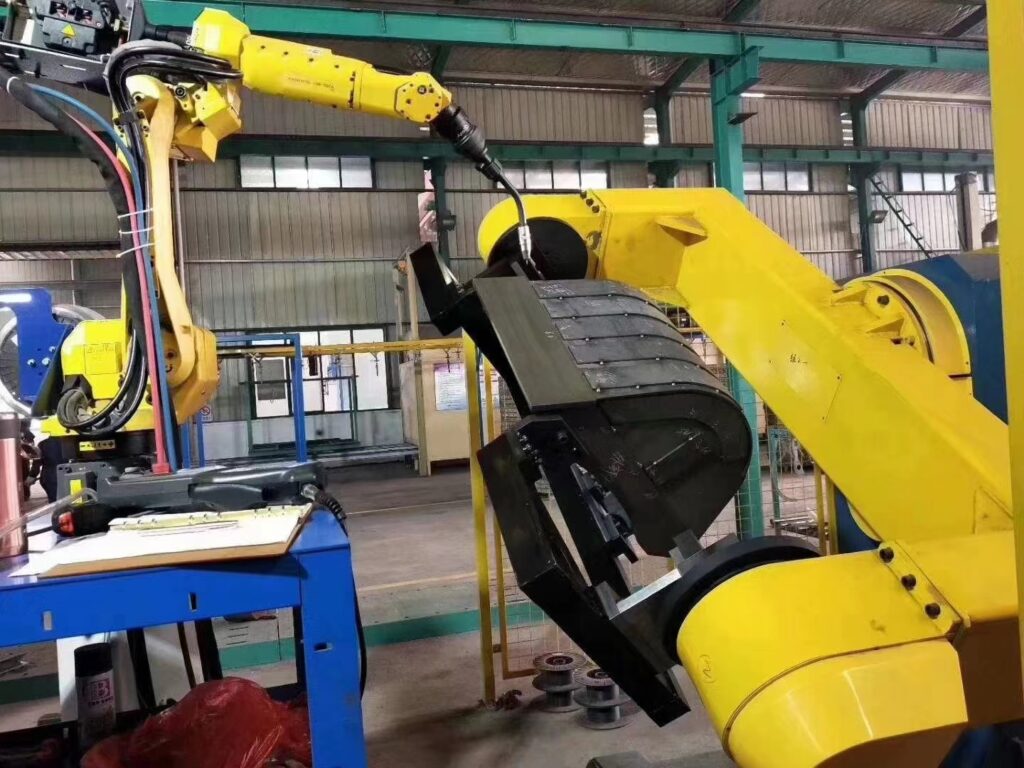
Looking to integrate headstock-tailstock positioners into your robotic welding line—or upgrade an existing system for heavy-duty applications?
Contact us today to discuss a tailored solution that matches your workpiece size, load capacity, and welding process requirements.