
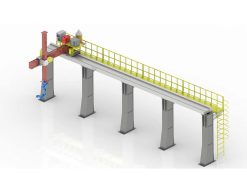
 Robot Linear track
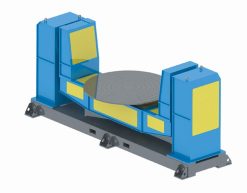 Robot welding Positioner
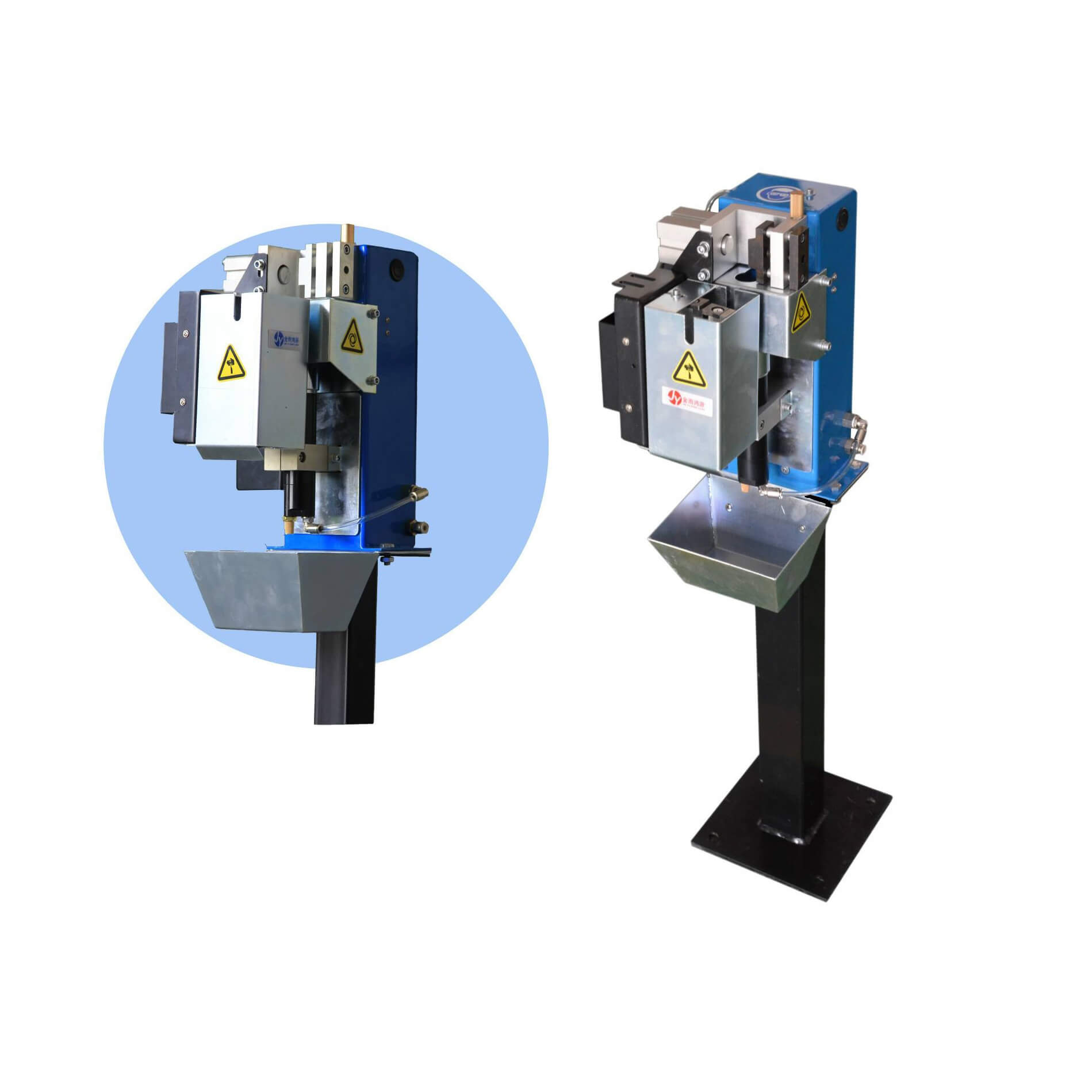 Robot Torch cleaning station
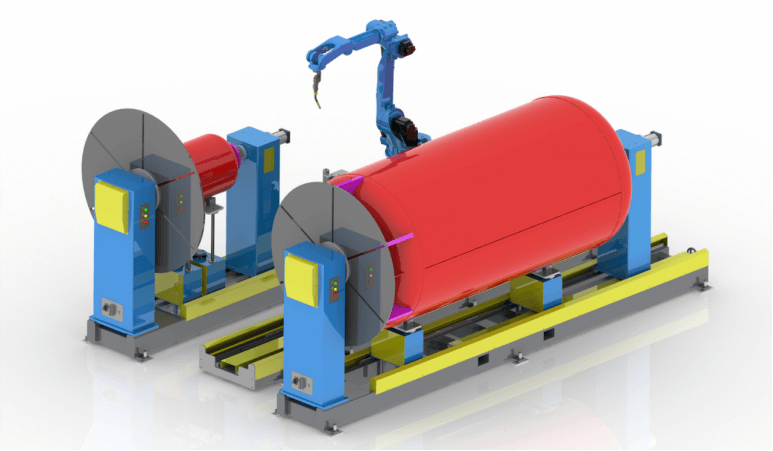 Welding Robot Workstations & Automation Solutions
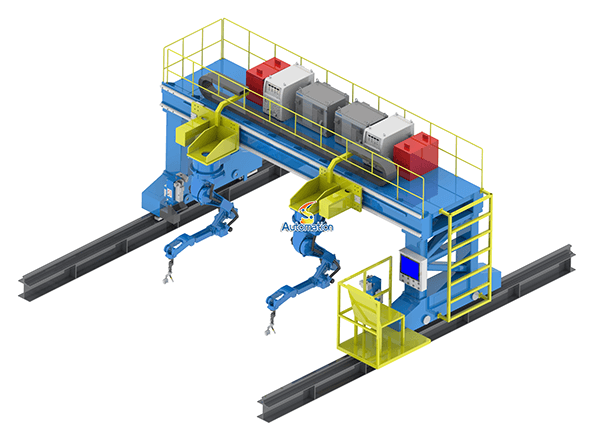 Robot Gantry System
Introduction
In the high-precision world of automated manufacturing, the physical architecture of a linear motion system is often the deciding factor between a line that scales and one that becomes a bottleneck. For large-format fabrication, facility planners typically choose between two primary mechanical structures: the Bridge-Style Gantry and the Cantilever system. While both utilize Cartesian coordinates (X, Y, Z) to provide overhead automation, their trade-offs in structural physics, payload handling, and long-term modularity are significant. This guide provides a deep technical analysis to help you determine which configuration will optimize your specific production flow.
The Bridge-Style Gantry: Engineering for Maximum Rigidity
The bridge-style gantry is defined by a horizontal beam supported by columns at both ends, creating a stable “bridge” across the workspace. This dual-support architecture is widely regarded as the superior choice for heavy-duty industrial welding and precision assembly.
- Eliminating Mechanical Deflection:By distributing weight across two parallel supports, the bridge-style gantry eliminates the “arm sag” or micro-vibrations common in single-sided systems.
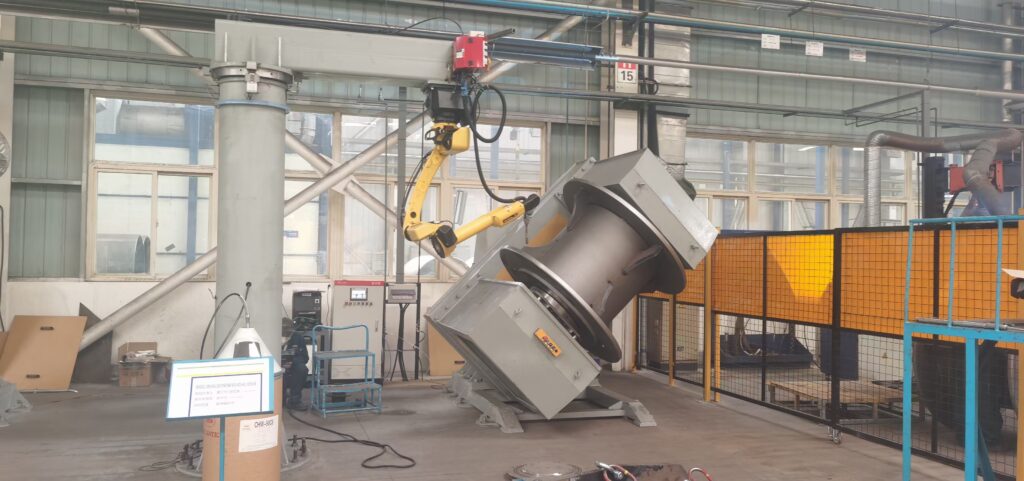
- High Payload Performance:These systems are designed to carry heavy equipment, such as high-power welders or large-format robotic arms, with a standard cantilever load capacity of 500kg.
- Sub-Millimeter Precision:Rigidity is the foundation of accuracy. A bridge-style gantry can maintain a repetitive positioning accuracy of 0.1mm on the Y-axis, ensuring consistent weld seams across massive components.
- Industrial Durability:Equipped with precision planetary reducers and gear-rack drives, these systems are engineered for the rigors of 24/7 continuous operation in heavy industry.
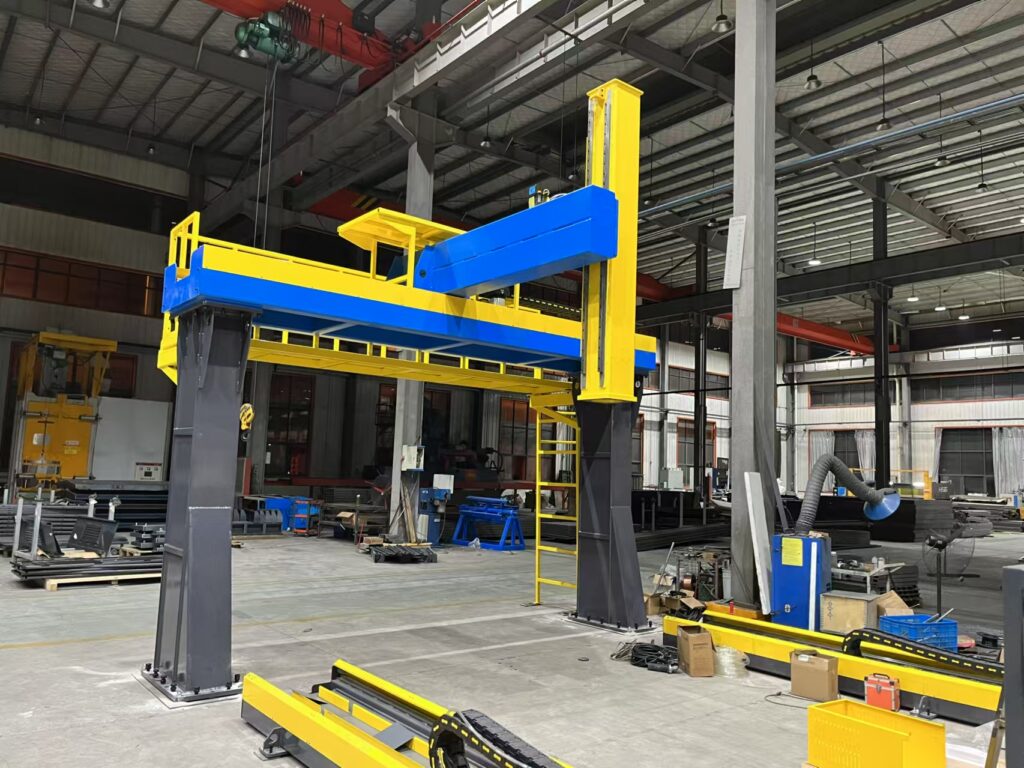
The Cantilever System: Flexibility in Restricted Envelopes
A cantilever system features a horizontal arm supported only on one end. While this limits its maximum payload compared to a bridge-style gantry, it offers specific advantages for workshops with irregular layouts.
- Side-Loading Accessibility:The primary advantage of a cantilever is its open end, which allows operators, forklifts, or AGVs to access the work area from the side without navigating around support columns.
- Minimizing Floor Obstructions:For facilities with existing overhead infrastructure—such as low-hanging cranes or mezzanine levels—the single-sided support allows for automation without a complete structural overhaul.
- High-Speed, Light-Duty Performance:These systems excel in high-speed pick-and-place or light-duty surface treatments where the total mass of the end-effector is relatively low.
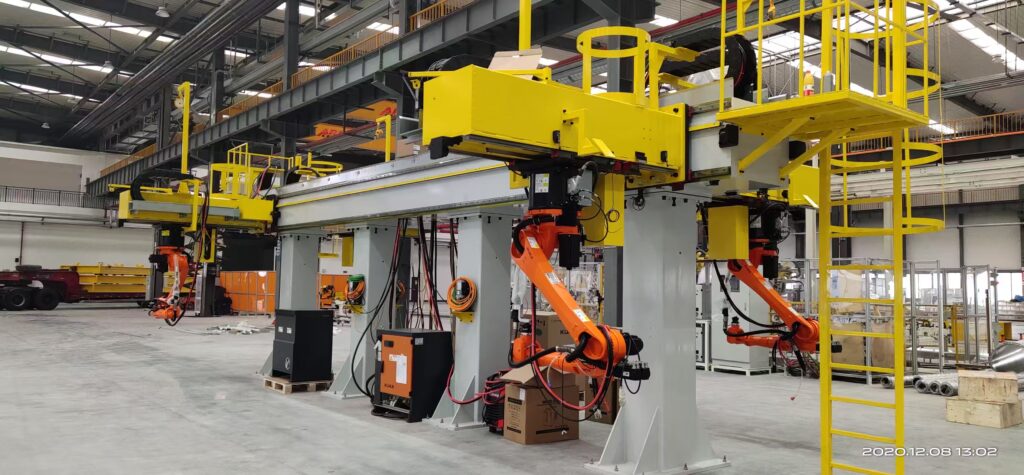
Technical Comparison: Spatial and Operational Impact
1. Scalability and Reach for Large-Scale Fabrication
For industries like shipbuilding or heavy machinery, “reach” is the most critical metric. Bridge-style gantries offer unparalleled scalability. With X-axis sections that are freely combinable in 4-meter increments up to 30 meters or more, a single gantry can cover the entire length of a ship hull or a crane boom. Cantilever systems, by contrast, are mathematically restricted in their Y-axis reach; extending the arm too far creates leverage that can lead to structural fatigue or accuracy loss at the tip.
2. Maintaining Production Uptime: The Maintenance Factor
Complexity is the enemy of uptime in an automated factory. Both gantry and cantilever systems offer a maintenance advantage over 6-axis articulated robots.
- Simplified Mechanics:Both architectures utilize linear guides and gear-rack transmissions, which are easily accessible for inspection.
- Automatic Lubrication:Systems like the AUT-DW series use 46# guide rail oil and automatic lubrication to minimize friction and wear.
- Reduced TCO:Because maintenance can be handled by in-house teams rather than specialized manufacturer technicians, the Total Cost of Ownership (TCO) is significantly lower over a 10-year period.
3. Optimizing the “Floor Highway” for AMRs
Modern “Smart Factories” rely on Autonomous Mobile Robots (AMRs) for logistics. A bridge-style gantry supports the “overhead-first” strategy, reclaiming the floor space for these robots. By elevating the automation, you create a clear path for logistics under the rails, reducing integration complexity and setup time by up to 40% compared to floor-mounted workstations.
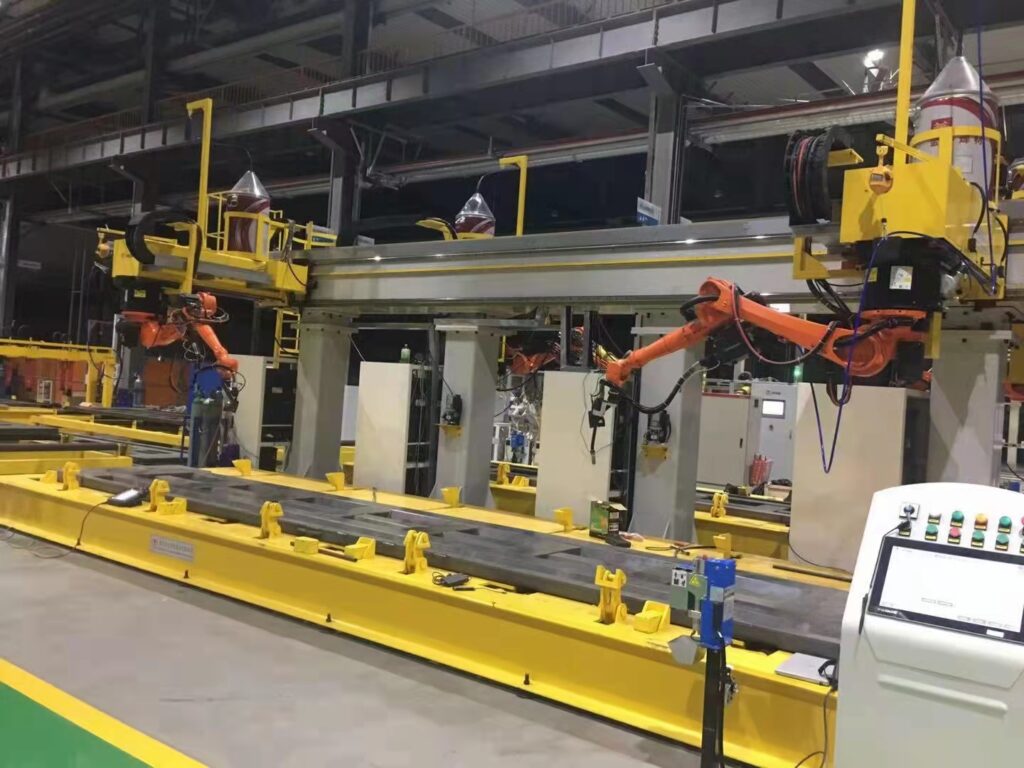
Application Analysis by Industry
The choice of structure often depends on the specific workpiece geometry:
- Marine & Shipbuilding:Bridge-style gantries are essential for welding large deck sections and hull components where sub-millimeter precision across 20+ meters is required.
- Heavy Construction Machinery:Fabrication of excavator arms and crane booms requires the heavy-load stability that only a bridge-style structure can provide.
- Specialized Automotive:For truck chassis and bus frame welding, gantries provide the stable platform needed for high-torque fastening and deep-seam welding.
- Steel Structure Fabrication:In the assembly of bridge trusses or factory frames, the linear modularity of the gantry allows the system to scale alongside the project size.
Making the Decision: A Strategic Checklist
Before committing to an architecture, facility planners should ask the following:
- What is the maximum weight of the robot plus the welding equipment?If it exceeds 200kg, a bridge-style gantry is usually the safer choice.
- Does the workspace require side-access for materials?If yes, a cantilever may offer better logistics flow, provided the precision requirements are met.
- Is future expansion likely?Bridge-style systems offer a more robust foundation for adding length to the X-axis as production needs grow.
Conclusion
While both bridge-style gantries and cantilever systems provide critical linear motion for industrial automation, the bridge-style gantry remains the gold standard for heavy-duty, high-precision fabrication. Its ability to combine massive reach with sub-millimeter accuracy makes it an indispensable tool for manufacturers looking to optimize their 3D workspace and future-proof their production lines.
Ready to find the ideal structure for your automated line?
Contact us today. Our engineering experts specialize in configuring Robot Slider and Gantry solutions tailored to your facility’s unique challenges.